
Whitewash
Horace Annesley Vachell
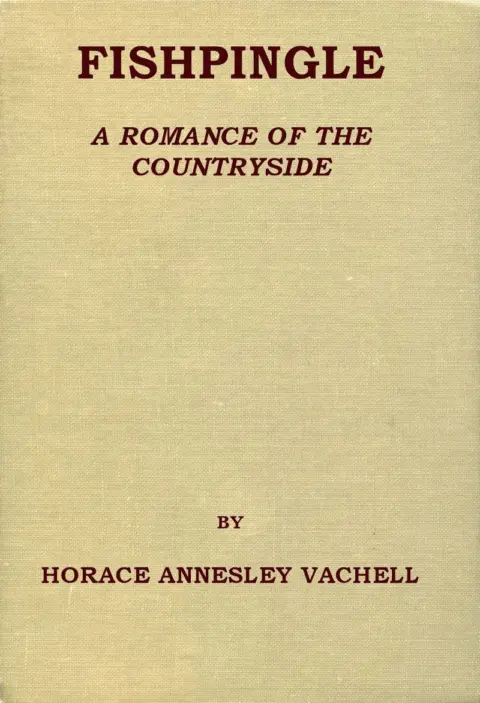
THE CLASSIC COLLECTION · 1917
"Fishpingle: A Romance of the Countryside" by Horace Annesley Vachell is a novel written in the early 20th century. This work captures the essence of rural English life, centered around the character Benoni Fishpingle, who serves as the butler and steward at Pomfret Court. The narrative delves into themes of estate management, class structures, and the intricacies of romance and relationships in the countryside, particularly focusing on the connections between the landowning gentry and their loyal servants. The opening of the novel introduces the reader to the unique atmosphere of the Pomfret estate through the room of Fishpingle, whose meticulous nature is highlighted through his interactions with the underfootmen Alfred and Prudence. Their playful banter reveals much about their personalities and the social dynamics of their setting. As Fishpingle, a man of extensive knowledge about the estate, engages in light-hearted yet insightful conversations with the Squire, Sir Geoffrey Pomfret, the groundwork for larger themes surrounding duty, love, and the challenges facing traditional landowners is established. The narrative hints at the evolving societal landscape, blending humor with a thoughtful critique of class and agricultural issues within England.
Introduction adapted from the source catalogue; source summaries may be automatically generated.
Free to read · English · 78,761 words · No account needed
MAKE TIME FOR A GOOD BOOK
On by default. Untick to stop anonymous reading totals. Each page counts after 10 seconds in view. How this works.
Anonymous counting is on unless you have switched it off.
“Joyce, my blessed girl, nothing can cheapen you or your father. Not prejudice, nor discourtesy—if it should come to that—nor injustice. I have told Margot. She was very sympathetic. Of course, she always regarded me as a friend. She will help, if she can. Her advice—and, mind you, she’s a dasher—is: Creep—crane—go canny! Father’s absurd position can’t be carried by storm. I shall undermine the fortress. That will take time.”
“Yes; but I warn you father won’t wait too long.”
“I count on Fishpingle. If you could have seen his dear old face when I told him! We shall collogue, I promise you.”
He returned home, champing the curb which circumstances imposed.
After tea, when the Squire betook himself to the river, Margot sat, as usual, upon the lawn, with Lady Pomfret. Lionel slipped away to Fishpingle’s room. “Colloguing,” in his present feverish condition, soothed him. To Fishpingle he could exhibit flowers of speech, nose-gays of pretty sentiment. And he could talk emphatically of the future, the simple life full of costless pleasures, dignified by steady work, by the determination to solve Moxon’s problem, to make Pomfret land pay. Fishpingle nodded approvingly, making happy suggestions, collaborating whole-heartedly.
In this agreeable fashion an hour or more may have passed away. Suddenly they heard the Squire’s voice in the courtyard, loud and clear. He was rating the egregious Bonsor.
“I tell you, man, this is your damned carelessness. Unless I give my personal attention to every detail, things go to blazes. I am surrounded by a pack of fools.”
Bonsor’s voice mumbled a reply. Fishpingle said quietly:
“The Squire has not caught any fish.”
Sir Geoffrey stumped in, fuming and fussing. Fishpingle rose to relieve him of rod, creel, and landing-net. Lionel said pleasantly:
“Anything wrong, father?”
“Everything,” snapped the angry man. “Tuesday is my unlucky day. I believe I was born on a Tuesday.”
Fishpingle politely corrected him.
“No, Sir Geoffrey. You were born on a Wednesday, at 1.45 a. m.”
The Squire turned to Lionel.
“I lost two beauties, and broke the tip of my rod.”
Fishpingle assured him that the tip could be mended in ten minutes. The
Squire fumed on:
“Four thoroughbred pigs out of the new litter are dead. Mother overlaid ’em. There are moments when I wish my mother had overlaid me. Bonsor tells me we are nearly out of coal, Ben.”
“I warned you, Sir Geoffrey, that we were running short a fortnight
ago.”
Your reading position is saved on this browser. Take it to another device with a library code. Reading pages adapt to text, rather than matching a printed edition.
Horace Annesley Vachell
Horace Annesley Vachell
Horace Annesley Vachell
Horace Annesley Vachell
BEHIND THE BOOK
This eBook is for the use of anyone anywhere in the United States and most other parts of the world at no cost and with almost no restrictions whatsoever. You may copy it, give it away or re-use it under the terms of the Project Gutenberg License included with this eBook or online at www.gutenberg.org. If you are not located in the United States, you will have to check the laws of the country where you are located before using this eBook. Read the source licence.
The original source file, including credits and licence, is retained by this library. Request an original-format copy at no charge. Please include the book title and Project Gutenberg identifier #50255.
KEEP YOUR CURIOSITY GOING
Coulson Kernahan

Maurice Baring
Frances Wright
Cécile Tormay

Frederic Jesup Stimson

W. H. P. (William Henry Pope) Jarvis