Beginners’ botany
L. H. (Liberty Hyde) Bailey
THE CLASSIC COLLECTION · 1908
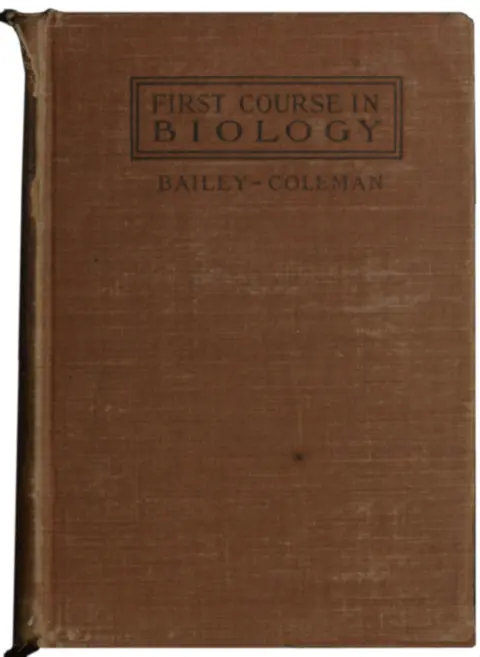
"First course in biology" by L. H. Bailey and Walter Moore Coleman is a secondary-school biology textbook written in the early 20th century. It presents plant, animal, and human biology as a unified, practical course that favors observation, experiment, and everyday relevance over rote facts. Readers can expect clear explanations, abundant classroom and field exercises, and an ecological perspective that ties structure and function to environment. The opening of the textbook sets a reform-minded tone, advocating a single unit course in biology for secondary students and outlining flexible ways to sequence plant, animal, and human topics. A general introduction then builds essential chemistry and physics skills through simple experiments—testing acids and bases, starch, sugar, proteids, and fats; making oxygen; demonstrating oxidation; contrasting organic and inorganic matter; and analyzing a candle flame to reveal oxygen consumption, carbon (soot), and carbon dioxide. Plant Biology begins by stressing variation, environmental struggle, and selection (including human selection in breeding), then surveys plant societies (ecology), plant parts and life histories (annuals, biennials, perennials). It proceeds to seeds and germination with hands-on studies of beans, castor beans, corn, and gymnosperms, and concludes with root forms and functions—tap and fibrous systems, aerial and adventitious roots, root hairs and osmosis, nitrogen-fixing nodules, and the importance of moisture, temperature, and air—ending mid-discussion of root structure.
Introduction adapted from the source catalogue; source summaries may be automatically generated.
Free to read · English · 163,598 words · No account needed
MAKE TIME FOR A GOOD BOOK
On by default. Untick to stop anonymous reading totals. Each page counts after 10 seconds in view. How this works.
Anonymous counting is on unless you have switched it off.
Bark-bound trees, P 54.
Bast, P 61, 66.
Bat, A 202.
Baths, H 23, 24.
Batrachia, A 126.
Bean, P 20, 28, 39, 194, H 95, 96, 112.
Beaver, A 204.
Bedbug, A 92, 93.
Bee, bumble, A 89; honey, A 88.
Beebe’s experiments, Dr., H 113.
Beef, H 111; tea, H 111.
Beetle, A 90, 91.
Berry, P 167.
Biennial plant, P 17.
Big-headed turtle, A 149.
Bilateral, A 34, 49, 98.
Bile, H 105.
Bill of bird, A 151.
Biology defined, A 1, H 9.
Birds, A 150.
Blind spot, H 151.
Blood, H 58; quantity of, H 55; of insects, A 78.
Blood vessels, H 52; control of, H 58.
Board of Health, H 163.
Boll weevil, A 95, 96.
Boll worm, A 95, 96.
Bones, H 29; composition of, H 31; growth of, H 14, 36; forms of, H 28, 29, 34; structure of, H 30.
Bony tissue, H 13.
Borax, H 93.
Brace cells, P 67.
Bracts, P 134.
Brain, H 122; coverings of, H 125; of fish, A 118.
Branch, P 111, A 9.
Breathing, forms of, H 80; of bird, A 161; of insect, A 76; through
mouth, H 85.
Breeding, plant, P 7, 8.
Bronchial tubes, H 75.
Bruises, H 62.
Bryophytes, P 181.
Bud propagation, P 121.
Budding, P 127, 128.
Buds, P 72, 82, 87, 111; flower, P 115; fruit, P 115.
Bureau of entomology, A 95.
Burns, H 24.
Burs, P 172, 174.
Bushes, P 191, A 171.
Butterfly, A 83.
Cabbage, P 113, H 95.
Cabbage butterfly, A 84, 86, 87.
Callus, P 56.
Calyx, P 133.
Cambium, P 63, 65.
Camel, A 214.
Candle, xv, A 5.
Cane sugar, H 92, 104.
Capillaries, H 52, 53, 56.
Capsule, P 165.
Carbohydrate, P 95, H 91, 95.
Carbon, vii, xviii, P 92.
Carbon, dioxid, A 24, P 22, 93, 106, H 60, 76, 81, 132; monoxid, H 85.
Carnivorous, P 99, H 111.
Carp, A 112, 117, 123.
Carpel, P 136.
Cartilage, H 13, 35.
Castor bean, P 24.
Cat, A 184.
Caterpillar, tent, A 84.
Catkin, P 158.
Caucasian, H 1, 2.
Caulicle, P 20, 22, 25.
Cedar apple, P 194.
Cell, P 42, 63, 145, 176, A 6, 7, H 5, 6.
Celom, A 46.
Cephalopod, A 106.
Cerebellum, H 122, 124.
Cerebro-spinal system, H 128, 129.
Cerebrum, H 122, 125, 126.
Chelonia, A 143.
Chemistry, xv.
Chemical symbols, xv.
Chest, H 32.
Chewing, H 90, 101.
Chimpanzee, A 219, 221.
Chirping, A 66.
Chitin, A 77.
Chlorophyll, P 86, 94, 101, 183, 186.
Cholera, H 160.
Choroid, H 150, 152.
Chyme, H 103.
Cigarettes, H 67, 86.
Cilia, A 14, 20, 101, 103, H 76.
Ciliated chamber, A 17.
Cion, P 125.
Circulation, H 51; and breathing, H 58; and exercise, H 67; hygiene of, H 68; in ameba, A 12; in insect, A 77; in fish, A 117; portal, H 60, 105; pulmonary, H 60; renal, H 60.
City, H 4.
Cladophylla, P 100.
Clam, hardshell, A 104; softshell, A 104.
Class, A 9.
Classification, of animals, A 8, 125; of birds, A 177; insects, A 82;
mammals, A 193.
Cleft graft, P 126.
Cleft leaf, P 75.
Cleistogamous, P 151.
Click-beetle, A 91.
Climate, and clothing, H 25; and brain work, H 68; and early man, H 2.
Climbing plants, P 129.
Clitellum, A 43, 47.
Cloaca, A 18.
Clot, H 61.
Clothes moth, A 84, 92, 93.
Clothing, H 16, 25.
Clover, P 39.
Club mosses, P 203.
Cluster, flower, P 155, 159; centrifugal, P 156, 159; centripetal, P 156; indeterminate, P 156.
Coagulation, H 61.
Cockroach, A 71.
Cocoon, A 84.
Codling moth, A 84, 86, 87, 95.
Cœlenterata, A 28.
Colds, care of, H 69, 86.
Coleoptera, A 82.
Collecting insects, A 72.
Colon, H 106, 111.
Colonies, plant, P 11.
Colorado beetle, A 90, 91.
Coloration, warning, A 84, 146; protective, A 34, 37, 49.
Colors of flowers, A 85.
Comparative study, A 85, 108, 122, 223; moth and butterfly, A 85.
Composite flowers, P 140.
Compositions, subjects for, H 15, 50, 116, 141.
Compound substance, vii.
Congestion, H 68.
Conjugation, P 185.
Conjunctiva, H 150.
Connective tissue, H 11, 54, 120.
Consumption, H 159.
Convolution, H 126.
Cooking, H 114.
Coördination, H 124.
Your reading position is saved on this browser. Take it to another device with a library code. Reading pages adapt to text, rather than matching a printed edition.
L. H. (Liberty Hyde) Bailey
Walter Moore Coleman
L. H. (Liberty Hyde) Bailey

L. H. (Liberty Hyde) Bailey
BEHIND THE BOOK
This eBook is for the use of anyone anywhere in the United States and most other parts of the world at no cost and with almost no restrictions whatsoever. You may copy it, give it away or re-use it under the terms of the Project Gutenberg License included with this eBook or online at www.gutenberg.org. If you are not located in the United States, you will have to check the laws of the country where you are located before using this eBook. Read the source licence.
The original source file, including credits and licence, is retained by this library. Request an original-format copy at no charge. Please include the book title and Project Gutenberg identifier #76851.
KEEP YOUR CURIOSITY GOING

John Muir

Asa Gray
Asa Gray

Florence Nightingale
Elizabeth Robins Pennell
Denison Olmsted