Horace Walpole: A memoir With an appendix of books printed at the Strawberry Hill Press
Austin Dobson
THE CLASSIC COLLECTION · 1889
"Fielding" by Austin Dobson is a biographical account focusing on the life and works of the English novelist and playwright Henry Fielding, written in the late 19th century. The book aims to present a thorough examination of Fielding's life, correcting past misconceptions and offering fresh insights into his personal and professional experiences. The opening of the memoir outlines Fielding's lineage and early years, detailing his birth into an ancient family and the influences that shaped his literary career. It presents a broad picture of his upbringing, education at Eton, and the early romantic escapades that hinted at his later literary pursuits. Dobson introduces various anecdotes about Fielding's family and education while alluding to his gradual emergence into the world of theater and his budding interest in playwriting, laying the groundwork for understanding Fielding's character as a dramatist and novelist.
Introduction adapted from the source catalogue; source summaries may be automatically generated.
Free to read · English · 63,377 words · No account needed
MAKE TIME FOR A GOOD BOOK
On by default. Untick to stop anonymous reading totals. Each page counts after 10 seconds in view. How this works.
Anonymous counting is on unless you have switched it off.
Next to Parson Adams, perhaps the best character in Joseph Andrews-- though of an entirely different type--is Lady Booby's "Waiting- Gentlewoman," the excellent Mrs. Slipslop. Her sensitive dignity, her easy changes from servility to insolence, her sensuality, her inimitably distorted vocabulary, which Sheridan borrowed for Mrs. Malaprop, and Dickens modified for Mrs. Gamp, are all peculiarities which make up a personification of the richest humour and the most life-like reality. Mr. Peter Pounce, too, with his "scoundrel maxims," as disclosed in that remarkable dialogue which is said to be "better worth reading than all the Works of Colley Cibber," and in which charity is defined as consisting rather in a disposition to relieve distress than in an actual act of relief; Parson Trulliber with his hogs, his greediness, and his willingness to prove his Christianity by fisticuffs; shrewish Mrs. Tow- wouse with her scold's tongue, and her erring but perfectly subjugated husband,--these again are portraits finished with admirable spirit and fidelity. Andrews himself, and his blushing sweetheart, do not lend themselves so readily to humorous art. Nevertheless the former, when freed from the wiles of Lady Booby, is by no means a despicable hero, and Fanny is a sufficiently fresh and blooming heroine. The characters of Pamela and Mr. Booby are fairly preserved from the pages of their original inventor. But when Fielding makes Parson Adams rebuke the pair for laughing in church at Joseph's wedding, and puts into the lady's mouth a sententious little speech upon her altered position in life, he is adding some ironical touches which Richardson would certainly have omitted.
No selection of personages, however, even of the most detailed and particular description, can convey any real impression of the mingled irony and insight, the wit and satire, the genial but perfectly remorseless revelation of human springs of action, which distinguish scene after scene of the book. Nothing, for example, can be more admirable than the different manifestations of meanness which take place among the travellers of the stage-coach, in the oft-quoted chapter where Joseph, having been robbed of everything, lies naked and bleeding in the ditch. There is Miss Grave-airs, who protests against the indecency of his entering the vehicle, but like a certain lady in the Rake's Progress, holds the sticks of her fan before her face while he does so, and who is afterwards found to be carrying Nantes under the guise of Hungary-water; there is the lawyer who advises that the wounded man shall be taken in, not from any humane motive, but because he is afraid of being involved in legal proceedings if they leave him to his fate; there is the wit who seizes the occasion for a burst of facetious double-meanings, chiefly designed for the discomfiture of the prude; and, lastly, there is the coachman, whose only concern is the shilling for his fare, and who refuses to lend either of the useless greatcoats he is sitting upon, lest "they should be made bloody," leaving the shivering suppliant to be clothed by the generosity of the postilion ("a Lad," says Fielding with a fine touch of satire, "who hath been since transported for robbing a Hen-roost"). This worthy fellow accordingly strips off his only outer garment, "at the same time swearing a great Oath," for which he is duly rebuked by the passengers, "that he would rather ride in his Shirt all his Life, than suffer a Fellow-Creature to lie in so miserable a Condition." Then there are the admirable scenes which succeed Joseph's admission into the inn; the discussion between the bookseller and the two parsons as to the publication of Adams's sermons, which the "Clergy would be certain to cry down," because they inculcate good works against faith; the debate before the justice as to the manuscript of AEschylus, which is mistaken for one of the Fathers; and the pleasant discourse between the poet and the player which, beginning by compliments, bids fair to end in blows. Nor are the stories of Leonora and Mr. Wilson without their interest. They interrupt the straggling narrative far less than the Man of the Hill interrupts Tom Jones, and they afford an opportunity for varying the epic of the highway by pictures of polite society which could not otherwise be introduced. There can be little doubt, too, that some of Mr. Wilson's town experiences were the reflection of the author's own career; while the characteristics of Leonora's lover Horatio,--who was "a young Gentleman of a good Family, bred to the Law," and recently called to the Bar, whose "Face and Person were such as the Generality allowed handsome: but he had a Dignity in his Air very rarely to be seen," and who "had Wit and Humour, with an Inclination to Satire, which he indulged rather too much"--read almost like a complimentary description of Fielding himself.
Your reading position is saved on this browser. Take it to another device with a library code. Reading pages adapt to text, rather than matching a printed edition.
Austin Dobson
Austin Dobson
Austin Dobson
Austin Dobson
BEHIND THE BOOK
This eBook is for the use of anyone anywhere in the United States and most other parts of the world at no cost and with almost no restrictions whatsoever. You may copy it, give it away or re-use it under the terms of the Project Gutenberg License included with this eBook or online at www.gutenberg.org. If you are not located in the United States, you will have to check the laws of the country where you are located before using this eBook. Read the source licence.
The original source file, including credits and licence, is retained by this library. Request an original-format copy at no charge. Please include the book title and Project Gutenberg identifier #6689.
KEEP YOUR CURIOSITY GOING
John L. Ransom
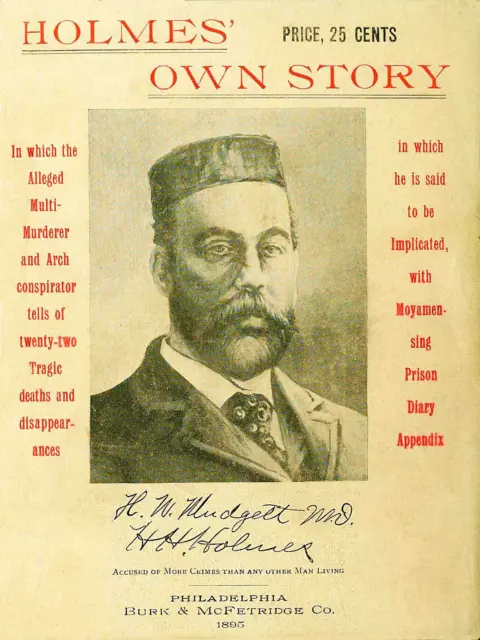
Herman W. Mudgett
Harriet Monroe
Daniel Dulany Addison
Charles Lanman
Harold Rosher