Horace Walpole: A memoir With an appendix of books printed at the Strawberry Hill Press
Austin Dobson
THE CLASSIC COLLECTION · 1889
"Fielding" by Austin Dobson is a biographical account focusing on the life and works of the English novelist and playwright Henry Fielding, written in the late 19th century. The book aims to present a thorough examination of Fielding's life, correcting past misconceptions and offering fresh insights into his personal and professional experiences. The opening of the memoir outlines Fielding's lineage and early years, detailing his birth into an ancient family and the influences that shaped his literary career. It presents a broad picture of his upbringing, education at Eton, and the early romantic escapades that hinted at his later literary pursuits. Dobson introduces various anecdotes about Fielding's family and education while alluding to his gradual emergence into the world of theater and his budding interest in playwriting, laying the groundwork for understanding Fielding's character as a dramatist and novelist.
Introduction adapted from the source catalogue; source summaries may be automatically generated.
Free to read · English · 63,377 words · No account needed
MAKE TIME FOR A GOOD BOOK
On by default. Untick to stop anonymous reading totals. Each page counts after 10 seconds in view. How this works.
Anonymous counting is on unless you have switched it off.
The literary work of Fielding is so inextricably interwoven with what is known of his life that most of it has been examined in the course of the foregoing narrative. What remains to be said is chiefly in summary of what has been said already. As a dramatist he has no eminence; and though his plays do not deserve the sweeping condemnation with which Macaulay once spoke of them in the House of Commons, they are not likely to attract any critics but those for whom the inferior efforts of a great genius possess a morbid fascination. Some of them serve, in a measure, to illustrate his career; others contain hints and situations which he afterwards worked into his novels; but the only ones that possess real stage qualities are those which he borrowed from Regnard and Moliere. Don Quixote in England, Pasquin, the Historical Register, can claim no present consideration commensurate with that which they received as contemporary satires, and their interest is mainly antiquarian; while Tom Thumb and the Covent-Garden Tragedy, the former of which would make the reputation of a smaller man, can scarcely hope to be remembered beside Amelia or Jonathan Wild. Nor can it be admitted that, as a periodical writer, Fielding was at his best. In spite of effective passages, his essays remain far below the work of the great Augustans, and are not above the level of many of their less illustrious imitators. That instinct of popular selection, which retains a faint hold upon the Rambler, the Adventurer, the World, and the Connoisseur, or at least consents to give them honourable interment as "British Essayists" in a secluded corner of the shelves, has made no pretence to any preservation, or even any winnowing, of the Champion and the True Patriot. Fielding's papers are learned and ingenious; they are frequently humorous; they are often earnest; but it must be a loiterer in literature who, in these days, except for antiquarian or biographical purposes, can honestly find it worth while to consult them. His pamphlets and projects are more valuable, if only that they prove him to have looked curiously and sagaciously at social and political problems, and to have striven, as far as in him lay, to set the crooked straight. Their import, to-day, is chiefly that of links in a chain--of contributions to a progressive literature which has travelled into regions unforeseen by the author of the Proposal for the Poor, and the Inquiry into the Causes of the late Increase of Robbers. As such, they have their place in that library of Political Economy of which Mr. McCulloch has catalogued the riches. It is not, however, by his pamphlets, his essays, or his plays that Fielding is really memorable; it is by his triad of novels, and the surpassing study in irony of Jonathan Wild. In Joseph Andrews we have the first sprightly runnings of a genius that, after much uncertainty, had at last found its fitting vein, but was yet doubtful and undisciplined; in Tom Jones the perfect plan has come, with the perfected method and the assured expression. There is an inevitable loss of that fine waywardness which is sometimes the result of untrained effort, but there is the general gain of order, and the full production which results of art. The highest point is reached in Tom Jones, which is the earliest definite and authoritative manifestation of the modern novel. Its relation to De Foe is that of the vertebrate to the invertebrate: to Richardson, that of the real to the ideal--one might almost add, the impossible. It can be compared to no contemporary English work of its own kind; and if we seek for its parallel at the time of publication we must go beyond literature to art--to the masterpiece of that great pictorial satirist who was Fielding's friend. In both Fielding and Hogarth there is the same constructive power, the same rigid sequence of cause and effect, the same significance of detail, the same side-light of allusion. Both have the same hatred of affectation and hypocrisy--the same unerring insight into character. Both are equally attracted by striking contrasts and comic situations; in both there is the same declared morality of purpose, coupled with the same sturdy virility of expression. One, it is true, leaned more strongly to tragedy, the other to comedy. But if Fielding had painted pictures, it would have been in the style of the Marriage a la Mode; if Hogarth had written novels, they would have been in the style of Tom Jones. In the gentler and more subdued Amelia, with its tender and womanly central-figure, there is a certain change of plan, due to altered conditions--it may be, to an altered philosophy of art. The narrative is less brisk and animated; the character-painting less broadly humorous; the philanthropic element more strongly developed. To trace the influence of these three great works in succeeding writers would hold us too long. It may, nevertheless, be safely asserted that there are few English novels of manners, written since Fielding's day, which do not descend from him as from their fount and source; and that more than one of our modern masters betray unmistakable signs of a form and fashion studied minutely from their frank and manly ancestor.
Your reading position is saved on this browser. Take it to another device with a library code. Reading pages adapt to text, rather than matching a printed edition.
Austin Dobson
Austin Dobson
Austin Dobson
Austin Dobson
BEHIND THE BOOK
This eBook is for the use of anyone anywhere in the United States and most other parts of the world at no cost and with almost no restrictions whatsoever. You may copy it, give it away or re-use it under the terms of the Project Gutenberg License included with this eBook or online at www.gutenberg.org. If you are not located in the United States, you will have to check the laws of the country where you are located before using this eBook. Read the source licence.
The original source file, including credits and licence, is retained by this library. Request an original-format copy at no charge. Please include the book title and Project Gutenberg identifier #6689.
KEEP YOUR CURIOSITY GOING
John L. Ransom
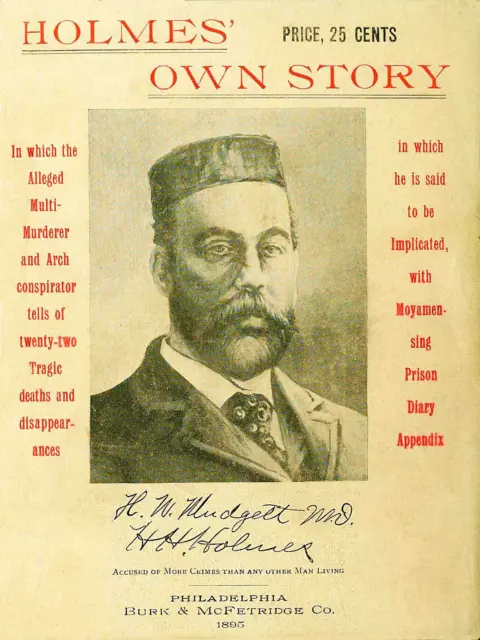
Herman W. Mudgett
Harriet Monroe
Daniel Dulany Addison
Charles Lanman
Harold Rosher