
Somewhere south in Sonora
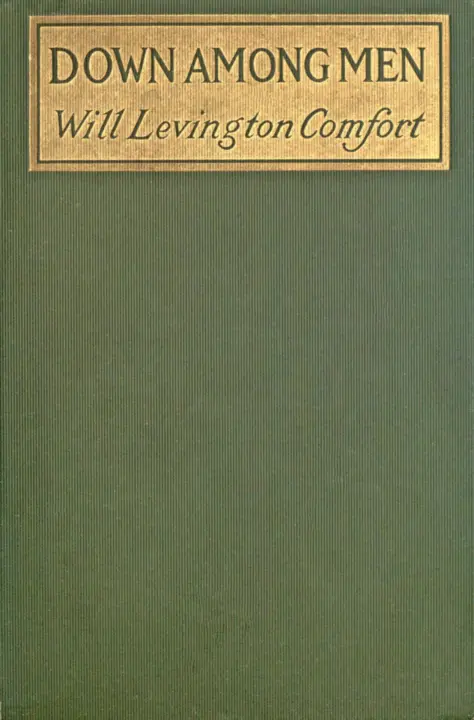
Will Levington Comfort
THE CLASSIC COLLECTION · 1912
"Fate Knocks at the Door: A Novel" by Will Levington Comfort is a work of fiction written during the early 20th century. The novel follows the life of Andrew Bedient, a young man who experiences profound emotional and physical transformations as he navigates through different cultures and personal relationships in Asia and beyond. Central to the narrative is the theme of fate and destiny, as Bedient encounters both the turmoil of life at sea and the complexities of love and friendship. The opening of the novel introduces Andrew Bedient as he serves as a cook on the ship "Truxton", which is becalmed in the treacherous waters of the China Sea. The narrative vividly portrays Bedient's interactions with Captain Carreras, a fragile yet kind-hearted gentleman who profoundly impacts his life. As a powerful typhoon strikes, forcing both men into a fight for survival, Bedient's character begins to emerge through his courage and quick thinking. Through this intense incident, the foundation is laid for Bedient's journey of self-discovery and the exploration of deep emotional connections, especially as he ventures into the world after parting from Carreras. This initial chapter sets the stage for further developments in Bedient's life, hinting at themes of resilience, friendship, and the search for purpose amidst chaos.
Introduction adapted from the source catalogue; source summaries may be automatically generated.
Free to read · English · 110,590 words · No account needed
MAKE TIME FOR A GOOD BOOK
On by default. Untick to stop anonymous reading totals. Each page counts after 10 seconds in view. How this works.
Anonymous counting is on unless you have switched it off.
"No, I'm not, Beth. Oh, it isn't the only thing--that has been rammed home to me.... Me; there's so much me mixed up in my mind, so much tiresome and squalid me, that I wonder every decent person hasn't cut me long since for a bore and a nuisance. Why, I had become all puny and blinded--my stomach, my desires, markets, memories, ambitions, doubts, rages, rights, poses and conceits. I really need to tell some one, to unveil before some one who won't wince, but treasure the little moral residuum----"
"You have done well to come to Beth," she said, leaning forward and patting his shoulder with the thin stem of her brush, though a woman always feels her years when a man brings woes such as these to her.... It was Beth's weakness (or strength) that she could never reveal the intimacies of her heart. Only sometimes in half-humorous generalities, she permitted things to escape, thinking no one understood.
"Thanks, Beth. I'm grateful," Cairns said. "I seem to have missed for a long time the bigger dimension in people, books, pictures, faces, even in the heart. It's a long time since I set out this way, a down-grade, and the last few days, I've heard the rapids. I'm going back, as far and as fast as I can up-stream. And this is no lie; no pose."
"I repeat, you're a dear boy----"
"Oh, it's Bedient who jerked me up straight. I'd have gone on.... And to think I made him wait over an hour, when he first called.... He's the finest bit of man-stuff I've ever known, Beth."
She found herself relieved, that he had given to the stranger the
praise.
"... And, Beth, if you want to dig for his views, you'll get them. He says New York plucks everything green; opinionates on the wing, makes personal capital out of another's offering, refusing to wait for the fineness of impersonal judgment. He asks nothing more stimulating than the capacity to say on occasion, 'I don't know,' flat and unqualified. He sees everywhere, the readiness to be clever instead of true. So many New Yorkers, he says, are like fishes, that, knowing water, disclaim the possibility of air.
"You know, Beth, Bedient never encountered what America was thinking and reading, until a few months ago down on his Island. We are editorialists in the writing game, he declares, what-shall-I-write-about-to-day-folks! We don't wait for fulness, but wear out brain thin bandying about what drops on it. If we would wait until we were full men, we would have to write, and not drive ourselves to the work----"
Your reading position is saved on this browser. Take it to another device with a library code. Reading pages adapt to text, rather than matching a printed edition.
Will Levington Comfort
Will Levington Comfort
Will Levington Comfort
Will Levington Comfort
BEHIND THE BOOK
This eBook is for the use of anyone anywhere in the United States and most other parts of the world at no cost and with almost no restrictions whatsoever. You may copy it, give it away or re-use it under the terms of the Project Gutenberg License included with this eBook or online at www.gutenberg.org. If you are not located in the United States, you will have to check the laws of the country where you are located before using this eBook. Read the source licence.
The original source file, including credits and licence, is retained by this library. Request an original-format copy at no charge. Please include the book title and Project Gutenberg identifier #11655.
KEEP YOUR CURIOSITY GOING
Coulson Kernahan

Maurice Baring
Frances Wright
Cécile Tormay

Frederic Jesup Stimson

W. H. P. (William Henry Pope) Jarvis