THE CLASSIC COLLECTION✦Letters from a Landscape PainterCLASSIC FREE BOOKS
Letters from a Landscape Painter
Charles Lanman
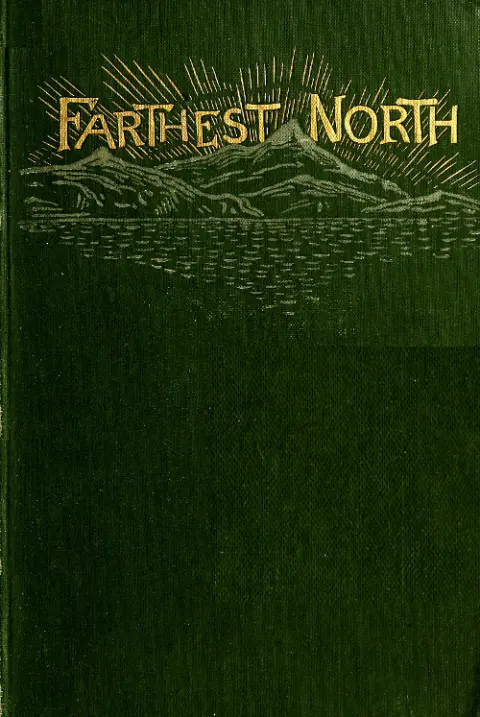
THE CLASSIC COLLECTION · 1885
"Farthest North" by Charles Lanman is a historical account written in the late 19th century. The book chronicles the life and explorations of Lieutenant James Booth Lockwood, particularly his role in the Greely Arctic Expedition, which sought to advance our understanding of the polar regions. It aims to provide insight into Lockwood's character and experiences as he navigated both the challenges of Arctic exploration and his military life. At the start of the narrative, the author presents Lockwood not only as a dedicated explorer but also as a man of notable character, detailing his early life, military training, and the formative experiences that shaped his adventurous spirit. The opening chapters lay a foundation for his expedition, addressing the circumstances surrounding the Greely mission and highlighting Lockwood's contributions and observations, which are meant to correct misconceptions about the expedition's achievements and challenges. His journey takes him from his childhood through military campaigns to the brink of his ultimate northward exploration, setting the stage for the dramatic events to unfold in the harsher environments of the Arctic.
Introduction adapted from the source catalogue; source summaries may be automatically generated.
Free to read · English · 85,594 words · No account needed
MAKE TIME FOR A GOOD BOOK
On by default. Untick to stop anonymous reading totals. Each page counts after 10 seconds in view. How this works.
Anonymous counting is on unless you have switched it off.
In view of the possibility that Lady Franklin Bay might become a permanent station, all the preliminary arrangements were made as complete as possible. A steamer called the Proteus was secured for conveying the expedition to Lady Franklin Bay, and she was ordered to await the arrival of the explorers at the port of St. John’s, in Newfoundland. Lieutenant Lockwood sailed in a steamer from Baltimore with the party and reached St. John’s late in June.
Here it may not be out of place to submit a few remarks on the utility of these Arctic explorations, which are sometimes criticised by people who, without due consideration, jump to hasty conclusions. In former times their main object was to find open passages between the northern regions of Europe, Asia, and America, and to settle the problem of the north pole; and statistics show that when these expeditions have confined their operations within reasonable limits, the mortality attending them has been remarkably small—less than in ordinary commercial voyages. Sir John Franklin went far beyond these limits, and left no monuments by which he could be traced. De Long put his ship into the polar ice with the design of moving with the polar drift. The Greely Expedition was expected to be confined, and was confined, to the well-known waters of Smith’s Sound. It could, therefore, be reached at any time, and, if necessary, it could fall back upon a point accessible at all times. All that was required to secure its safe return was a well-chosen base, and an absolute certainty that this base would be maintained. Unfortunately, neither requirement was fulfilled, and hence nineteen men lost their lives. Sledge-journeys from established bases, though fraught with great labor and discomfort, have never been attended with serious loss of life. It is now about one thousand years since the first Arctic voyage was made, and their aggregate usefulness can hardly be questioned when we remember that they have developed fisheries that have built up the commerce and navies of nations, and that the direct return into the exchange of England has been far more than the cost to her of all her Arctic explorations. The Polar Commission, already alluded to, inaugurated a new policy in regard to Arctic explorations, and one whose utility can not be questioned. It had its origin, in 1875, in the mind of a German discoverer named Carl Weyprecht; and in the opinion of many of the leading minds of the world, the meteorological observations inaugurated by him have done much, and will do much more, to rectify errors in the polar problem and bring to light information about the ice zones, which will give the observers a prominent position in scientific history. According to Professor Joseph Henry, the problems connected with physical geography and science, which are yet unsolved, are the determination of the figure and of the magnetism of the earth, complete knowledge of the tides of the ocean, the winds of the globe, and the influence of extreme cold on animal and vegetable life. Surely the men who voluntarily toil and suffer in their efforts to obtain the needed light on all these subjects, are quite as worthily employed as those who struggle for riches or political fame. In the Professor’s opinion, all the branches of science above mentioned are indirectly connected with the well-being of man, and tend not only to enlarge his sphere of mental activity, but to promote the application of science to the arts of life. A French writer, after applauding the plans of the Polar Commission, concludes his remarks as follows: “The larger number of the civilized nations are striving by scientific means to wrest the mysterious secrets of the deep from the hidden recesses of the North.” In 1884 the number of nations that had entered heartily into the project was thirteen; fifteen polar stations, and over forty auxiliary stations, had already been established. That the reader may fully understand the operations and exploits which are to be chronicled in the subsequent pages of this volume, it may be well to submit the subjoined extract from the official report of General W. B. Hazen, Chief of the United States Signal Service, for the year 1881: “Owing to the very mobile nature of the atmosphere, the changes taking place on one portion of the globe, especially in the Arctic zone, quickly affect regions very distant therefrom. The study of the weather in Europe and America can not be successfully prosecuted without a daily map of the whole northern hemisphere, and the great blank space of the Arctic region upon our simultaneous international chart has long been a subject of regret to meteorologists. The general object is to accomplish, by observations made in concert at numerous stations, such additions to our knowledge as can not be acquired by isolated or desultory traveling parties. No special attempt will be made at geographical exploration, and neither expedition is in any sense expected to reach the north pole. The single object is to elucidate the phenomena of the weather and of the magnetic needle as they occur in America and Europe, by means of observations taken in the region where the most remarkable disturbances seem to have their origin.”
Your reading position is saved on this browser. Take it to another device with a library code. Reading pages adapt to text, rather than matching a printed edition.
Charles Lanman
Charles Lanman
Charles Lanman
Charles Lanman
BEHIND THE BOOK
This eBook is for the use of anyone anywhere in the United States and most other parts of the world at no cost and with almost no restrictions whatsoever. You may copy it, give it away or re-use it under the terms of the Project Gutenberg License included with this eBook or online at www.gutenberg.org. If you are not located in the United States, you will have to check the laws of the country where you are located before using this eBook. Read the source licence.
The original source file, including credits and licence, is retained by this library. Request an original-format copy at no charge. Please include the book title and Project Gutenberg identifier #54019.
KEEP YOUR CURIOSITY GOING
Cécile Tormay

Moritz Busch
John L. Ransom
Frances Wright
Cécile Tormay

Mabel Potter Daggett