THE CLASSIC COLLECTION✦Letters from a Landscape PainterCLASSIC FREE BOOKS
Letters from a Landscape Painter
Charles Lanman
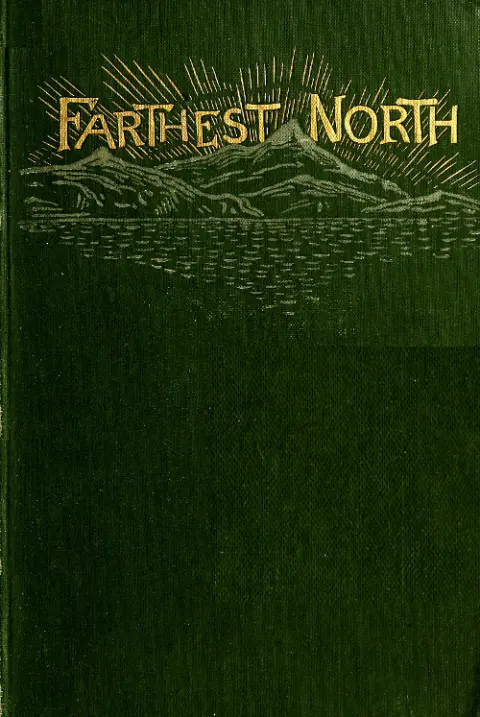
THE CLASSIC COLLECTION · 1885
"Farthest North" by Charles Lanman is a historical account written in the late 19th century. The book chronicles the life and explorations of Lieutenant James Booth Lockwood, particularly his role in the Greely Arctic Expedition, which sought to advance our understanding of the polar regions. It aims to provide insight into Lockwood's character and experiences as he navigated both the challenges of Arctic exploration and his military life. At the start of the narrative, the author presents Lockwood not only as a dedicated explorer but also as a man of notable character, detailing his early life, military training, and the formative experiences that shaped his adventurous spirit. The opening chapters lay a foundation for his expedition, addressing the circumstances surrounding the Greely mission and highlighting Lockwood's contributions and observations, which are meant to correct misconceptions about the expedition's achievements and challenges. His journey takes him from his childhood through military campaigns to the brink of his ultimate northward exploration, setting the stage for the dramatic events to unfold in the harsher environments of the Arctic.
Introduction adapted from the source catalogue; source summaries may be automatically generated.
Free to read · English · 85,594 words · No account needed
MAKE TIME FOR A GOOD BOOK
On by default. Untick to stop anonymous reading totals. Each page counts after 10 seconds in view. How this works.
Anonymous counting is on unless you have switched it off.
While thus occupied, the dogs took advantage of their absence to visit the cache and eat up part of a sack of hard bread and half a dozen shot-gun cartridges—the shot and the brass being rather indigestible. They left camp after midnight and a beautiful morning followed, calm and clear, the sun unpleasantly warm; and no wonder, since Lockwood was wearing three heavy flannel shirts, a chamois-skin vest, a vest of two thicknesses of blanket (double all round), a knitted guernsey and canvas frock, besides two or three pairs of drawers, etc.
They tramped along on snow-shoes, and a couple of hours after starting, Brainard, who was on the hill-side to the left, discovered, with his one unbandaged eye, relics of Beaumont—an old Enfield rifle, a pole shod with iron, a cross-piece of a sledge, three or four articles of underwear, some cartridges, sewing-thread and thimble, and the remains of a shoe with a wooden sole about an inch thick. Other articles mentioned by Lieutenant Beaumont in his journal were not to be found. They may have been carried off by animals or buried in the snow near by. The articles found were in a little bare mound near the ice-foot. “Poor Beaumont! how badly he must have felt when he passed along there with most of his party down with scurvy, dragging their heavy sledge and heavier equipments!” Farther on, Lockwood shot a ptarmigan on top of a large floe-berg thirty feet high, and, by taking advantage of a snow-drift and doing some “boosting,” they secured the bird. They stopped at cache No. 3 (near Frankfield Bay) and took out what the supporting party had left there. Gave the dogs the lime-juice pemmican and ground beans, but it was only by seeming to favor first one dog and then another that they were induced to eat it, thus illustrating the advantage of their “dog-in-the-manger” spirit. Went into camp on the east shore of Hand Bay. Their buffalo sleeping-bag now began to feel too warm, but was always delightfully soft and dry. Eyes painful. Advanced twelve miles in ten hours. After crossing Hand Bay they made a short stop at Cape Stanton. The Grinnell coast now became very distinct, and seemed home-like. They could see Cape Joseph Henry, or what they took for that headland. The floes off shore, consisting of alternate floes crossed by ridges of hummocks, made very laborious traveling. On reaching the cache near Stanton Gorge, they got the rations left there. The traveling continued very difficult and tiresome. On reaching the Black Horn Cliffs, they decided, as their old tracks were entirely obliterated, to follow along under the cliffs, instead of taking the wide détour they had made going out. They got along pretty well for a while, and then reached a mass of hummocks and rubble-ice. There they found a relic of the past—a towel which the men had used to wipe the dishes, and had lost or abandoned. By dint of hard work they got through this bad ice, crossed the smooth, level floe adjoining, and then came to the next patch of rubble-ice. After proceeding through this some distance, the sledge needing relashing, Lockwood went on alone with the axe, making a road as he went. Found the site of their old camp on the shore, but, as the snow slope there had become impassable, he kept along the coast on the floe and finally found a landing several miles to the west. Sledge and all got here at eight o’clock, and they continued on over the snow slopes, passing the remains of the “Nares” sledge and reaching Drift Point, where they went into camp alongside a big floe-berg, with lots of icicles upon it waiting for them, having advanced twenty-two and a half miles in ten hours. Finding strong winds and snow from the west, they delayed starting till almost midnight. The ice-foot along this low, sloping shore being excellent, they made good time, in an hour reaching the place of their first camp on this coast. The melting of the floe-bergs and the fall of the snow had so changed the general aspect, that the place was hardly recognizable. At 2 A. M. they came opposite the break in the cliff where they had entered on the coast in April. They soon made out the dark object seen previously from this point to be a cairn, and discovered a small bay which they knew must be Repulse Harbor. Crossing this bay, they reached the cairn at three o’clock. It was a tremendous affair, and the tin can inside was full of papers by Beaumont, Dr. Coppinger, and others. As a cold wind was blowing, Lockwood made a short-hand copy of the documents and left the originals.
Your reading position is saved on this browser. Take it to another device with a library code. Reading pages adapt to text, rather than matching a printed edition.
Charles Lanman
Charles Lanman
Charles Lanman
Charles Lanman
BEHIND THE BOOK
This eBook is for the use of anyone anywhere in the United States and most other parts of the world at no cost and with almost no restrictions whatsoever. You may copy it, give it away or re-use it under the terms of the Project Gutenberg License included with this eBook or online at www.gutenberg.org. If you are not located in the United States, you will have to check the laws of the country where you are located before using this eBook. Read the source licence.
The original source file, including credits and licence, is retained by this library. Request an original-format copy at no charge. Please include the book title and Project Gutenberg identifier #54019.
KEEP YOUR CURIOSITY GOING
Cécile Tormay

Moritz Busch
John L. Ransom
Frances Wright
Cécile Tormay

Mabel Potter Daggett