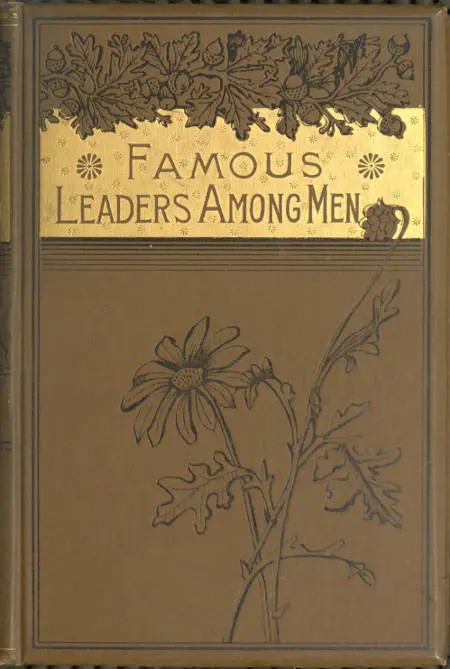
Famous leaders among men
Sarah Knowles Bolton
THE CLASSIC COLLECTION · 1889
"Famous Men of Science" by Sarah Knowles Bolton is a historical account written in the late 19th century. The book highlights the lives and achievements of notable figures in science, detailing their struggles, triumphs, and contributions to the field. Through biographical sketches, Bolton aims to inspire readers with stories of perseverance and intellectual passion. At the start of the text, the author establishes the objective of the book by summarizing its intent to showcase how young men, despite facing obstacles such as poverty and illness, have made significant impacts on science. The opening focuses on Galileo Galilei, introducing his early life, education, and the challenges he faced on his journey toward becoming a renowned scientist. Themes of determination and the importance of following one’s true calling are evident in Galileo’s narrative, illustrating how foundational experiences shaped the path for many great scientists.
Introduction adapted from the source catalogue; source summaries may be automatically generated.
Free to read · English · 106,156 words · No account needed
MAKE TIME FOR A GOOD BOOK
On by default. Untick to stop anonymous reading totals. Each page counts after 10 seconds in view. How this works.
Anonymous counting is on unless you have switched it off.
He was buried in Pere la Chaise, by his own request, under the tombstone which covered Clementine, and whose death had virtually caused his own. His coffin was borne by the pupils of the different colleges in which he had taught, thousands following it to the cemetery. His library of nineteen thousand volumes was purchased by the government for the Jardin des Plantes. There was no child left to bear his titles.
Not only do the books of such a man live; his whole life, with its untiring energy, its promptness, its order, its unfaltering purpose, its high aims, as well as its tenderness and nobility of heart, is a constant inspiration.
In Hanover, Germany, in the year 1732, Isaac Herschel and a plain, industrious girl, Anna Ilse Moritzen, began their home life together. The young man did not like the calling of his father, the cultivating of the royal gardens, and learned to play the oboe in the royal band.
He became skilled in music, and, as, one after another, ten children were born into the little home, he taught them to play on the violin and oboe, and such other branches of knowledge as he possessed. After a time his health became impaired with exposure in the Seven Years' War, and then he earned his living by lessons in music, given to scholars at his home.
The children attended the garrison school in Hanover, and learned the ordinary rudiments, besides French and German. Though the father sometimes copied music half the night to eke out his scanty living, he spared no pains to teach them all he could of his favorite art.
The fourth son, William, born November 15, 1738, not only learned French and English rapidly, but studied Latin and arithmetic with the teacher, after hours. He became passionately fond of books, reading their own little store with avidity. The mother, who could not even write, viewed with alarm this intellectual development, feeling that her children, if they became learned, would go away from home--possibly from Germany. Poor, ignorant heart! She cooked and sewed, and prevented her daughters from learning French or drawing; but her weak hand could not stay the power of a mind like William's, bent on acquiring knowledge.
Caroline, the eighth child, born in 1750, twelve years younger than William, looked upon this brother as a marvel; and shy, plain, and silent herself, watched the boy with pride, who, perchance, would be somebody by and by. Alexander, a little older than Caroline, was skilled on the violoncello, and both the boys became members of the Hanover foot guards.
Your reading position is saved on this browser. Take it to another device with a library code. Reading pages adapt to text, rather than matching a printed edition.
Sarah Knowles Bolton
Sarah Knowles Bolton
Sarah Knowles Bolton
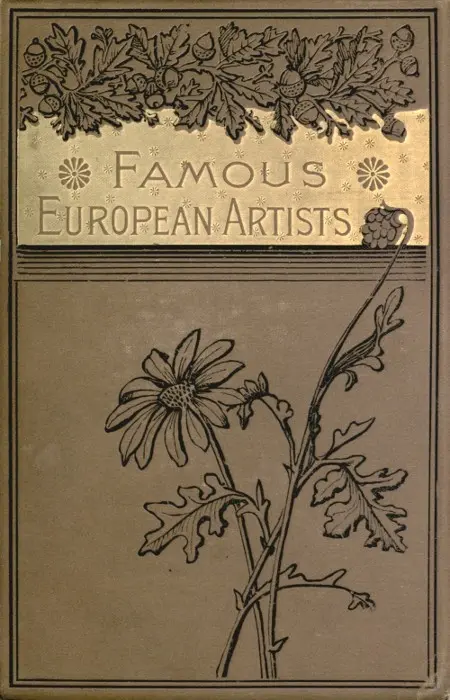
Sarah Knowles Bolton
BEHIND THE BOOK
This eBook is for the use of anyone anywhere in the United States and most other parts of the world at no cost and with almost no restrictions whatsoever. You may copy it, give it away or re-use it under the terms of the Project Gutenberg License included with this eBook or online at www.gutenberg.org. If you are not located in the United States, you will have to check the laws of the country where you are located before using this eBook. Read the source licence.
The original source file, including credits and licence, is retained by this library. Request an original-format copy at no charge. Please include the book title and Project Gutenberg identifier #35489.
KEEP YOUR CURIOSITY GOING
John L. Ransom

Herman W. Mudgett

Harriet Monroe

John Muir

Asa Gray
Asa Gray