
Some Artists at the Fair
Francis Davis Millet & W. Hamilton (William Hamilton) Gibson & Will H. (Will Hicok) Low & John Ames Mitchell & Francis Hopkinson Smith
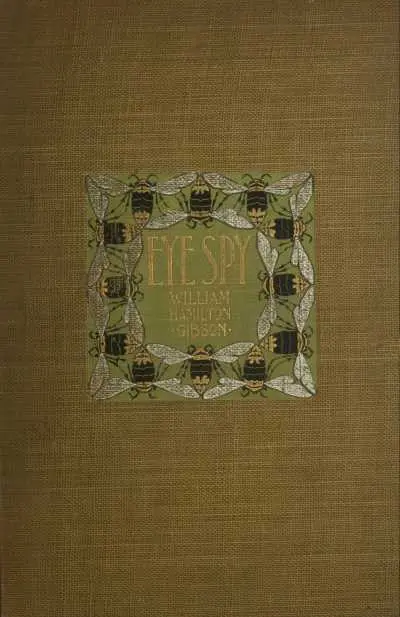
THE CLASSIC COLLECTION · 1897
"Eye Spy: Afield with Nature Among Flowers and Animate Things" by W. Hamilton Gibson is a naturalist's exploration of the intricacies of nature, written in the late 19th century. This work blends personal reflection, ecological observation, and artistic illustration, focusing on various aspects of the natural world, particularly insects and plants. Gibson’s unique perspective showcases the beauty and complexity of everyday flora and fauna, inviting readers to look closer at the seemingly mundane." "The opening of the work sets a reflective tone as Gibson reminisces about his childhood curiosity and passion for nature, highlighting key moments that shaped his life as a naturalist and artist. He introduces readers to his early experiences of discovering the metamorphosis of insects and expresses how these formative moments fueled his lifelong fascination with the natural world. Through the depiction of early encounters with various creatures and observations of their behaviors, the text establishes a foundation for exploring broader natural themes that unfold in subsequent sections, setting the stage for an engaging journey through the wonders of field observation."
Introduction adapted from the source catalogue; source summaries may be automatically generated.
Free to read · English · 48,438 words · No account needed
MAKE TIME FOR A GOOD BOOK
On by default. Untick to stop anonymous reading totals. Each page counts after 10 seconds in view. How this works.
Anonymous counting is on unless you have switched it off.
But aside from his historical fame, he will well repay our careful study, and serve to while away a pleasant hour in the observance of his queer habits. He is now no longer the awe-inspiring sacred scarab, but Mr. Tumble-bug, or, rather, "Mr. and Mrs. Tumble-bug," for a tumble-bug always pictured in the ancient hieroglyph is rarely to be seen in its natural haunts. Mr. and Mrs. Tumble-bug are devoted and inseparable, and, as a rule, vie with each other in the solicitude for that precious rolling ball with which the insects are always associated. From June to autumn we may find our tumble-bugs. There are a number of species included in the group of Scarabaeus to which they belong. Two species are particularly familiar, one of a lustrous bronzy hue, with a very rounded back, usually found at work on the country highway in the track of the horse, and the other, the true typical tumble-bug, a flat-backed, jet-black lustrous species which we naturally associate with the barn-yard and cow-pasture. The latter may be taken as an illustrative example of his class, and his ways are identical with those of his ancient sacred congener and present inhabitant of Egypt.
When we first see them they are generally manipulating the ball--a small mass of manure in which an egg has been laid, and which by rolling in the dust has now become round and firmly incrusted and smooth. Let us follow the couple in their apparently aimless though no less expeditious and vehement labors. They have now brought their globular charge through the grassy stubble, and have reached a clear spot of earth with scattered weeds. Of course we all know from the books that their intention is to find a suitable spot in which to bury this ball, and such being the case, with what astonishing stupidity do they urge on that labor! Here certainly is just the right spot for you, Mrs. Tumble-bug! Stop rolling and dig! But no, she will not listen to reason. She mounts the top of the ball, and, creeping far out upon it, pulls it over forward with her back feet, while Mr. Tumble-bug helps her in a most singular fashion. Does he stand up on his hind legs on the opposite side, and push with his powerful front feet? Oh no; he stands on his head, and pushes with his hind legs. As he pushes, and as the ball rolls merrily on, Mrs. Tumble-bug is continually rolled around with it, and must needs climb backward at a lively rate to keep her place. A foot or two is thus travelled without special incident, when a slight trouble occurs. The ball has struck an obstacle which neither Mrs. Tumble-bug's pull nor Mr. Tumble-bug's push can overcome. Then follow an apparent council and interchange of Tumble-bug talk, until at length both put their shovel-shaped heads together beneath the sphere, and over it goes among the weeds. It is soon out again upon the open. Now, Mrs. Tumble-bug, everything is plain-sailing for you; here is a long down grade over the smooth clean dirt! Why, the ball would roll down itself if you would only let it; but, no, she will not let it. She pauses, and the ball rests, and both beetles now creep about, shovelling up the dirt here and there with their very queer little flat heads. Ah, perhaps they are going to start that hole which all the books tell us about. But no; the place is evidently not quite satisfactory, both of them seem so to conclude, like two souls with but a single thought. Mrs. T. is up on the bridge in a jiffy, and Mr. T. takes his place at the helm; and now what an easy time they will have of it down this little slope; but, no, again; tumble-bugs don't seem to care for an easy time. A hundred times on their travels will they pass the very best possible spot for that burrow, a hundred times will they persist in guiding that little world of theirs over an obstruction, when a clear path lies an inch to the right or left of them. And here, when their labors might be so easily lightened by a downward grade, what do they do? they deliberately turn the ball about and hustle it along up hill, and that, too, over dirt that is not half as promising. Tip they go! Mrs. T. now seems to have the best of it, and I sometimes have my suspicions whether she is not playing a prank on that unsuspecting spouse working so hard at her back, for he now has not only the ball, but Mrs. T. as well, to shove along, for the most that she can do is to throw the weight of her body forward, which in a steep up grade amounts to nothing as a help.
Your reading position is saved on this browser. Take it to another device with a library code. Reading pages adapt to text, rather than matching a printed edition.
Francis Davis Millet & W. Hamilton (William Hamilton) Gibson & Will H. (Will Hicok) Low & John Ames Mitchell & Francis Hopkinson Smith
W. Hamilton (William Hamilton) Gibson
W. Hamilton (William Hamilton) Gibson
BEHIND THE BOOK
This eBook is for the use of anyone anywhere in the United States and most other parts of the world at no cost and with almost no restrictions whatsoever. You may copy it, give it away or re-use it under the terms of the Project Gutenberg License included with this eBook or online at www.gutenberg.org. If you are not located in the United States, you will have to check the laws of the country where you are located before using this eBook. Read the source licence.
The original source file, including credits and licence, is retained by this library. Request an original-format copy at no charge. Please include the book title and Project Gutenberg identifier #38954.
KEEP YOUR CURIOSITY GOING
Cécile Tormay

Moritz Busch
John L. Ransom
Frances Wright
Cécile Tormay

Mabel Potter Daggett