
Some Artists at the Fair
Francis Davis Millet & W. Hamilton (William Hamilton) Gibson & Will H. (Will Hicok) Low & John Ames Mitchell & Francis Hopkinson Smith
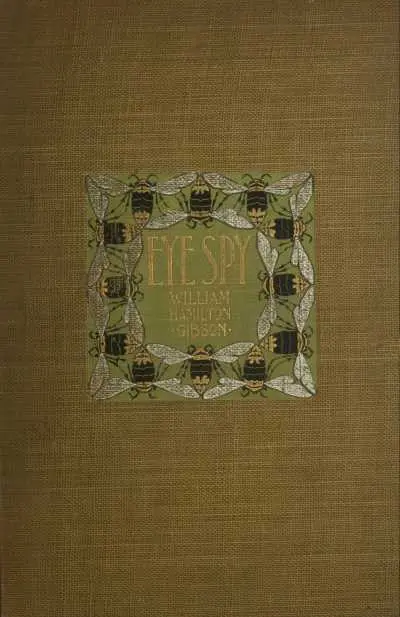
THE CLASSIC COLLECTION · 1897
"Eye Spy: Afield with Nature Among Flowers and Animate Things" by W. Hamilton Gibson is a naturalist's exploration of the intricacies of nature, written in the late 19th century. This work blends personal reflection, ecological observation, and artistic illustration, focusing on various aspects of the natural world, particularly insects and plants. Gibson’s unique perspective showcases the beauty and complexity of everyday flora and fauna, inviting readers to look closer at the seemingly mundane." "The opening of the work sets a reflective tone as Gibson reminisces about his childhood curiosity and passion for nature, highlighting key moments that shaped his life as a naturalist and artist. He introduces readers to his early experiences of discovering the metamorphosis of insects and expresses how these formative moments fueled his lifelong fascination with the natural world. Through the depiction of early encounters with various creatures and observations of their behaviors, the text establishes a foundation for exploring broader natural themes that unfold in subsequent sections, setting the stage for an engaging journey through the wonders of field observation."
Introduction adapted from the source catalogue; source summaries may be automatically generated.
Free to read · English · 48,438 words · No account needed
MAKE TIME FOR A GOOD BOOK
On by default. Untick to stop anonymous reading totals. Each page counts after 10 seconds in view. How this works.
Anonymous counting is on unless you have switched it off.
Andrena bee, 222.
Andromeda-bell, its welcome to the bee, 221, 222.
Aniline bath, 47.
Aphides, 125, 126;
pest of the rose-garden; plants and trees, 126;
sucking the sap, 127;
disappearance of a swarm, 128;
all females; end of season males appear; wonderful multiplication
of, 233, 236.
Aphis lion (Hemorobida), 128, 129.
Aphrophora, "spume-bearer," 89.
Apple-trees bearing pumpkins and squashes, 192.
Aquilegia canadensis, columbine, 46.
Arachne, 106.
Archippus. See Butterflies.
Argiope riparia, ballooning or flying spiders, 120.
Artists as interpreters of the beauty of the commonplace, 26.
Asters, 110.
Attacus prometheus, 75.
Aurelius, 161.
Balloon, the true, 118.
Ballooning spiders (Argiope riparia), annual picnic of, 114;
shooting of webs, 115;
sailing out of sight; sending out broad bands from their
spinnerets, 117;
skilful handling, 118;
making the balloon; the ascension; manner of alighting, 119.
Baltimore oriole, 172.
Banquet of beetles, 134.
Barberry blossoms, shrinking hearts; strange manners, 224;
an unsuspecting agent, 227.
Bedegnar, sponge-gall, 43.
Bees:--
bumble, 6, 91;
honey, 7;
yellow-jacket, 91;
Andrena, 222.
Beetles:--
floundering, 1;
tiger (Cicindelidae), oil, 2;
snapping (Elater), 20;
perfumed (Osmoderma scabei), 133;
blue oil, 239.
Bellworts, 44.
Bigelow, Hosea, quoted, 224.
Billings, Josh, quoted, 92, 124.
Birds'-nests, materials of:--
milkweed bark, toad-skins, and snake-skins, 171, 172;
twine and horse-hair, caterpillar-skins, 172;
wool, dandelion seeds, 173;
gray lichens and seeds, 177.
Black-paper hornet, his bad reputation, 94;
a tempting target; results of an attack on his house, 96;
making themselves promiscuous; the stoical bachelor, 97;
his discomfiture, 98;
antics explained; his hiding-place revealed, 100;
favorite hunting-ground, 101;
occasional big game; life of; manner of laying eggs; several
broods in a season, 102;
number of tiers in a nest; winter the best time to examine nests,
103.
Black snake, 85.
Blossom etiquette, 221, 222.
Blue carnation, 46.
Blue dahlia, 45.
Blue oil beetle, 239.
Blue pansies, 46.
Blue rose, 45, 46.
Blue tulip, 45.
Bluets, Houstonia, 24, 208, 209.
Boletus, 142.
Bridge-building spiders, 104.
Brooklyn Bridge, 104;
"carrier" or "traveller" should have been called "spider," 105;
Engineer Farrington crossing, 110.
Brown screech-owl, 151.
Browning, Robert, quoted, 26.
"Bull's-eye" caterpillar, 156.
Bumble-bee, 6, 91.
Butterflies asleep at night, 168.
Butterflies:--
Idalia (Argynnis idalia), Archippus (Danais archippus), yellow
swallow-tails (Papilio turnus), 131;
Red Admiral (Vanessa atalanta), 155, 158, 161;
"comma" (Vanessa comma), 156, 161, 170;
Atalanta (Cynthia atalanta), 158;
semicolon (Vanessa interrogationis), 161.
Canterbury bells, 42.
Cardanus quoted, 93.
Careless observation of nature, 185, 186.
Carnation, blue, 46.
Catbrier, 188.
Caterpillars:--
woolly-bear (Arctiadae), 148;
"bull's-eye" (Saturnia io), 156;
sphinx (Chaerocampa panipenatrix), 241.
Cecropia, 156.
Chinese pink, 73.
Chipmonk, 153.
Chrysalids, 161.
Chrysanthemum, 86, 127.
Cicada, 87, 246;
his manner of feeding; how he differs from the grasshopper; the
secret of his music, 250;
his last song; borne off by his captor, 251;
living food, 254;
suspended animation, 255.
Clintonia, 239.
Clothes moth (Tineidae), 170.
Clover (Trifolium), four-leaved, 215;
nine-leaved, found in groups, 216;
possibilities of cultivation, 217;
an exceptional find, 218, 219;
saying its prayers, 219;
lotus, 222.
Cobweb showers, 114;
blinding dogs interrupting sport, 114;
flakes and rags of, 115;
silken streamers, 116;
shower in Prospect Park, Brooklyn, 120;
on Brooklyn Bridge, 121.
Cocoons:--curious, 145;
solid to the core, 147;
ribs and vertebrae, 149;
secret of the hollow, 151;
what the pellets were, 152;
yielding wasps, 242.
Colors of flowers, laws governing colors and combinations, 44, 45; natural exception to; three primary colors in the hyacinth, Egyptian lotus; sky reflections destroying color, 45.
Your reading position is saved on this browser. Take it to another device with a library code. Reading pages adapt to text, rather than matching a printed edition.
Francis Davis Millet & W. Hamilton (William Hamilton) Gibson & Will H. (Will Hicok) Low & John Ames Mitchell & Francis Hopkinson Smith
W. Hamilton (William Hamilton) Gibson
W. Hamilton (William Hamilton) Gibson
BEHIND THE BOOK
This eBook is for the use of anyone anywhere in the United States and most other parts of the world at no cost and with almost no restrictions whatsoever. You may copy it, give it away or re-use it under the terms of the Project Gutenberg License included with this eBook or online at www.gutenberg.org. If you are not located in the United States, you will have to check the laws of the country where you are located before using this eBook. Read the source licence.
The original source file, including credits and licence, is retained by this library. Request an original-format copy at no charge. Please include the book title and Project Gutenberg identifier #38954.
KEEP YOUR CURIOSITY GOING
Cécile Tormay

Moritz Busch
John L. Ransom
Frances Wright
Cécile Tormay

Mabel Potter Daggett