
Some Artists at the Fair
Francis Davis Millet & W. Hamilton (William Hamilton) Gibson & Will H. (Will Hicok) Low & John Ames Mitchell & Francis Hopkinson Smith
THE CLASSIC COLLECTION · 1897
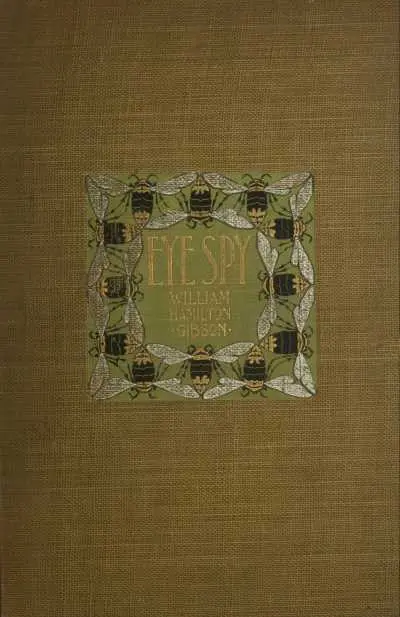
"Eye Spy: Afield with Nature Among Flowers and Animate Things" by W. Hamilton Gibson is a naturalist's exploration of the intricacies of nature, written in the late 19th century. This work blends personal reflection, ecological observation, and artistic illustration, focusing on various aspects of the natural world, particularly insects and plants. Gibson’s unique perspective showcases the beauty and complexity of everyday flora and fauna, inviting readers to look closer at the seemingly mundane." "The opening of the work sets a reflective tone as Gibson reminisces about his childhood curiosity and passion for nature, highlighting key moments that shaped his life as a naturalist and artist. He introduces readers to his early experiences of discovering the metamorphosis of insects and expresses how these formative moments fueled his lifelong fascination with the natural world. Through the depiction of early encounters with various creatures and observations of their behaviors, the text establishes a foundation for exploring broader natural themes that unfold in subsequent sections, setting the stage for an engaging journey through the wonders of field observation."
Introduction adapted from the source catalogue; source summaries may be automatically generated.
Free to read · English · 48,438 words · No account needed
MAKE TIME FOR A GOOD BOOK
On by default. Untick to stop anonymous reading totals. Each page counts after 10 seconds in view. How this works.
Anonymous counting is on unless you have switched it off.
The contrast, to the observant ear, between the meadow in a hot July noon and the same meadow on a following cool and overcast day would be remarkable could we but compare the two conditions during the same moment of time. Even a cloud shadow passing over a "quiet" meadow will often suddenly reveal to us how noisy it really was but a moment before. But the harsh timbrel of the cicada is not a part of this "quiet" music. He is no retiring fiddler hiding somewhere among the grass-blades. His note rings out high above the meadow chorus, and he always gets the credit as the chief soloist, and we say, "Hark! there's a 'locust,'" when we ought to know better. Let us try and straighten out this confusion of terms, and let the younger generation at least begin the reform that shall eventually set matters right and correct this wide-spread popular error.
Our cicada belongs to quite another family of insects. Instead of jaws for biting, as our fiddling "grasshopper," the cicada has only a long "beak for sucking," and this feature alone connects him with the tribe of "bugs." Moreover, his methods of music-making are very different from those of the "grasshopper" tribe. It is the male only that makes the music, and his instrument is a drum. He carries two of these inclosed within his body, the opening of each being covered beneath by a broad plate, which is easily seen on the under surface of the body. Deep within lies the "drum," and the hard and hollow body of the insect acts as a resonator or sounding-board. This drummer does not use his legs as drum-sticks, as might be supposed, his drum being vibrated by twitching muscles and cords.
The method by which the sound is produced may be illustrated by a simple experiment. Take a small piece of stiff, sized writing-paper or smooth Manilla paper, and by pressure with some rounded blunt instrument produce a slight hollow or blister upon its surface. Upon pressure from either side this blister will be found to "snap," and could we but repeat the operation with great rapidity, a continuous sound would result. The toy called the "telegraph ticker" is made on this principle, the blister being made on a strip of steel, and the click produced by pressure upon its top, the elasticity of the metal bringing it back to its original position of rest, and each motion accompanied by a snap as the blister changes sides. Indeed, we need look no further than the bottom of almost any well-ordered tin pan for a complete illustration of this principle. So our cicada is a drummer, and his favorite tune is a "roll-call," the beats following each other with such rapidity as to form a tone. All through the summer we hear his strain. Even at this moment, as I write, a very long-winded specimen is tuning up in the tree just outside my studio window, and I am almost moved to give him some good advice. Have a care, my noisy minstrel. If it were I alone who were within ear-shot of your noise all might be well with you, but there are others near by to whom your music hath charms. Have a care! Only a moment ago I heard an ominous hum on my piazza, and upon investigation discovered a huge sand-hornet prying about the premises. He knows what he is looking for, and so ought you, if your parents have done their duty by you. Hereditary instinct at least ought to teach you that your drum should play second fiddle to that hornet's humming music. I remember once being the witness of the sad fate of an ancestor of yours who drummed not wisely but too well. He was monopolizing the neighborhood, just as you are doing now, when I noticed his principal effort was suddenly cut short in the middle in a most unusual manner. If he had been a singer I would have supposed some rival had clapped a hand over his mouth, so suddenly was the song abbreviated. In another moment there was a rustling among the leaves, as something fell from the tree in his immediate neighborhood. Down, down it dropped, its passage to the ground accompanied by one or two short, sharp, spasmodic tattoos on that same noisy drum. The object fell among some rocks, but before I could reach the spot the humming sound of a sand-hornet greeted my ears, and in a moment more the insect took flight directly across my path, and, what was more, he was not alone. Would you know who accompanied him? Look then on the picture on page 252, and have a care, my noisy friend, for the lineal descendant of that sand-hornet now hovers outside my doorway. He has a grudge against your tribe, and he is even now on your scent. Perhaps you may be interested to know what the hornet did with that rash ancestor of yours. Well, I will tell you, for your own good. Guided by his noisy demonstration, the hornet spied him on his twig, and in a second had pounced upon him and, like a highwayman, stabbed him to the heart with a poisoned javelin. This cut short his song, as you may well suppose, and he fell in the grasp of his assailant. In another moment the hornet got a fresh hold upon him, and though your ancestor, like yourself, was much bigger than the hornet, those powerful, buzzing wings made an easy burden of him for quite a distance across the meadow. Here our captor took a rest, and after tugging that helpless cicada some distance up a high fence-rail, started off on another flight, which was brought to an end in the grass at the foot of a tree. In a moment more the hornet was seen tugging its huge load up the trunk. When some ten feet in height a third flight was made, this time gradually settling down on the roof of a shed down-hill. Tugging his game to the edge of the shed roof, a fourth trip was made, and this landed the two in the neighborhood of a sand bank at the roadside in the valley below.
Your reading position is saved on this browser. Take it to another device with a library code. Reading pages adapt to text, rather than matching a printed edition.
Francis Davis Millet & W. Hamilton (William Hamilton) Gibson & Will H. (Will Hicok) Low & John Ames Mitchell & Francis Hopkinson Smith

W. Hamilton (William Hamilton) Gibson
W. Hamilton (William Hamilton) Gibson
BEHIND THE BOOK
This eBook is for the use of anyone anywhere in the United States and most other parts of the world at no cost and with almost no restrictions whatsoever. You may copy it, give it away or re-use it under the terms of the Project Gutenberg License included with this eBook or online at www.gutenberg.org. If you are not located in the United States, you will have to check the laws of the country where you are located before using this eBook. Read the source licence.
The original source file, including credits and licence, is retained by this library. Request an original-format copy at no charge. Please include the book title and Project Gutenberg identifier #38954.
KEEP YOUR CURIOSITY GOING
Cécile Tormay

Moritz Busch
John L. Ransom
Frances Wright
Cécile Tormay

Mabel Potter Daggett