
The Writing of News A Handbook with Chapters on Newspaper Correspondence and Copy Reading
Charles G. (Charles Griffith) Ross
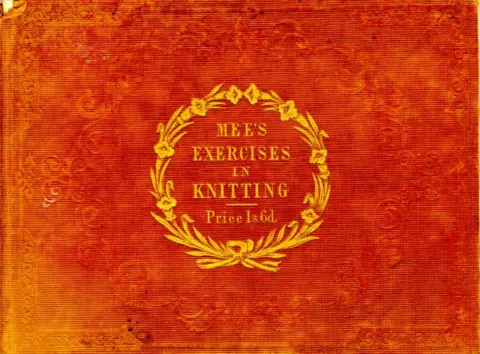
THE CLASSIC COLLECTION · 1847
"Exercises in Knitting" by Cornelia Mee is a practical guide on knitting techniques written in the mid-19th century. The work presents various knitting patterns along with detailed instructions on how to create items such as chair covers, bags, and garments. The primary focus of the book is to provide knitters with a range of projects that utilize different patterns and color schemes, enhancing both skill and creativity in knitting. The opening of the text outlines a structured approach to various knitting exercises, starting with a list of projects, including twelve chair covers featuring intricate designs like the German Pattern of Open Double Knitting and Nun's Pattern. Each section provides clear instructions on the number of stitches needed, types of wool, and the specific techniques for achieving the patterns. The beginning emphasizes the adaptability of these patterns for various uses, allowing knitters to apply their skills beyond simple projects and explore the art of decorative and functional knitting.
Introduction adapted from the source catalogue; source summaries may be automatically generated.
Free to read · English · 14,714 words · No account needed
MAKE TIME FOR A GOOD BOOK
On by default. Untick to stop anonymous reading totals. Each page counts after 10 seconds in view. How this works.
Anonymous counting is on unless you have switched it off.
Fourth row:--Seamed.
Fifth row:--Knit 2 together, knit 1, knit 2 together, make 1,
knit 1, make 1.
Sixth row:--Seamed.
Seventh row:--Knit 3 together, make 1, knit 3, make 1.
Eighth row:--Seamed. Repeat from first row. The plain rows between may be knit, instead of seamed, if wished.
Oriental Mat, or Hookah Carpet.
This may also be used as a carriage rug, or is very pretty as a
mat for the front of the piano.
It is composed of an open stripe of dark knitting, and a stripe of white knitting, with a pattern worked in cross stitch on it, and is quite new. Large wooden pins are required, and 12-threaded fleecy, dark claret for the open stripe, and white, with 4 shades of gold, green, lilac, and scarlet, form a good combination of colours for the close stripe, and are extremely rich in their effect. For the open stripe cast on 18 stitches.
First row:--Knit 2 stitches, bring the wool forward, pass the first of the 2 knit stitches over, knit 2, bring the wool forward, pass the first of the 2 knit stitches over, repeat.
Second row:--Seamed: repeat these 2 rows alternately till you have done the length you wish your mat to be.
For the close stripe cast on 20 stitches, and knit the same length as the open stripe. When finished, pin it on to a weighted cushion to work the pattern on it, as that stretches the knitting, and shews more plainly where you should put your needle in.
Then work the annexed pattern on it. First pattern in shades of gold; second, shades of green; third, shades of scarlet; fourth, shades of lilac. Repeat with the gold. Four stripes of the white, and 3 of the dark, will make a nice-sized mat for a drawing-room. If for a carriage rug, an additional stripe of each.
[Image: Pattern for Oriental mat.]
Very elegant Knitted Pelisse.
This may be made either smaller or larger by using finer or
coarser wool and pins.
It is usually done in 4-thread fleecy, with coloured centre, and
border to imitate ermine.
Cast on 270 stitches with white, bring the wool forward, slip a stitch the reversed way, knit 2 together, and repeat: every row is alike. Knit 24 rows with the white, then slip off 24 stitches at the beginning of the next row, and join the coloured wool, leave 24 stitches at the other end. These stitches are not required again till the centre is done, and are then knitted in white to form the border up the sides: this will leave 222, knit with these, with the coloured wool for 12 rows.
Your reading position is saved on this browser. Take it to another device with a library code. Reading pages adapt to text, rather than matching a printed edition.
BEHIND THE BOOK
This eBook is for the use of anyone anywhere in the United States and most other parts of the world at no cost and with almost no restrictions whatsoever. You may copy it, give it away or re-use it under the terms of the Project Gutenberg License included with this eBook or online at www.gutenberg.org. If you are not located in the United States, you will have to check the laws of the country where you are located before using this eBook. Read the source licence.
The original source file, including credits and licence, is retained by this library. Request an original-format copy at no charge. Please include the book title and Project Gutenberg identifier #21032.
KEEP YOUR CURIOSITY GOING
Charles G. (Charles Griffith) Ross
Hannah Webster Foster

Emily Lawless
Edwin Hamlin Carr

Charles De Lano Hine
Andrew Ure