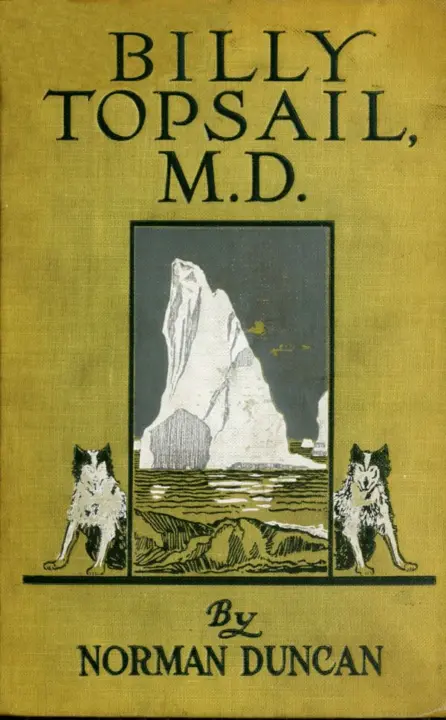
Billy Topsail, M.D.: A Tale of Adventure With Doctor Luke of the Labrador
Norman Duncan
THE CLASSIC COLLECTION · 1906
"Every Man for Himself" by Norman Duncan is a novel written in the early 20th century. The story is set against the rugged backdrop of Newfoundland and follows the life of Tumm, a fisherman who shares tales of his experiences and the eccentric characters around him, particularly focusing on Abraham Botch, a contemplative man from Jug Cove. The narrative explores themes of existence, identity, and the relentless struggle for survival in a harsh, indifferent world. At the start of the novel, we are introduced to Tumm and the crew aboard the trader "Good Samaritan" as they anchor in Poor Man's Harbor during a snowstorm. Tumm engages the crew with a philosophical tale about souls and purpose, leading to an encounter with Abraham Botch, who ponders the nature of existence. Through Tumm's storytelling, we learn of Botch's deep questioning about life, the soul, and the universe, which sets the stage for the exploration of profound themes intertwining with the everyday struggles of the fishermen. Tumm's observations and interactions with Botch highlight the tension between whimsical thoughts and harsh realities, framing the novel's exploration of humanity's quest for understanding in an unforgiving environment.
Introduction adapted from the source catalogue; source summaries may be automatically generated.
Free to read · English · 62,156 words · No account needed
MAKE TIME FOR A GOOD BOOK
On by default. Untick to stop anonymous reading totals. Each page counts after 10 seconds in view. How this works.
Anonymous counting is on unless you have switched it off.
"Tom-ee," Salim Awad repeated, smiling now, "I am--mus'--go. Goo'-bye,
Tom-ee!"
"No, no!"
In this hoarse, gasping protest Salim Awad perceived rare sweetness. He smiled again--delight, approval. "Ver' much 'bliged," he said, politely. Then he rolled off into the water....
One night in winter the wind, driving up from the Battery, whipped a gray, soggy snow past the door of Nageeb Fiani's pastry-shop in Washington Street. The shop was a cosey shelter from the weather; and in the outer room, now crowded with early idlers, they were preaching revolution and the shedding of blood--boastful voices, raised to the falsetto of shallow passion. Khalil Khayyat, knowing well that the throne of Abdul-Hamid would not tremble to the talk of Washington Street, sat unheeding in the little back room; and the coal on the narghile was glowing red, and the coffee was steaming on the round table, and a cloud of fragrant smoke was in the air. In the big, black book, lying open before the poet, were to be found, as always, the thoughts of Abo Elola Elmoarri.
Tanous, the newsboy--the son of Yusef, the father of Samara, by many called Abosamara--threw Kawkab Elhorriah on the cook's counter.
"News of death!" cried he, as he hurried importantly on. "Kawkab! News
of death!"
The words caught the ear of Khalil Khayyat. "News of death?" mused he. "It is a massacre in Armenia." He turned again, with a hopeless sigh, to the big, black book.
"News of death!" cried Nageeb Fiani, in the outer room. "What is this?"
The death of Salim Awad: being communicated, as the editor made known, by one who knew, and had so informed an important person at St. John's, who had despatched the news south from that far place to Washington Street.... And when Nageeb Fiani had learned the manner of the death of Salim Awad, he made haste to Khalil Khayyat, holding Kawkab Elhorriah open in his, hand.
"There is news of death, O Khalil!" said he.
"Ah," Khayyat answered, with his long finger marking the place in the big, black book, "there has been a massacre in Armenia. God will yet punish the murderer."
"No, Khalil."
Khayyat looked up in alarm. "The Turks have not shed blood in Beirut?"
"No, Khalil."
"Not so? Ah, then the mother of Shishim has been cast into prison because of the sedition uttered by her son in this place; and she has there died."
"No, Khalil."
"Nageeb," Khayyat demanded, quietly, "of whom is this sad news spoken?"
"The news is from the north."
Your reading position is saved on this browser. Take it to another device with a library code. Reading pages adapt to text, rather than matching a printed edition.
Norman Duncan
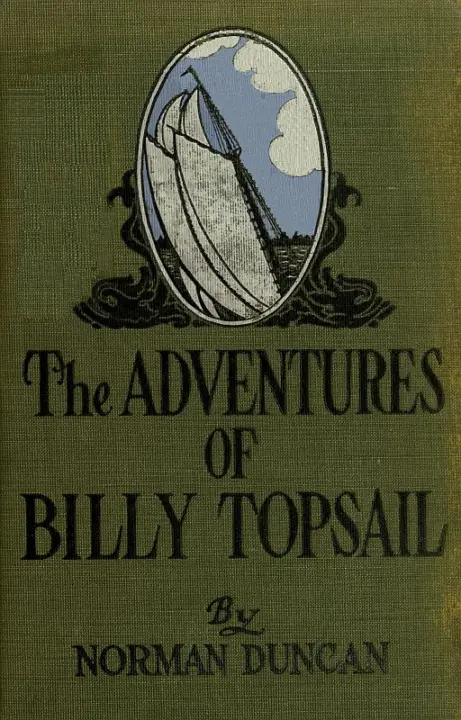
Norman Duncan
Norman Duncan
Norman Duncan
BEHIND THE BOOK
This eBook is for the use of anyone anywhere in the United States and most other parts of the world at no cost and with almost no restrictions whatsoever. You may copy it, give it away or re-use it under the terms of the Project Gutenberg License included with this eBook or online at www.gutenberg.org. If you are not located in the United States, you will have to check the laws of the country where you are located before using this eBook. Read the source licence.
The original source file, including credits and licence, is retained by this library. Request an original-format copy at no charge. Please include the book title and Project Gutenberg identifier #36998.
KEEP YOUR CURIOSITY GOING
Coulson Kernahan

Maurice Baring
Frances Wright
Cécile Tormay

Frederic Jesup Stimson

W. H. P. (William Henry Pope) Jarvis