THE CLASSIC COLLECTION✦An outlaw’s diary: the CommuneCLASSIC FREE BOOKS
An outlaw’s diary: the Commune
Cécile Tormay
THE CLASSIC COLLECTION · 1915
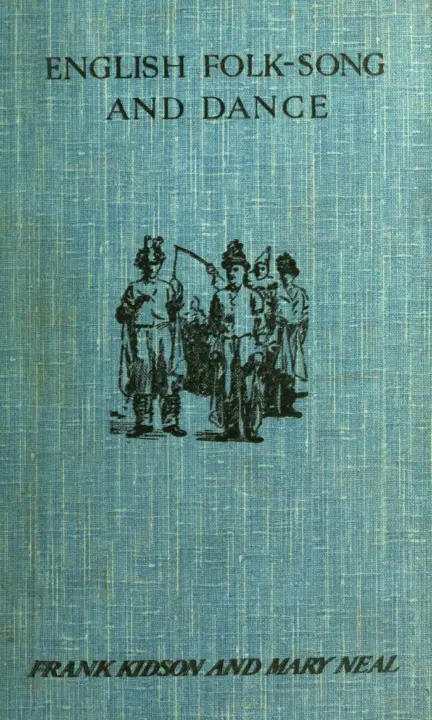
"English Folk-Song and Dance" by Frank Kidson and Mary Neal is a scholarly examination of the traditions surrounding English folk songs and dances, written in the early 20th century. The text delves into the cultural significance, definitions, origins, and collections of folk songs and dances, exploring how these art forms have been transmitted and transformed over time. Both authors aim to elevate folk music's status and highlight its integral role in the fabric of English cultural heritage. At the start of the work, the authors introduce the concept of folk song through historical perspectives, notably invoking Joseph Addison’s admiration for such music as an expression of communal sentiment and artistry. They argue for folk songs as vital cultural artifacts, reflecting the values and experiences of the people who create and perpetuate them. The opening chapters touch on how folk songs arise from the needs and lives of the folk, their communal nature, and the changes they undergo as they are passed down through generations, setting the stage for a deeper exploration of the various types of folk music and their place in English society.
Introduction adapted from the source catalogue; source summaries may be automatically generated.
Free to read · English · 35,996 words · No account needed
MAKE TIME FOR A GOOD BOOK
On by default. Untick to stop anonymous reading totals. Each page counts after 10 seconds in view. How this works.
Anonymous counting is on unless you have switched it off.
Another point that should be emphasised is that there should be as much interest as possible aroused in the collecting of these dances, and as much publicity as possible about the places where they are danced, the time of year when they can be seen, and the dancers who still hold the tradition. Probably the best dances are already in print; still, surprises of treasure still undiscovered may await us, and even if every known dance is already collected and published, nothing but good will come of this being done again and again by different people at different times. This will keep the traditional dances from becoming set and rigid, and will give a delightful air of spontaneity if at any folk festival, while all dance correctly, each dances a little differently from the others. Nothing is less to be desired than that any school or any individual should take possession of this national treasure; let all who are interested give of their best, whether as collectors, teachers, organisers, or writers, to the preservation of our National Folk-Dance.
In the space of the foregoing book it has been impossible to give more than a limited account of English Folk-Dance. Students are, therefore, referred to the following books—
“Dancing.” Badminton Library. By Mrs Lily Grove. 1895.
“Educational Value of Dancing and Pantomime.” By Dr Stanley Hall, Clarke University, Worcester, Mass.
“Illustrations of Shakespeare and of Ancient Manners.” 2 vols. London, 1807. By Francis Douce. 1807.
“The Witch of Edmonton.” By divers well estimed Poets, W. Rowley, T. Dekker, J. Ford, etc. 1658.
“History, Natural and Experimental, of Life and Death.”
Lord Bacon. 1638.
“Every Man out of His Humour.” Ben Jonson. Act II. Sc. i.
1600.
“The Gypsies Metamorphosed.” Gifford’s Edition, reprinted by Lt.-Col. Cunningham. 1875. Vol. II.
“Women Pleased.” J. Fletcher.
“Survey of London.” By Strype. 1791.
“Orchesographie. Et Traicte en Forme de Dialogue. Par lequel toutes personnes peuvent facilement apprendre et pratiquer l’honneste exercice des dances.” Par Thoinot-Arbeau (i.e. Jean Tabourot) demeurant-a-Langres. (22nd Nov., 1588.)
“The Vow Breaker, or Fair Maid of Clifton.”
William Sampson. 1636.
“Old Meg of Herefordshire for a Mayd Marian, and Hereford towne for a Morris-dance; or twelve Morris dancers in Herefordshire of 1200 years old.” 1609.
“Survey of London,” 1598, p. 72. Stowe.
“Antiquites Vulgares.” Bourne. 1725.
“Natural History of Cornwall.” Borlase. 1758.
“The British Bibliographer.” Vol. IV.
“Popular Antiquities.” Brand. The early and the later editions.
“English County Songs.” Collected by Lucy E. Broadwood and J. A. Fuller Maitland. 1893.
“Mysterium und Mimus im Rigveda.”
By Leopold Von Schroeder. 1908.
“Old English Sports, Pastimes, and Customs.” By Rev. P. H. Ditchfield. (Methuen, 1891.)
“Festivals, Games, and Amusements, Ancient and Modern.” By Horatio Smith. (Colburn & Bentley, 1831.)
Your reading position is saved on this browser. Take it to another device with a library code. Reading pages adapt to text, rather than matching a printed edition.
BEHIND THE BOOK
This eBook is for the use of anyone anywhere in the United States and most other parts of the world at no cost and with almost no restrictions whatsoever. You may copy it, give it away or re-use it under the terms of the Project Gutenberg License included with this eBook or online at www.gutenberg.org. If you are not located in the United States, you will have to check the laws of the country where you are located before using this eBook. Read the source licence.
The original source file, including credits and licence, is retained by this library. Request an original-format copy at no charge. Please include the book title and Project Gutenberg identifier #64536.
KEEP YOUR CURIOSITY GOING
Cécile Tormay

Moritz Busch
John L. Ransom
Frances Wright
Cécile Tormay

Mabel Potter Daggett