THE CLASSIC COLLECTION✦Uncooked foods & how to use themCLASSIC FREE BOOKS
Uncooked foods & how to use them
Eugene Christian & Mollie Griswold Christian
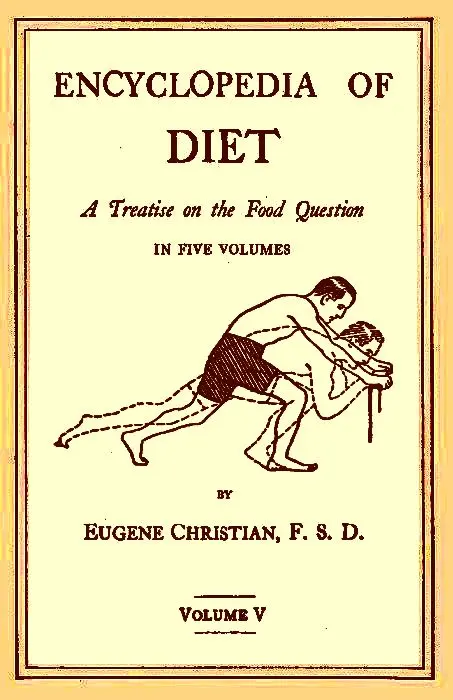
THE CLASSIC COLLECTION · 1914
"Encyclopedia of Diet: A Treatise on the Food Question, Vol. 5" by Eugene Christian is a scientific publication written in the early 20th century. This volume focuses on the principles of diet, specifically addressing how food choices can be tailored to various life stages and conditions, such as infancy, old age, and athleticism. It aims to provide clear guidance for establishing healthy eating practices that promote optimal digestion and assimilation of nutrients, which are vital for maintaining overall health." "At the start of this volume, the text lays the groundwork for understanding the importance of adapting one's diet to unique circumstances, emphasizing the need to consider factors such as age, physical activity, and environmental conditions. It introduces key concepts of selecting foods that balance nutritional needs while avoiding common dietary pitfalls. The author discusses how dietary habits influence health, particularly in relation to age categories ranging from infants to the elderly, making it clear that the work aims to empower readers with knowledge for better nutritional choices."
Introduction adapted from the source catalogue; source summaries may be automatically generated.
Free to read · English · 31,879 words · No account needed
MAKE TIME FOR A GOOD BOOK
On by default. Untick to stop anonymous reading totals. Each page counts after 10 seconds in view. How this works.
Anonymous counting is on unless you have switched it off.
FOOD preparation of, I 15 chemistry of, I 15, I 21 how to select, I 16 how to combine, I 16 how to proportion, I 16 how to determine quantity, I 16 science, I 19, I 20 importance of, I 4 classes of, I 105 analysis of, I 106 maltose in, I 118 predigested, I 141 manufacture of, I 141 predigested, comparison of, I 146 mastication of, I 150-183 digestibility of, comparative, I 159 fermentation of, I 164 decomposition of, I 173 determining quantity of, I 177 values, I 178 breakfast, I 182 tissue builder as, I 195 importance of protein in, I 209 standards of, I 217 endurance tests of, I 219 government standards of, I 220 dietary standards of, I 222 correct dietary standards of, I 225 quantity required, I 226 proportion of fat required in, I 228 fallacy of nitrogenous, I 229 influence of religion on, I 235 a factor in producing physical and mental power, I 240 unscientific to use meat as, I 241 rare meat unfit for, I 258 in contagious dis-eases, I 258 fish as a, I 260 superiority of fish as a, I 261 oysters as a, I 262 clams as a, I 262 shell-fish as a, I 262 poultry as a, I 262 superiority of poultry as a, I 263 comparative analyses of, I 264 feeding of poultry for, I 265 cheese as a, I 282 butter considered as a, I 283 wheat considered as a, II 290 grain as a remedial, II 298 white potato as a, II 321 relative value of salads as, II 321 relative value of water melon as a, II 323 relative value of musk melon as a, II 323 honey compared as a, II 330 life dependent upon, II 345 substitution of, II 439 staples, II 440 list of constipating, II 446 list of laxative, II 446 that reduces fat, II 498 in obesity, II 502 in locomotor ataxia, II 519 to eat in case of colds, II 524 to eat in catarrh, II 530 in hay fever, II 532 combinations, III 602 quantity an important factor, III 604 instinct a safe guide in selecting, III 605 tables, how to interpret, III 607 tables of digestive harmonies and disharmonies, III 609 fats, III 609 eggs, III 610 milk, III 611 nuts, III 612 grains, III 613 vegetables, III 614 acid fruits, III 615 sweet fruits, III 616 sugars, III 617 simple classification of, III 621 based on principal nutritive substances, III 624 purposes of different classes of, III 625 difference between digestibility and assimilability of, III 630 table showing comparative assimilability carbohydrate and water content of various classes of food, III 632 purpose of the vieno table in, III 634 vieno system of, III 645 values, measurement of, III 639 values, measurement of--(old system), III 642 amount of nitrogen in, incorrect standards, III 645 incorrect standards of measurement of, III 646 what constitutes a true, III 647 explanation of vieno system of food measurement, III 648 edible portion of, III 650 how to reduce foods to vienos, III 651 nitrogen factor in, III 651 direct method of calculating available nitrogen in, III 655, III 663 curative value of, III 668 for children (see menus for children), III 687 in cirrhosis of the liver, III 823 in consumption, IV 989-990 in pregnancy, IV 1033 selection, combination and proportion of, V 1149, V 1152 according to age, V 1149 according to time of year, V 1151 according to work or activity, V 1151 and energy, V 1310 relative importance of air, water and, V 1313
Your reading position is saved on this browser. Take it to another device with a library code. Reading pages adapt to text, rather than matching a printed edition.
Eugene Christian & Mollie Griswold Christian
Eugene Christian
Eugene Christian
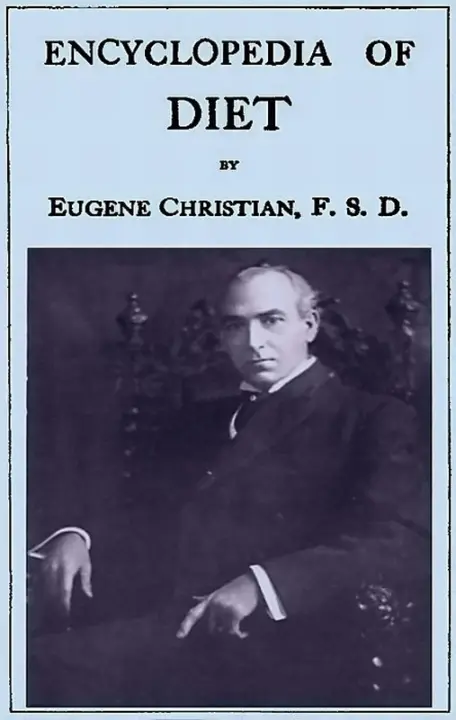
Eugene Christian
BEHIND THE BOOK
This eBook is for the use of anyone anywhere in the United States and most other parts of the world at no cost and with almost no restrictions whatsoever. You may copy it, give it away or re-use it under the terms of the Project Gutenberg License included with this eBook or online at www.gutenberg.org. If you are not located in the United States, you will have to check the laws of the country where you are located before using this eBook. Read the source licence.
The original source file, including credits and licence, is retained by this library. Request an original-format copy at no charge. Please include the book title and Project Gutenberg identifier #50660.
KEEP YOUR CURIOSITY GOING

Charles G. (Charles Griffith) Ross
Hannah Webster Foster

Emily Lawless
Edwin Hamlin Carr

Charles De Lano Hine
Andrew Ure