THE CLASSIC COLLECTION✦An outlaw’s diary: the CommuneCLASSIC FREE BOOKS
An outlaw’s diary: the Commune
Cécile Tormay
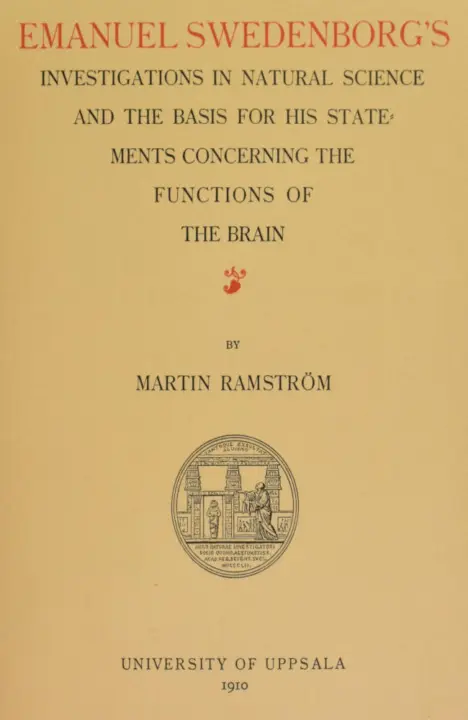
THE CLASSIC COLLECTION · 1910
"Emanuel Swedenborg's Investigations in Natural Science and the Basis for His Statements Concerning the Functions of the Brain" by Martin Ramström is a scientific publication written in the early 20th century. This work delves into the extensive contributions of Emanuel Swedenborg, exploring his investigations across various fields of natural science, particularly focusing on his groundbreaking insights into anatomy and the functions of the brain. The text highlights Swedenborg's multifaceted approach to science, emphasizing both his theoretical advancements and practical applications. The opening of this scholarly work sets the stage for a comprehensive examination of Swedenborg's scientific legacy, noting his growing interest in natural sciences beyond his well-known theological writings. It outlines the admiration for Swedenborg's wide-ranging investigations, mentioning various accolades from contemporaries in fields such as anatomy, geology, and cosmology. Furthermore, it introduces topics that will be unpacked in greater depth, such as Swedenborg's pioneering ideas on the connections between brain functions and sensory experiences, hinting at his theories on localization within the brain, which were ahead of his time.
Introduction adapted from the source catalogue; source summaries may be automatically generated.
Free to read · English · 18,098 words · No account needed
MAKE TIME FOR A GOOD BOOK
On by default. Untick to stop anonymous reading totals. Each page counts after 10 seconds in view. How this works.
Anonymous counting is on unless you have switched it off.
[34] Œc. R. A. II., 193: ›Haec minime effectum consequerentur, — — — nisi partes substantiae Corticalis inter se, atque in gradus et series sint divisae, in quales sunt modificationum causae: seu nisi series substantiarum corticalium sint uti series sensationum; nisi sphaerularum Corticis perfectissima sit varietas harmonica, ita ut nulla earum, praeter qua essentialia et attributa, alteri sit simillima.› For the same see also ›Regnum Animale›, VII., chap. XX; Œc. R. A. II., No. 307: ›Ex lustratione ipsius Cerebri apparet, quod substantiae corticales ita Sapienter sunt ordinatae, ut cuilibet sensationi externae ad amussim correspondeant; nam dictae substantiae, ut unitates glomatim in quendam numerum coalescunt, et hi glomuli tanquam novae unitates in congeries adhuc majores, et hae in maximam, quae est ipsum Cerebrum: singulae partitiones discriminatae sunt per rimas, sulcos et anfractus, et consertae per vasa et productiones meningeas, sic ut quasi sint numeri unitatum in analogiae formam redacti, prorsus ut decet sensorium commune, quod recepturum sit omnem speciem sensationis externae, distinctim suum visum, distinctim auditum, gustum et olfactum. Œc. R. A. II., chap. XX.
[35] Œc. R. A. II., No. 192, ›Ex anatome Cerebri in ipsius oculi luce est, quod radii visuales medio nervo optico influant in thalamos nervorum opticorum, et abinde per collectas e toto Cerebro, perque Fornicis basin transmissas, et thalamis superinstratas fibras, quaquaversum in corticem diffundantur.›
[36] Œc. R. A. II., No. 192. — — ›quod subtiles tactus membranae Olfactoriae cavitates labyrintheas narium investientis, et inde oriundae subtiles contremiscentiae aut modificationes per laminam cribrosam et processus mammillares in Corpora striata, aut in medullam totius centri ovalis enitentes non desinant nisi in peripheriam fibrarum, seu in ambitum corticalem;› See also II., 38-42, where the processus mamillaris is supposed to mediate a reflex action from the sense of smell upon the muscles of breathing.
[37] Œc. R. A. II., No. 101: — — ›totidem origines motus sunt, quot sphaerulae illius substantiae (corticis)›; II., 140, 153, etc.
[38] Œc. R. A. II., No. 146, ›Sic distinctissime quaevis (Sphaerula) suam fibrulam animat, et usque ad ejus finem in fibram corporis motricem influit›; see also II., 135, 147, 150, 156: ›Ex his ... fluit consequens de singulis Cerebellulis ..., quod vitiato uno aut pluribus ... contagium se non latius quam in appensas fibras et subjectos musculos immediate extendat.› And III., 59, 127, at the end, and 197.
[39] Œc. R. A. II., No. 147: ›Sphaerulae illum sortitae sunt in Cerebro ordinem et situm, ut singulae aut plures simul, aut omnes in communi queant systolen suam et diastolen perficere›. Œc. R. A. II., No. 156: ›Quare ita compaginatum est Cerebrum, ut totum queat alterna vertigine auferri, utque solum ejus medietas aut semiglobi Haemisphaerium; aut solum plures aut una circumgyratio; aut utmodo hujus glomus, minor congeries, aut pars.› The same in ›The Brain›, No. 104 c.
Your reading position is saved on this browser. Take it to another device with a library code. Reading pages adapt to text, rather than matching a printed edition.
BEHIND THE BOOK
This eBook is for the use of anyone anywhere in the United States and most other parts of the world at no cost and with almost no restrictions whatsoever. You may copy it, give it away or re-use it under the terms of the Project Gutenberg License included with this eBook or online at www.gutenberg.org. If you are not located in the United States, you will have to check the laws of the country where you are located before using this eBook. Read the source licence.
The original source file, including credits and licence, is retained by this library. Request an original-format copy at no charge. Please include the book title and Project Gutenberg identifier #63033.
KEEP YOUR CURIOSITY GOING
Cécile Tormay

Moritz Busch
John L. Ransom
Frances Wright
Cécile Tormay

Mabel Potter Daggett