THE CLASSIC COLLECTION✦An outlaw’s diary: the CommuneCLASSIC FREE BOOKS
An outlaw’s diary: the Commune
Cécile Tormay
THE CLASSIC COLLECTION · 1910
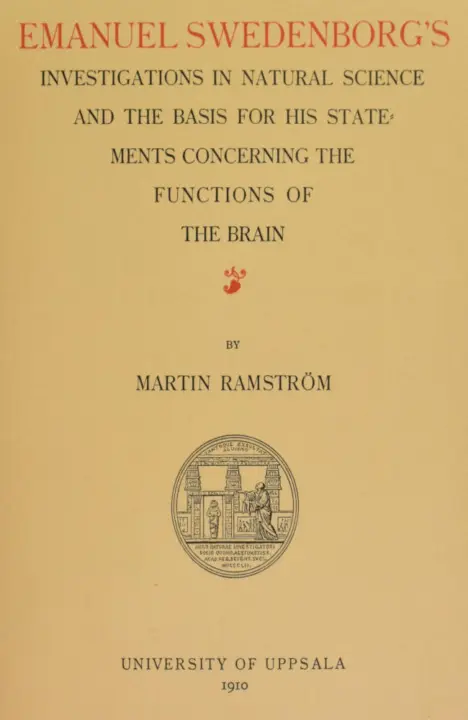
"Emanuel Swedenborg's Investigations in Natural Science and the Basis for His Statements Concerning the Functions of the Brain" by Martin Ramström is a scientific publication written in the early 20th century. This work delves into the extensive contributions of Emanuel Swedenborg, exploring his investigations across various fields of natural science, particularly focusing on his groundbreaking insights into anatomy and the functions of the brain. The text highlights Swedenborg's multifaceted approach to science, emphasizing both his theoretical advancements and practical applications. The opening of this scholarly work sets the stage for a comprehensive examination of Swedenborg's scientific legacy, noting his growing interest in natural sciences beyond his well-known theological writings. It outlines the admiration for Swedenborg's wide-ranging investigations, mentioning various accolades from contemporaries in fields such as anatomy, geology, and cosmology. Furthermore, it introduces topics that will be unpacked in greater depth, such as Swedenborg's pioneering ideas on the connections between brain functions and sensory experiences, hinting at his theories on localization within the brain, which were ahead of his time.
Introduction adapted from the source catalogue; source summaries may be automatically generated.
Free to read · English · 18,098 words · No account needed
MAKE TIME FOR A GOOD BOOK
On by default. Untick to stop anonymous reading totals. Each page counts after 10 seconds in view. How this works.
Anonymous counting is on unless you have switched it off.
[19] Dædalus Hyperboreus, Eller Några Nya Mathematiska och Physicaliska Försök och Anmerckningar: Som Wälborne Herr Assessor Polhammar och Andre Sinrike i Swerige Hafwa giordt Och Nu tijd efter annan til almen nytta lemna. Printed in Uppsala (and Skara), 1716-1718. Preface by EM. SVEDBERG, Stockholm, Dec. 23rd, 1715.
[20] ›Förslag til wart Mynts och Måls Indelning, så at Rekningen kan lettas och alt Bråk afskaffas›. Stockholm, Kongl. Boktryckeriet, 1719, 8 pp. 4:o. See ALFRED H. STROH and GRETA EKELÖF: Chronological list of the works of Emanuel Swedenborg, dedicated to the Swedenborg Society by the Royal Swedish Academy of Sciences, Uppsala and Stockholm, 1910, pp. 17 and 19.
[21] Eman. Swedbergs Assess. i Kongl. Bergz Coll. Försök At finna Östra och Westra Lengden igen igenom Månan, Som Til the Lärdas ompröfwande framstelles. Upsala, 1718. See ALFR. H. STROH and G. EKELÖF: Op. cit. p. 17. See also the letters of Eman. Swedberg ad Ericum Benzelium in the Swedenborg edition of the Acad. of Sciences, Vol. I.
[22] See E. LILJEDAHL: ›Swedenborg›, Stockholm, 1908; and HJ. HOLMQUIST: ›Från Swedenborgs ungdom och första stora verksamhetsperiod›, Bibelforskaren, 1909, No. 3.
[23] See also ALFR. H. STROH and G. EKELÖF: Chronological list of the works of E. Swedenborg, pp. 15 and 16. The titles of the three pamphlets are in English: ›On the way to improve commerce and manufactures›, ›Memorial on the institution of saltboileries in Sweden›, ›On the utility and necessity of instituting an observatory in Sweden›.
[24] ›Om Watnens Högd och Förra Werldens starcka Ebb och Flod, Bewjs utur Swergie›. (Stockholm, 1719; see also Acta Literaria Sueciæ Upsaliæ publ. 1720, pp. 5-11). Reprinted in the edition of Swedenborg’s Scientific works, publ. by the R. S. Acad. of Sciences, Vol. I., pp. 1-27.
[25] See concerning this the above-named work by HJ. HOLMQUIST, in which he says p. 223 concerning SWEDENBORG’s method of research: ›SWEDENBORG himself indicates the scientific method which he followed: first, the collecting of as many experiments and investigations as possible, afterwards the working over of these according to the laws of geometry, and lastly, speculation, hypotheses: ’as long as proofs are lacking, principles may not be accepted and hypotheses defended, as they then deserve better the name of fantasies than of principles’. ’Experientia, geometria et facultas ratiocinandi’, experience, geometry and reason, were the foundations of SWEDENBORG’s work both within the world of nature and that of spirit.›
[26] See ›Œconomia Regni Animalis›, Vol. I., No. 360, where Swedenborg mentions Parts IV., V., VI. of the Œc. R. A.
[27] Œc. R. A. Vol. III., ›De Fibra›, translated into English by Rev. Prof. ALFRED ACTON in ›New Philosophy›.
[28] See Œc. R. A. Vol. II., Nos. 71-75, 76-82, 112; III. No. 59, etc.
Your reading position is saved on this browser. Take it to another device with a library code. Reading pages adapt to text, rather than matching a printed edition.
BEHIND THE BOOK
This eBook is for the use of anyone anywhere in the United States and most other parts of the world at no cost and with almost no restrictions whatsoever. You may copy it, give it away or re-use it under the terms of the Project Gutenberg License included with this eBook or online at www.gutenberg.org. If you are not located in the United States, you will have to check the laws of the country where you are located before using this eBook. Read the source licence.
The original source file, including credits and licence, is retained by this library. Request an original-format copy at no charge. Please include the book title and Project Gutenberg identifier #63033.
KEEP YOUR CURIOSITY GOING
Cécile Tormay

Moritz Busch
John L. Ransom
Frances Wright
Cécile Tormay

Mabel Potter Daggett