
Elsie’s Friends at Woodburn
Martha Finley
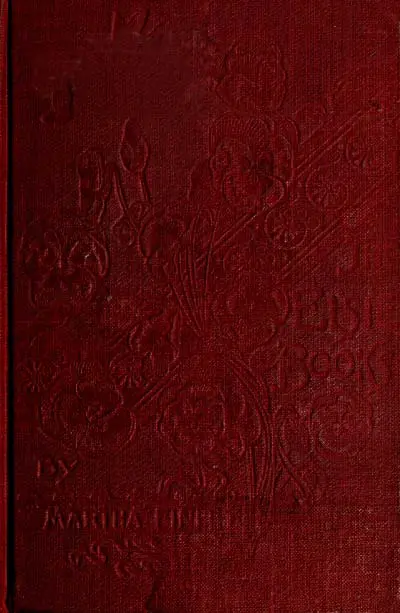
THE CLASSIC COLLECTION · 1880
"Elsie's Widowhood" by Martha Finley is a novel written in the late 19th century. The story follows Elsie Travilla, a character already well-acquainted with challenges as she navigates the profound loss of her husband, Mr. Travilla. The narrative delves into themes of mourning, the strength found in faith, and the importance of familial bonds through the trials of widowhood. At the start of the novel, Elsie's life is marked by sorrow as she grapples with the death of her beloved husband. The opening chapters depict her intimate moments with her family—especially her father and children—as they collectively confront their grief. Elsie is portrayed as deeply caring and devoted, striving to remain a pillar of support for her children. The narrative establishes a poignant exploration of her emotional struggles and the comfort she seeks both from her family and her faith in God during this difficult time of transition.
Introduction adapted from the source catalogue; source summaries may be automatically generated.
Free to read · English · 71,364 words · No account needed
MAKE TIME FOR A GOOD BOOK
On by default. Untick to stop anonymous reading totals. Each page counts after 10 seconds in view. How this works.
Anonymous counting is on unless you have switched it off.
"I see you have some idea of what is necessary in housekeeping, Charlie, and I'll give you a good recommendation to--the first nice girl who asks me if you'll make a good husband," Mary returned, looking at her cousin with laughing eyes.
"Am I to have an answer to my question, Miss Keith?" he inquired with
dignity.
"Yes, when I see fit to give it. The Marstons were, of course, served with butter, eggs, milk and cream, fish, flesh, and fowl, and Mr. Marston told me he had spoken to the persons thus serving him and his to do likewise by me and mine: does this explanation relieve your mind, Mr. Perrine?"
"Entirely. I am satisfied that we are not invited to share starving rations, which I am morally certain would give me the dyspepsia."
"I think we are very fortunate," Mary remarked, resuming her ordinary tone; "they have left us bedding, table and kitchen furniture, and we have nothing whatever to provide except our food, drink and clothing."
"I shall order a carriage for an early hour to-morrow morning," said Edward, "and drive over to see my mother. Vi will, of course, go along, and I wish, Cousin Mary, that you and Charlie would go too."
"Thank you very much," Mary said. "I should enjoy it extremely, but there are some few arrangements to be made here. The girls may come to-morrow evening, and I must be here and ready to receive them."
Then Charlie decided that he must stay and take care of Mary; so it was finally arranged that Edward and Violet should go alone, and the former attend to the ordering of the groceries, and anything else he could think of that was desirable and did not require to be fresh.
When the carriage containing Edward and Violet drove up to their
mother's door, nearly all the family and their guests were out upon the
beach.
There was instantly a glad shout from Harold, Herbert and Walter, "There they are!" and they, their sisters and grandfather started at once for the house, while Mrs. Dinsmore and Mrs. Travilla, who were within, hastened to the door.
Mrs. Conly and Virginia, slowly sauntering along within sight of the cottage, looked after those who were hurrying towards it, with smiles of contempt.
"Such a hugging and kissing as there will be now!" sneered Virginia; "they will make as much fuss as if they hadn't seen each other for five years."
"Yes," returned her mother, "and I don't wish to be a spectator of the sickening scene. Thank fortune I'm not of the overly affectionate kind."
Your reading position is saved on this browser. Take it to another device with a library code. Reading pages adapt to text, rather than matching a printed edition.
Martha Finley

Martha Finley

Martha Finley

Martha Finley
BEHIND THE BOOK
This eBook is for the use of anyone anywhere in the United States and most other parts of the world at no cost and with almost no restrictions whatsoever. You may copy it, give it away or re-use it under the terms of the Project Gutenberg License included with this eBook or online at www.gutenberg.org. If you are not located in the United States, you will have to check the laws of the country where you are located before using this eBook. Read the source licence.
The original source file, including credits and licence, is retained by this library. Request an original-format copy at no charge. Please include the book title and Project Gutenberg identifier #38353.
KEEP YOUR CURIOSITY GOING
Coulson Kernahan

Maurice Baring
Frances Wright
Cécile Tormay

Frederic Jesup Stimson

W. H. P. (William Henry Pope) Jarvis