
Elsie’s Friends at Woodburn
Martha Finley
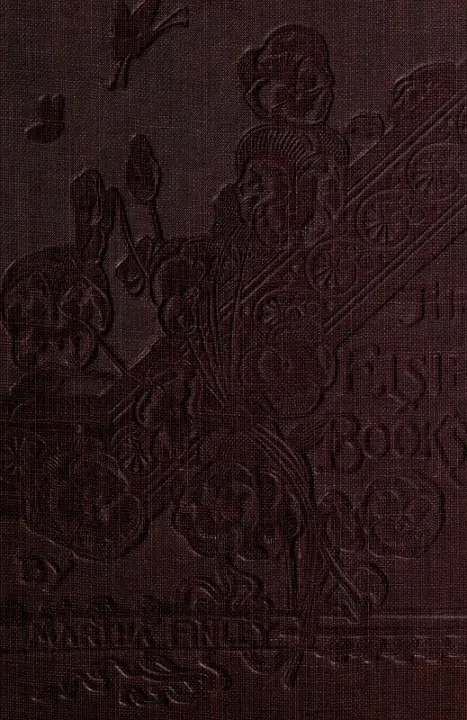
THE CLASSIC COLLECTION · 1893
"Elsie at Ion" by Martha Finley is a novel written in the late 19th century. This story continues the tale of Elsie Dinsmore and her family, focusing on their interactions with new characters, particularly Marian McAlpine, who has recently escaped from a troubled past. The narrative explores themes of familial love, kindness, and the importance of education, all underscored by moral and spiritual lessons typical of Finley’s works. The opening of the novel introduces us to Violet and Lulu, who are enjoying a quiet moment on their veranda after returning home from Viamede. They discuss a mutual acquaintance, Marian McAlpine, who soon arrives as a guest, bringing emotional baggage from her past, including the loss of her family and a difficult relationship with her father. Captain Raymond, respectful and compassionate, insists on helping Marian find comfort and a path forward, while his family rallies around her in support, showing the warmth and generosity characteristic of their household. The stage is set for Marian to integrate into their lives, suggesting that her journey toward healing and self-discovery will be central to the narrative.
Introduction adapted from the source catalogue; source summaries may be automatically generated.
Free to read · English · 62,235 words · No account needed
MAKE TIME FOR A GOOD BOOK
On by default. Untick to stop anonymous reading totals. Each page counts after 10 seconds in view. How this works.
Anonymous counting is on unless you have switched it off.
“I hardly want to,” she said, shuddering; “it seems so like a dreadful foe that had tried to kill my husband, my darling babies, and myself.”
“How the horses are trembling with fright!” exclaimed Edward. “Poor fellows! it is no wonder, for if I am not mistaken the tree actually grazed their noses as it fell.”
“Yes, sah, it did dat berry ting,” said Solon, who had alighted and was stroking and patting the terrified steeds, “an’ dey mos’ tinks dey’s half killed. I dunno how we’s goin’ fer to git ’long hyar, Mr. Ed’ard, sah; cayn’t drive ober dis big tree no how ’tall.”
“No, but perhaps we can manage to go round it; or better still, we’ll turn and drive back till we can get into the high-road again. But drive slowly, till your horses recover, in a measure at least, from their fright.”
“Yes, I think that is the best we can do,” said Herbert, wheeling about and trotting on ahead.
The shock to Zoe had been very severe. All the way home she was shuddering, trembling, sobbing hysterically, and clinging to her husband and babies as though in terror lest they should be suddenly torn from her arms.
In vain Edward tried to sooth and quiet her, clasping her close and calling her by every endearing name; telling her the danger was a thing of the past; that their heavenly Father had mercifully preserved and shielded them, and they had every reason to rest with quietness and assurance in his protecting care.
“Yes, yes, I know it all, dear Ned,” she sobbed, “but have patience with me, dear; my nerves are all unstrung and I cannot be calm and quiet; I cannot help trembling, or keep back the tears, though I am thankful, oh, so thankful! that not one of us was killed or even hurt.”
“No; it was a wonderful escape,” he said in moved tones; “a wonderful evidence of the goodness of God to all of us; and thankful I am that even the horses escaped injury.”
“Yes, yes, indeed, poor things! I’m very glad they escaped so well,” she sobbed; “but for them to have been killed would have been as nothing to having one of our dear babies hurt.”
“Oh, no, no! and we can never be thankful enough for their escape,” he responded in moved tones, putting his arm around both at once and drawing them into a closer embrace, while they looked from one parent to the other in wide-eyed wonder.
Your reading position is saved on this browser. Take it to another device with a library code. Reading pages adapt to text, rather than matching a printed edition.
Martha Finley

Martha Finley

Martha Finley

Martha Finley
BEHIND THE BOOK
This eBook is for the use of anyone anywhere in the United States and most other parts of the world at no cost and with almost no restrictions whatsoever. You may copy it, give it away or re-use it under the terms of the Project Gutenberg License included with this eBook or online at www.gutenberg.org. If you are not located in the United States, you will have to check the laws of the country where you are located before using this eBook. Read the source licence.
The original source file, including credits and licence, is retained by this library. Request an original-format copy at no charge. Please include the book title and Project Gutenberg identifier #48356.
KEEP YOUR CURIOSITY GOING
Coulson Kernahan

Maurice Baring
Frances Wright
Cécile Tormay

Frederic Jesup Stimson

W. H. P. (William Henry Pope) Jarvis