
Elsie’s Friends at Woodburn
Martha Finley
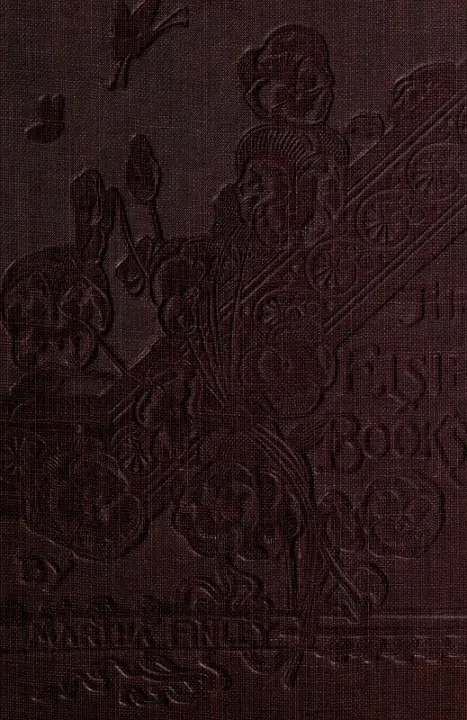
THE CLASSIC COLLECTION · 1893
"Elsie at Ion" by Martha Finley is a novel written in the late 19th century. This story continues the tale of Elsie Dinsmore and her family, focusing on their interactions with new characters, particularly Marian McAlpine, who has recently escaped from a troubled past. The narrative explores themes of familial love, kindness, and the importance of education, all underscored by moral and spiritual lessons typical of Finley’s works. The opening of the novel introduces us to Violet and Lulu, who are enjoying a quiet moment on their veranda after returning home from Viamede. They discuss a mutual acquaintance, Marian McAlpine, who soon arrives as a guest, bringing emotional baggage from her past, including the loss of her family and a difficult relationship with her father. Captain Raymond, respectful and compassionate, insists on helping Marian find comfort and a path forward, while his family rallies around her in support, showing the warmth and generosity characteristic of their household. The stage is set for Marian to integrate into their lives, suggesting that her journey toward healing and self-discovery will be central to the narrative.
Introduction adapted from the source catalogue; source summaries may be automatically generated.
Free to read · English · 62,235 words · No account needed
MAKE TIME FOR A GOOD BOOK
On by default. Untick to stop anonymous reading totals. Each page counts after 10 seconds in view. How this works.
Anonymous counting is on unless you have switched it off.
“You jess g’long an’ look fer it then,” returned Scip loftily. “’Pears like maybe you find him in de parlor yonder behind de doah.”
The children had been looking and listening, wondering where the men
and the parrots were.
“Papa, where is de mans and birds? de pollies dat talked so loud?” asked little Eric Leland. “Me don’t see dem.”
“No; they can only be heard, not seen,” laughed his father, “while little fellows—like my Eric, you know—should be seen and not heard when at table with so many older people.”
“Big folks talk very much, papa,” remarked the little one, smiling up into his father’s face.
“So they do, and so may you when you grow big,” returned his father. “And now, when at home with no strangers by, you may talk too.”
“Well, Hector, suppose you take Scip’s advice and go and look for those tramps,” said Dr. Conly, addressing the frightened, perplexed-looking young servant-man. “Don’t be afraid; I promise to cure your hurts if you get any in trying to put them out.”
But Hector stood where he was as if rooted to the spot, shaking his head gloomily in response to the doctor’s suggestions.
“No, tank you, doctah, sah, but dis chile radder stay cured widout bein’ hurted fus,” he answered, retreating a little farther from the parlor door as he spoke.
“Then come and make yourself useful,” said Ella. “Get your salver and hand this cup of coffee to Mr. Lilburn.”
Hector obeyed, and Cousin Ronald, giving him a humorous look as he took his cup from the salver, asked: “Are you really going to leave those tramps in the parlor yonder to carry off whatever they please?”
“Why, sah, dis chile ain’t so powerful strong dat he kin fight two big fellers widout nobody to help wid the business,” grumbled Hector, looking very black at the suggestion.
“Oh, Hector, don’t be such a coward,” exclaimed Walter Travilla. “I’m not very big or strong, but, if mamma will let me, I’ll go along and protect you from them while you put them out. I may, mayn’t I, mamma?” giving her an inquiring look as he rose from his chair.
But at that moment one of the strange voices was again heard at the
door opening on the veranda.
“Never mind, little feller; we’re out here and going off now; and we haven’t taken a pin’s worth, for we’re honest chaps if we are poor and sometimes ask for a bite o’ victuals.”
“Yaas, that’s so,” drawled the other voice.
Your reading position is saved on this browser. Take it to another device with a library code. Reading pages adapt to text, rather than matching a printed edition.
Martha Finley

Martha Finley

Martha Finley

Martha Finley
BEHIND THE BOOK
This eBook is for the use of anyone anywhere in the United States and most other parts of the world at no cost and with almost no restrictions whatsoever. You may copy it, give it away or re-use it under the terms of the Project Gutenberg License included with this eBook or online at www.gutenberg.org. If you are not located in the United States, you will have to check the laws of the country where you are located before using this eBook. Read the source licence.
The original source file, including credits and licence, is retained by this library. Request an original-format copy at no charge. Please include the book title and Project Gutenberg identifier #48356.
KEEP YOUR CURIOSITY GOING
Coulson Kernahan

Maurice Baring
Frances Wright
Cécile Tormay

Frederic Jesup Stimson

W. H. P. (William Henry Pope) Jarvis