
Elsie’s Friends at Woodburn
Martha Finley
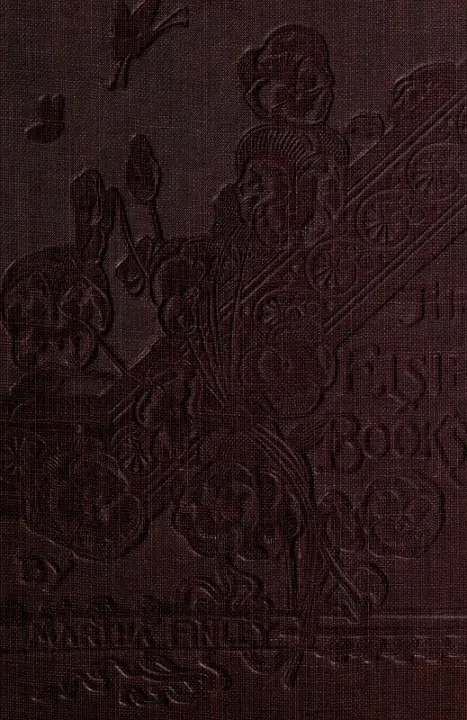
THE CLASSIC COLLECTION · 1893
"Elsie at Ion" by Martha Finley is a novel written in the late 19th century. This story continues the tale of Elsie Dinsmore and her family, focusing on their interactions with new characters, particularly Marian McAlpine, who has recently escaped from a troubled past. The narrative explores themes of familial love, kindness, and the importance of education, all underscored by moral and spiritual lessons typical of Finley’s works. The opening of the novel introduces us to Violet and Lulu, who are enjoying a quiet moment on their veranda after returning home from Viamede. They discuss a mutual acquaintance, Marian McAlpine, who soon arrives as a guest, bringing emotional baggage from her past, including the loss of her family and a difficult relationship with her father. Captain Raymond, respectful and compassionate, insists on helping Marian find comfort and a path forward, while his family rallies around her in support, showing the warmth and generosity characteristic of their household. The stage is set for Marian to integrate into their lives, suggesting that her journey toward healing and self-discovery will be central to the narrative.
Introduction adapted from the source catalogue; source summaries may be automatically generated.
Free to read · English · 62,235 words · No account needed
MAKE TIME FOR A GOOD BOOK
On by default. Untick to stop anonymous reading totals. Each page counts after 10 seconds in view. How this works.
Anonymous counting is on unless you have switched it off.
“Not I,” replied Herbert, “but it is quite dark up there where the branches and leaves are so thick.”
“So it is,” said Croly. “Hi there, Polly! show yourself.”
“Go ’way!” screamed the harsh voice.
“Come down, Polly; we won’t hurt you,” said Harold.
“Polly’s hungry; Polly wants a cracker,” responded the harsh voice.
“Come down, and if you are the good bird you seem, you shall have a cracker and a cup of coffee,” he promised; but the only reply was a sound as of the fluttering and flapping of wings that seemed to leave the tree and go farther away till lost in the distance.
“Gone!” said Croly; “and I did not catch so much as a glimpse of her.
Did anybody else?”
“And you haven’t found the bugler either,” remarked Mary Keith.
“No,” laughed Calhoun Conly, sitting beside her, “they are not very
successful hunters.”
“Do you think you could do better, Cal?” asked Herbert, as he and his two companions came leisurely up the steps into the veranda.
“Well, I hardly think I should do worse,” returned Calhoun lightly.
“Then suppose you start out on the quest, find that bugler, and coax him to give us another tune.”
Some soft, low notes came to their ears at that moment, as if in reply; they seemed to issue from the depths of the wood, and the listeners almost held their breath to catch them. As they died away Croly spoke again.
“He seems to have made quite a circuit to escape us; and why on earth should he? for he surely has no reason to fear we would do him harm.”
“Bashful, perhaps,” suggested Edward. “But why care to see him? Is not
hearing enough?”
“If Mr. Croly were a woman, I would suggest that he was probably actuated by curiosity,” laughed Mary Keith; “but since he belongs to the other sex, it must be supposed to be something else.”
“Dear me, Miss Keith, who would ever have dreamed you could be so severe? You who belong to the gentler sex?” returned Croly, in a feignedly mortified tone.
“Hark! there he is at it again!” exclaimed Maud Dinsmore, as distant bugle notes once more came softly to the ear. “If you want to catch him, I advise you to hasten in the direction of those sounds, Mr. Croly.”
“Hardly worth while, since he is so adroit at getting out of the way,” sighed Croly, sinking into a chair as if quite exhausted with the efforts already made.
“Never say die, Mr. Croly,” laughed Rosie Travilla. “Gather up your strength and pursue the investigation. ‘Try, try, try again,’ is an excellent motto.”
Your reading position is saved on this browser. Take it to another device with a library code. Reading pages adapt to text, rather than matching a printed edition.
Martha Finley

Martha Finley

Martha Finley

Martha Finley
BEHIND THE BOOK
This eBook is for the use of anyone anywhere in the United States and most other parts of the world at no cost and with almost no restrictions whatsoever. You may copy it, give it away or re-use it under the terms of the Project Gutenberg License included with this eBook or online at www.gutenberg.org. If you are not located in the United States, you will have to check the laws of the country where you are located before using this eBook. Read the source licence.
The original source file, including credits and licence, is retained by this library. Request an original-format copy at no charge. Please include the book title and Project Gutenberg identifier #48356.
KEEP YOUR CURIOSITY GOING
Coulson Kernahan

Maurice Baring
Frances Wright
Cécile Tormay

Frederic Jesup Stimson

W. H. P. (William Henry Pope) Jarvis