
Elsie’s Friends at Woodburn
Martha Finley
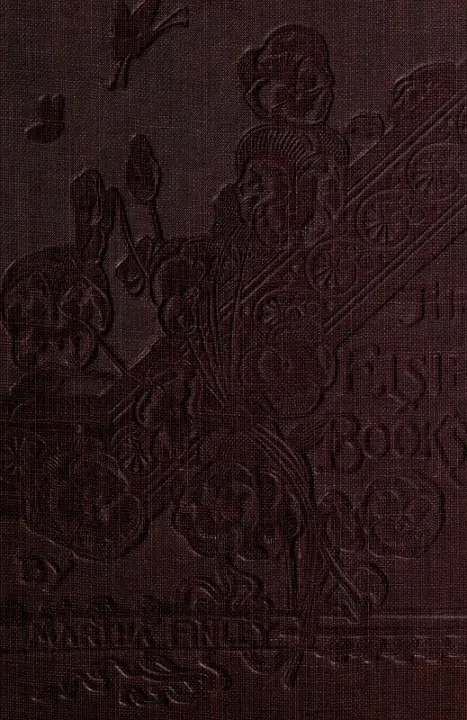
THE CLASSIC COLLECTION · 1893
"Elsie at Ion" by Martha Finley is a novel written in the late 19th century. This story continues the tale of Elsie Dinsmore and her family, focusing on their interactions with new characters, particularly Marian McAlpine, who has recently escaped from a troubled past. The narrative explores themes of familial love, kindness, and the importance of education, all underscored by moral and spiritual lessons typical of Finley’s works. The opening of the novel introduces us to Violet and Lulu, who are enjoying a quiet moment on their veranda after returning home from Viamede. They discuss a mutual acquaintance, Marian McAlpine, who soon arrives as a guest, bringing emotional baggage from her past, including the loss of her family and a difficult relationship with her father. Captain Raymond, respectful and compassionate, insists on helping Marian find comfort and a path forward, while his family rallies around her in support, showing the warmth and generosity characteristic of their household. The stage is set for Marian to integrate into their lives, suggesting that her journey toward healing and self-discovery will be central to the narrative.
Introduction adapted from the source catalogue; source summaries may be automatically generated.
Free to read · English · 62,235 words · No account needed
MAKE TIME FOR A GOOD BOOK
On by default. Untick to stop anonymous reading totals. Each page counts after 10 seconds in view. How this works.
Anonymous counting is on unless you have switched it off.
“Don’t look so troubled, daughter,” said the captain, smiling kindly upon her, “there is no great harm done. Marian would probably have found it out before long without any help from you.”
“And I’ll try to make no bad use of my discovery,” added Marian.
“You and papa are very kind,” returned Grace, with a slight sigh of
relief.
“I suppose this is to be a holiday for the children, captain?” remarked Violet with an inquiring look at her husband.
“Quite a mistake, my dear,” he returned pleasantly. “I do not think it good for my pupils to have too many holidays, and have no doubt they will enjoy play all the more for having done a little work first.”
“Yes, sir, no doubt we shall,” said Marian cheerfully, “and I for one should be very loath to miss the lessons. I enjoy them, and am very grateful to you for taking the trouble to teach me.”
“You are as welcome as possible,” he returned in the kindest of tones. “Your companionship in her studies is of advantage to my daughter Lulu, and makes very little more work for me.”
“You are very kind indeed to look at it in that light, sir,” was Marian’s response, while Lulu gave him a most grateful, loving look.
Then a voice that seemed to come from the doorway into the hall said: “You are the very best of fathers, sir, always ready to take any amount of trouble for the benefit of any of your children.”
“Maxie! where is you? Tum and det some breakfus,” exclaimed baby Ned, as he and all the others turned their heads in the direction of the sounds.
But no one was to be seen there.
“Where is Maxie?” queried Ned, almost ready to cry. “Papa tell Maxie tum eat his breakfus.”
“Maxie isn’t there, son,” said the captain pleasantly. “It was Cousin Ronald talking in Maxie’s voice.”
“Papa,” said little Elsie, “maybe Maxie is there, hiding behind the
door.”
“Do you think so?” returned her father with a smile. “Well, you may go and look, if you wish, and if you find him tell him papa says for him to come immediately to his breakfast.”
At that Elsie made haste to get down from her chair, and ran to the door calling, “Maxie, Maxie, papa says, come right to your breakfus dis minute.”
Not finding Max at the door, she ran on down the hall, out upon the veranda, looking searchingly from side to side, back again and through the different rooms, calling, “Max, Max, where are you? Papa says, come to your breakfus.”
Your reading position is saved on this browser. Take it to another device with a library code. Reading pages adapt to text, rather than matching a printed edition.
Martha Finley

Martha Finley

Martha Finley

Martha Finley
BEHIND THE BOOK
This eBook is for the use of anyone anywhere in the United States and most other parts of the world at no cost and with almost no restrictions whatsoever. You may copy it, give it away or re-use it under the terms of the Project Gutenberg License included with this eBook or online at www.gutenberg.org. If you are not located in the United States, you will have to check the laws of the country where you are located before using this eBook. Read the source licence.
The original source file, including credits and licence, is retained by this library. Request an original-format copy at no charge. Please include the book title and Project Gutenberg identifier #48356.
KEEP YOUR CURIOSITY GOING
Coulson Kernahan

Maurice Baring
Frances Wright
Cécile Tormay

Frederic Jesup Stimson

W. H. P. (William Henry Pope) Jarvis