
Old People and the Things That Pass
Louis Couperus
THE CLASSIC COLLECTION · 1892
"Eline Vere" by Louis Couperus is a novel written in the late 19th century. The book explores themes of beauty, youth, and societal roles through the life of the main character, Eline Vere, a sensitive and dreamy young woman navigating her relationships and ambitions in a social milieu that often feels stifling and unkind. The narrative offers a richly detailed look at the intricacies of her world, where social expectations clash with personal desires. The opening of "Eline Vere" introduces readers to a vibrant setting of a grand social event where various characters prepare for a tableau performance. Frédérique van Erlevoort, one of the performers, is assisted by Paul van Raat as she readies herself. The atmosphere is filled with excitement and a flurry of activity. Through insightful descriptions, we learn about Eline, who is later revealed as a more introspective character, feeling somewhat isolated due to her melancholic nature and her struggles with identity and purpose. Tender moments are interspersed with observations on the superficiality of social interactions, setting the stage for Eline's deeper emotional journey.
Introduction adapted from the source catalogue; source summaries may be automatically generated.
Free to read · English · 128,052 words · No account needed
MAKE TIME FOR A GOOD BOOK
On by default. Untick to stop anonymous reading totals. Each page counts after 10 seconds in view. How this works.
Anonymous counting is on unless you have switched it off.
“Go on, you stupid boy!” cried Tine indignantly, and she gave him a push, so that he tumbled over Lientje, and in a few moments Frédérique’s bed was a chaos of woollen blankets, fair curls, pillows, and bare pink legs and arms, all tumbling and wriggling about to the accompaniment of loud screams and yells.
Madame van Erlevoort and Frédérique nearly cried with laughing at the scene, to the great confusion of Mathilde, who, do what she would, could not manage to get the laces tied, and Madame van Erlevoort called Otto and Etienne, who in evening dress and overcoats were coming down-stairs, to go in and have a look at the scene.
“Get in here with us, Uncle Eetje; come along, do!” screamed Johan; but Etienne declined the honour; he was much too pretty now to romp about like that.
“You look like a fairy queen, Freddie!” said Otto smiling; “fit to——”
“To be blown away, eh? But, Tilly, aren’t you finished yet with those
laces?”
“Well, Freddie, you won’t stand still for one minute.”
At last Tilly was ready, every one was ready, and Madame van Erlevoort went down-stairs, as the carriage had just arrived.
“Now, children, stop in bed, and don’t run about in the cold,” cried Mathilde commandingly, while Frédérique, with Martha’s help, wrapped her sortie about her, Otto took charge of a fan, and Etienne of a glove.
“Come, Freddie, mamma has gone down-stairs long ago,” said Otto, and he beat the fan impatiently on his hand.
“Freddie, haven’t you forgotten anything?” asked Mathilde.
“I say, where is your other glove, Freddie, or are you only going to wear one?” cried Etienne as loud as he could, to make himself heard above the noise and the din the children were making in the bed.
“Oh! how you are worrying me, all of you!—I have already got it half on, my second glove! Martha, my handkerchief! Thanks; everything right? Yes? Well, good-bye, you pets!”
“Freddie, you have forgotten something!” cried Etienne.
“What is it, then?”
“Your umbrella, here.”
“Silly boy! Mamma is waiting in the carriage, and you delay me with stupidities! Well, good-bye, Tilly! good-bye, dearies! yes, Otto, I am coming.... Good-bye, Tilly, thanks for your assistance. Good-bye, Martha!”
“Much pleasure, miss.”
“Much pleasure, Freddie.”
Freddie went, followed by Otto and Etienne. Ernestine sprang out of the bed, followed by Johan and Lientje.
“Here, children, come here!” cried Mathilde.
She threw some wraps about them, shawls, blankets, whatever she could
find.
“And where is Miss Frantzen, that you have all come in here like this?” she asked, dissatisfied.
Your reading position is saved on this browser. Take it to another device with a library code. Reading pages adapt to text, rather than matching a printed edition.
Louis Couperus
Louis Couperus

Louis Couperus
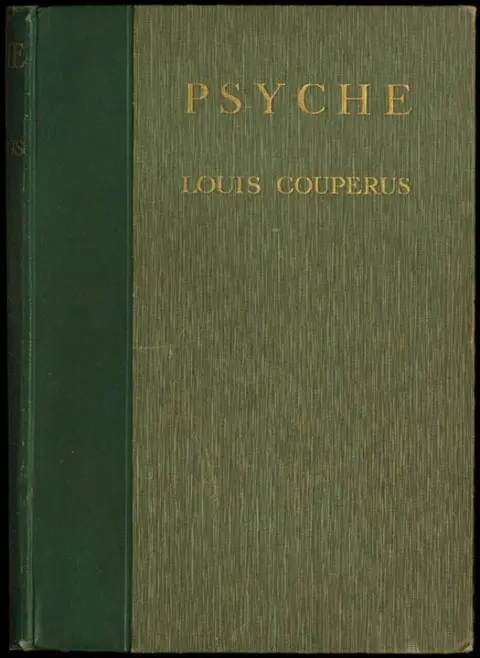
Louis Couperus
BEHIND THE BOOK
This eBook is for the use of anyone anywhere in the United States and most other parts of the world at no cost and with almost no restrictions whatsoever. You may copy it, give it away or re-use it under the terms of the Project Gutenberg License included with this eBook or online at www.gutenberg.org. If you are not located in the United States, you will have to check the laws of the country where you are located before using this eBook. Read the source licence.
The original source file, including credits and licence, is retained by this library. Request an original-format copy at no charge. Please include the book title and Project Gutenberg identifier #66911.
KEEP YOUR CURIOSITY GOING
Coulson Kernahan

Maurice Baring
Frances Wright
Cécile Tormay

Frederic Jesup Stimson

W. H. P. (William Henry Pope) Jarvis