
Old People and the Things That Pass
Louis Couperus
THE CLASSIC COLLECTION · 1892
"Eline Vere" by Louis Couperus is a novel written in the late 19th century. The book explores themes of beauty, youth, and societal roles through the life of the main character, Eline Vere, a sensitive and dreamy young woman navigating her relationships and ambitions in a social milieu that often feels stifling and unkind. The narrative offers a richly detailed look at the intricacies of her world, where social expectations clash with personal desires. The opening of "Eline Vere" introduces readers to a vibrant setting of a grand social event where various characters prepare for a tableau performance. Frédérique van Erlevoort, one of the performers, is assisted by Paul van Raat as she readies herself. The atmosphere is filled with excitement and a flurry of activity. Through insightful descriptions, we learn about Eline, who is later revealed as a more introspective character, feeling somewhat isolated due to her melancholic nature and her struggles with identity and purpose. Tender moments are interspersed with observations on the superficiality of social interactions, setting the stage for Eline's deeper emotional journey.
Introduction adapted from the source catalogue; source summaries may be automatically generated.
Free to read · English · 128,052 words · No account needed
MAKE TIME FOR A GOOD BOOK
On by default. Untick to stop anonymous reading totals. Each page counts after 10 seconds in view. How this works.
Anonymous counting is on unless you have switched it off.
“Look out, do you hear, or I’ll tickle you!” cried Frédérique, and she tickled Johan under his little arms, so that he fell, struggling and crowing, on the floor.
“Mais comme vous les gâtez, toutes les deux! ne les choyez donc pas, quand je suis fâchée. Je perdrai tout mon pouvoir, si vous continuez ainsi!” exclaimed Madame van Ryssel despairingly, as she glanced over the banisters, for down below Madeline and Nikolaas were giving Miss Frantzen a terrible trouble and would not go up-stairs with her.
“Lientje, Nico!” cried Madame van Ryssel in her severest tones.
“Come, Mathilde, do leave the children alone for a moment, and come and look at my dress!” Freddie implored.
“I can’t keep them in order any longer, really,” said Mathilde, with a
sigh of despair.
“Make haste, Freddie; we dine rather earlier to-day,” said Madame van
Erlevoort.
The street door was being opened; it was Otto and Etienne van Erlevoort who were coming home, and their cheerful voices mingled with the laughter and screams of the children, the chiding tones of Miss Frantzen, and the barking of Hector, Otto’s dog.
“Come, Mathilde, do just have a look at my dress,” Freddie pleaded, in
coaxing tones.
Mathilde thought it best to give up all attempts at exerting her maternal influence in that Babel of confusion, and yielded to Frédérique’s coaxing.
“Really, I mean it, I have no more control over them——”
“Come, children, don’t fight any more now; be good!” said Madame van Erlevoort to Ernestine and Johan. “Come with us down-stairs, ’tis enough to freeze you here.”
Madame van Erlevoort had always been used to excitement and hubbub, and it never seemed to upset her. Herself mother of seven children, she had always been surrounded by noisy laughter, turmoil and excitement, and she could not have understood how a large family could have existed in any atmosphere that was calmer than her own. From the first, her house had been filled with the shrill voices, the boisterous laughter, and the continual running to and fro of her children, until they grew up, in all the joyful freshness of their youthful spirits. Then with the death of her husband, Théodore Otto, Baron van Erlevoort ter Horze, member of the Second Chamber of the States General, commenced a period of unwonted calm and peacefulness, which grew even more so when her four children, one after another, left her house and got married. The first to go was Théodore, the eldest, who now managed their estates in Gelderland, and who, in the midst of his numerous family, lived at the Huis ter Horze the life of a gentleman-farmer and of a youthful patriarch combined. He was followed by her third daughter, Mathilde, whose brief married life had been very unhappy; after her, the two eldest girls, Cathérine and Suzanne, left their mother’s home, the former married to an English banker, Mr. Percy Howard, living in London, the other to Jonkheer Arnold van Stralenburg, Recorder at the Court of Justice at Zwolle.
Your reading position is saved on this browser. Take it to another device with a library code. Reading pages adapt to text, rather than matching a printed edition.
Louis Couperus
Louis Couperus

Louis Couperus
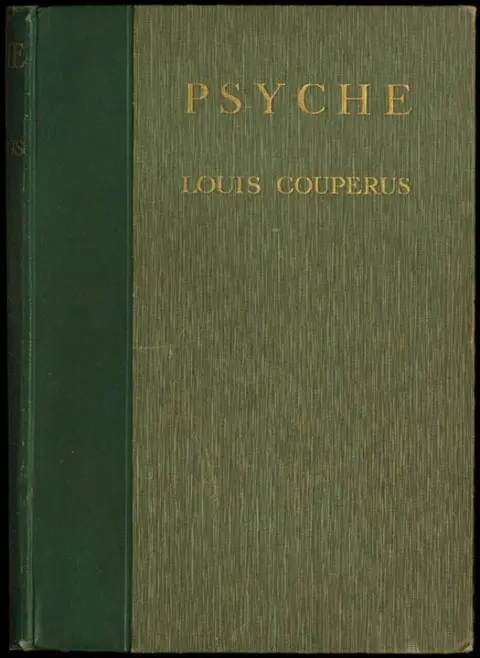
Louis Couperus
BEHIND THE BOOK
This eBook is for the use of anyone anywhere in the United States and most other parts of the world at no cost and with almost no restrictions whatsoever. You may copy it, give it away or re-use it under the terms of the Project Gutenberg License included with this eBook or online at www.gutenberg.org. If you are not located in the United States, you will have to check the laws of the country where you are located before using this eBook. Read the source licence.
The original source file, including credits and licence, is retained by this library. Request an original-format copy at no charge. Please include the book title and Project Gutenberg identifier #66911.
KEEP YOUR CURIOSITY GOING
Coulson Kernahan

Maurice Baring
Frances Wright
Cécile Tormay

Frederic Jesup Stimson

W. H. P. (William Henry Pope) Jarvis