
Old People and the Things That Pass
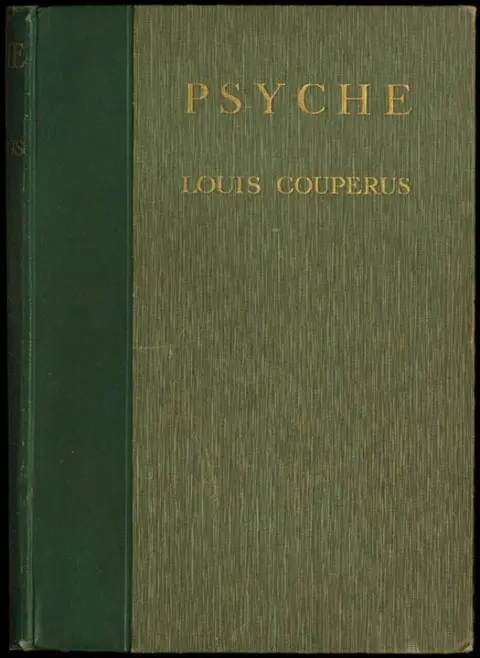
Louis Couperus
THE CLASSIC COLLECTION · 1892
"Eline Vere" by Louis Couperus is a novel written in the late 19th century. The book explores themes of beauty, youth, and societal roles through the life of the main character, Eline Vere, a sensitive and dreamy young woman navigating her relationships and ambitions in a social milieu that often feels stifling and unkind. The narrative offers a richly detailed look at the intricacies of her world, where social expectations clash with personal desires. The opening of "Eline Vere" introduces readers to a vibrant setting of a grand social event where various characters prepare for a tableau performance. Frédérique van Erlevoort, one of the performers, is assisted by Paul van Raat as she readies herself. The atmosphere is filled with excitement and a flurry of activity. Through insightful descriptions, we learn about Eline, who is later revealed as a more introspective character, feeling somewhat isolated due to her melancholic nature and her struggles with identity and purpose. Tender moments are interspersed with observations on the superficiality of social interactions, setting the stage for Eline's deeper emotional journey.
Introduction adapted from the source catalogue; source summaries may be automatically generated.
Free to read · English · 128,052 words · No account needed
MAKE TIME FOR A GOOD BOOK
On by default. Untick to stop anonymous reading totals. Each page counts after 10 seconds in view. How this works.
Anonymous counting is on unless you have switched it off.
Betsy, too, was boiling with rage. Gerard left the room, but she made no reply and restrained herself.
“Nily, dear,” said Otto, “I bear Vincent no ill-will, although I don’t feel much sympathy with him, but still I shall be glad too when he is gone.”
“Indeed—you too, eh?” she hissed.
“May I finish?” he resumed, clasping her icy hand in his. “Yes, I shall be glad when he goes, at least if his presence in the house is able to excite you like this. You are quite beside yourself. You don’t know what you are saying, Nily; at least not with what force you are speaking.”
His quiet words drove her frantic.
“And you—you—with your eternal calmness, your eternal phlegmatic calmness!” she burst, nearly shrieking, as she rose from the table and flung down her serviette. “It drives me mad—that calmness! Great heavens, it drives me mad! Betsy crushes me with her egoism, and you with your calmness—with your calmness, yes, your calmness! I—I—I can’t bear it any longer—it suffocates me!”
“Eline!” cried Otto.
He rose and grasped her wrists, and looked her straight in the eyes. She expected something very terrible, that he would fling her down, strike her. But while he continued to hold her hands he only shook his head slowly, and his voice sounded full of sorrow, as he simply said—
“Eline!—for shame!”
“Great God! I—I am going mad!” she screamed in a fit of sobbing, and she tore herself away from his grasp, and rushed out of the room, as she went, dragging some glasses from the table, which fell with a tinkling noise in shatters on the ground.
Betsy trembled with rage, and wanted to run after Eline. Otto, however,
stayed her.
“Let her be, I beg of you!” he entreated.
Henk too had risen, and when Gerard came in they all three felt very much confused before the servant, about the abruptly interrupted dinner, and about the shattered glass.
“Never mind—never mind, Gerard!” said Betsy almost humbly, “never mind. Clear the table.”
It was impossible for them to assume a nonchalant air. Gerard must have noticed that there was something wrong, though his face remained ever so calm and dignified.
Eline in the meantime had rushed up-stairs into her bedroom and thrown herself on her bed. Then she began to sob—but Vincent must not hear it. She sobbed and sobbed until it grew dark; then she heard Vincent walking in the adjoining room, but she lay still and wrung her hands and choked the sobs in her bosom.
Your reading position is saved on this browser. Take it to another device with a library code. Reading pages adapt to text, rather than matching a printed edition.
Louis Couperus
Louis Couperus

Louis Couperus
Louis Couperus
BEHIND THE BOOK
This eBook is for the use of anyone anywhere in the United States and most other parts of the world at no cost and with almost no restrictions whatsoever. You may copy it, give it away or re-use it under the terms of the Project Gutenberg License included with this eBook or online at www.gutenberg.org. If you are not located in the United States, you will have to check the laws of the country where you are located before using this eBook. Read the source licence.
The original source file, including credits and licence, is retained by this library. Request an original-format copy at no charge. Please include the book title and Project Gutenberg identifier #66911.
KEEP YOUR CURIOSITY GOING
Coulson Kernahan

Maurice Baring
Frances Wright
Cécile Tormay

Frederic Jesup Stimson

W. H. P. (William Henry Pope) Jarvis