THE CLASSIC COLLECTION✦Studies of American Fungi. Mushrooms, Edible, Poisonous, etc.CLASSIC FREE BOOKS
Studies of American Fungi. Mushrooms, Edible, Poisonous, etc.
George Francis Atkinson
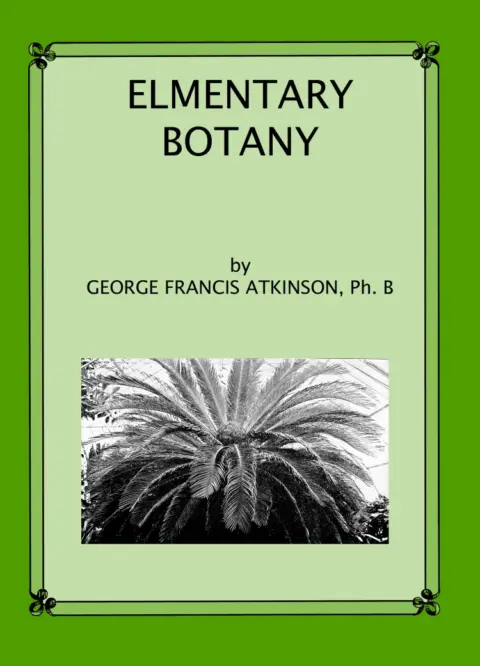
THE CLASSIC COLLECTION · 1898
"Elementary Botany" by George Francis Atkinson is a scientific publication written in the early 20th century. The work provides a comprehensive introduction to botany, focusing on plant physiology, morphology, and ecology, exploring the fundamental life processes of plants, as well as their form and function in relation to their environment. It serves as a textbook for students, particularly those in botany courses, aiming to deepen their understanding of plant life. At the start of the book, the author outlines the structure and aims of the text, detailing its organization into three main parts: physiology, morphology and life history of representative plants, and the relationship between plant members and their environment. This introductory section sets the stage for an in-depth exploration of protoplasm—the living material of plants—beginning with its study in various simple plants like "Spirogyra" and "Mucor". The opening discussions illustrate important concepts such as the properties of protoplasm, methods of observation, and initial experiments to observe plant behavior under different conditions, laying a strong foundation for the chapters that follow.
Introduction adapted from the source catalogue; source summaries may be automatically generated.
Free to read · English · 146,679 words · No account needed
MAKE TIME FOR A GOOD BOOK
On by default. Untick to stop anonymous reading totals. Each page counts after 10 seconds in view. How this works.
Anonymous counting is on unless you have switched it off.
=Function of the root cap.=—The root cap serves an important function in protecting the delicate meristem or cambium at the tip of the root. These cells are, of course, very thin-walled, and while there is not so much danger that they would be injured from dryness, since the soil is usually moist enough to prevent evaporation, they would be liable to injury from friction with the rough particles of soil. No similar cap is developed on the end of the stem, but the meristem here is protected by the overlapping bud-scales. One of the most striking illustrations of a root cap may be seen in the case of the Pandanus, or screw-pine, often grown in conservatories (see fig. 447). On the prop roots which have not yet reached the ground the root caps can readily be seen, since they are so large that they fit over the end of the root like a thimble on the finger.
=713. Descriptive Classification of Tissues.=
{ Epidermis. { { { Simple hairs. { { Many-celled hairs. { { Branched hairs, often stellate. Epidermal { Trichomes. { Clustered, tufted hairs. System. ····{ { Glandular hairs. { { Root hairs. { { Prickles. { { Guard cells of stomates. { Spiral vessels. { Pitted vessels. { Scalariform vessels. { Xylem (wood). { Annular vessels. { { Tracheides. { { Wood fibers. { { Wood parenchyma. Fibrovascular { System. ····{ Cambium (fascicular). { { { Sieve tubes. { Phloem (bast). { Bast fibers. { Companion cells. { Bast parenchyma. { Cork. { Collenchyma. { Cortex.····{ Parenchyma. { { Fibers. { { Milk tissue. { { Pith-ray.··{ Parenchyma. { { Intrafascicular { Stem and root. { cambium. { { Pith.······{ Parenchyma. { { { Sclerenchyma. { { Fundamental { { Bundle-sheath. System. ····{ { { { Endodermis. { { Leaves. { Palisade tissue. { { Spongy parenchyma. { { Reproductive Organs (mainly fundamental).
=714. Physiological Classification of Tissues.=
Formative Tissue.
Thin-walled cells composing the meristem, capable of division and from which other tissues are formed.
Protective Tissue.
Tegumentary System.—Epidermis, periderm, bark protecting the plant
from external contact.
Mechanical System.—Bast tissue, bast-like tissue, collenchyma, sclerenchyma, afford protection against harmful bending, pulling, etc.
Nutritive Tissues.
Absorptive System.—Root hairs and cells, rhizoids, aerial root tissue, absorptive leaf glands, absorptive organs in seeds, haustoria of parasites, etc.
Assimilatory System.—Assimilating cells in leaf and stem.
Conductive System.—Sieve tissue, tracheary tissue, milk tissue,
conducting parenchyma, etc.
Food-storing System.—Water reservoir, water tissue, slime tissue, fleshy roots and stems, endosperm and cotyledons, etc.
Aerating System.—Air spaces and tubes, special air tissue, air-seeking roots, stomates, lenticels, etc.
Secretory and Excretory System.—Water glands, digestive glands, resin glands, nectaries, tannin, pitch and oil receptacles, etc.
Apparatus and Tissues for Special Duties.
Holdfasts.
Tissues of movement, parachute hairs, floating tissue, hygroscopic
tissue, living tissue.
For perceiving stimuli.
For conducting stimuli, etc.
Your reading position is saved on this browser. Take it to another device with a library code. Reading pages adapt to text, rather than matching a printed edition.
BEHIND THE BOOK
This eBook is for the use of anyone anywhere in the United States and most other parts of the world at no cost and with almost no restrictions whatsoever. You may copy it, give it away or re-use it under the terms of the Project Gutenberg License included with this eBook or online at www.gutenberg.org. If you are not located in the United States, you will have to check the laws of the country where you are located before using this eBook. Read the source licence.
The original source file, including credits and licence, is retained by this library. Request an original-format copy at no charge. Please include the book title and Project Gutenberg identifier #64601.
KEEP YOUR CURIOSITY GOING
John Muir
Asa Gray
Asa Gray
Florence Nightingale
Elizabeth Robins Pennell
Denison Olmsted