THE CLASSIC COLLECTION✦An outlaw’s diary: the CommuneCLASSIC FREE BOOKS
An outlaw’s diary: the Commune
Cécile Tormay
THE CLASSIC COLLECTION · 1890
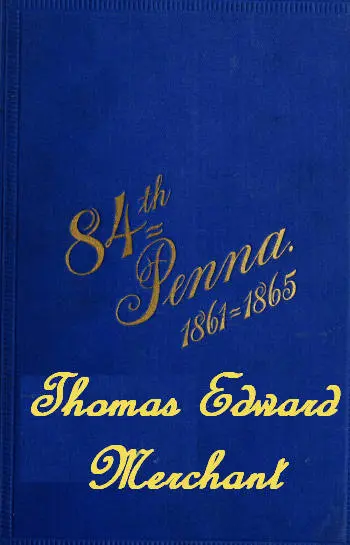
"Eighty-fourth Regiment, Pennsylvania Volunteers (Infantry)" by Captain Thomas E. Merchant is a historical account written in the late 19th century. The work details the history and experiences of the 84th Regiment during the American Civil War, particularly focusing on their involvement in the Battle of Gettysburg and subsequent campaigns. This narrative serves to commemorate the regiment's efforts, sacrifices, and the bonds of camaraderie formed during their service. The opening of the text sets the stage for a dedication ceremony of a monument commemorating the 84th Regiment at Gettysburg, highlighting the deep emotional connections among the soldiers who served together. Captain Merchant outlines the regiment's organization, its early years, and introduces key figures involved in the events to be chronicled. He acknowledges the weight of memories carried by the surviving members and emphasizes the importance of their collective experiences. As the narration progresses, it promises to delve into significant battles and actions the regiment undertook, revealing a detailed history of their distinguished service throughout the war.
Introduction adapted from the source catalogue; source summaries may be automatically generated.
Free to read · English · 20,381 words · No account needed
MAKE TIME FOR A GOOD BOOK
On by default. Untick to stop anonymous reading totals. Each page counts after 10 seconds in view. How this works.
Anonymous counting is on unless you have switched it off.
Thus far the Massanutten Mountains had separated Jackson and his immediate pursuers from Shields. This mountain range stops just before reaching Port Republic. The only troops in the town were the four regiments of Carroll's Brigade, 1st Va., 7th Ind., 84th and 110th Pa., about sixteen hundred strong.
"At this point," read the orders to General Shields, "you will intercept Jackson and cut off his retreat."
With the bridge standing, Carroll's force, or even the entire Division, would be a mere handful against the foe now almost at hand.
The effectual cut-off would have been the destruction of the bridge, and had there been but one man there, in place of a brigade, he would have destroyed it.
Did Shields order Carroll to burn the bridge?
And, if so, did Carroll think it would be more soldierly to fight the
whole rebel army?
Whatever the answer, the fact remains that the bridge was not burned. When the attempt was made it was too late.
Over the bridge was Jackson's only way of escape from Fremont. When he found Carroll there he moved up his advance, under cover of the night, quietly posted twenty guns where they would command the way over the river, and opened them at daylight. The fire was too much to stand against, and over the bridge came Jackson's cavalry, followed by his columns of infantry, and having forced our small command back the Luray Valley to Conrad's Store, and burned the bridge to avoid further trouble with Fremont, he had a good free road to Richmond, where he met with a cordial welcome from Lee.
The loss of 124 killed and 292 wounded showed the disposition of Carroll's Brigade to fight, as also the character of the rebel fire, and the 514 prisoners testified to the character of the pursuit in getting Carroll out of the way.
Ewell was liberal enough to concede three Confederates to one National, in number, and voluntarily said, "It was a most gallant fight on the part of the latter."
The Regiment lost one man killed and ten wounded.
On the 10th, Shields' Division reached Luray, and on the
15th, was again at Front Royal.
On the 18th, at Manassas Junction, and on the
25th, arrived at Camp Pope, near Alexandria.
On the 26th, by order of the President, the forces under Fremont, Banks, and McDowell were constituted the "Army of Virginia," Pope in command, Fremont assigned to the 1st Corps, Banks the 2d, and McDowell the 3d. Fremont withdrew from the Service because thus made subordinate to an officer whose commission post-dated his own.
Your reading position is saved on this browser. Take it to another device with a library code. Reading pages adapt to text, rather than matching a printed edition.
BEHIND THE BOOK
This eBook is for the use of anyone anywhere in the United States and most other parts of the world at no cost and with almost no restrictions whatsoever. You may copy it, give it away or re-use it under the terms of the Project Gutenberg License included with this eBook or online at www.gutenberg.org. If you are not located in the United States, you will have to check the laws of the country where you are located before using this eBook. Read the source licence.
The original source file, including credits and licence, is retained by this library. Request an original-format copy at no charge. Please include the book title and Project Gutenberg identifier #46344.
KEEP YOUR CURIOSITY GOING
Cécile Tormay

Moritz Busch
John L. Ransom
Frances Wright
Cécile Tormay

Mabel Potter Daggett