THE CLASSIC COLLECTION✦An outlaw’s diary: the CommuneCLASSIC FREE BOOKS
An outlaw’s diary: the Commune
Cécile Tormay
THE CLASSIC COLLECTION · 1913
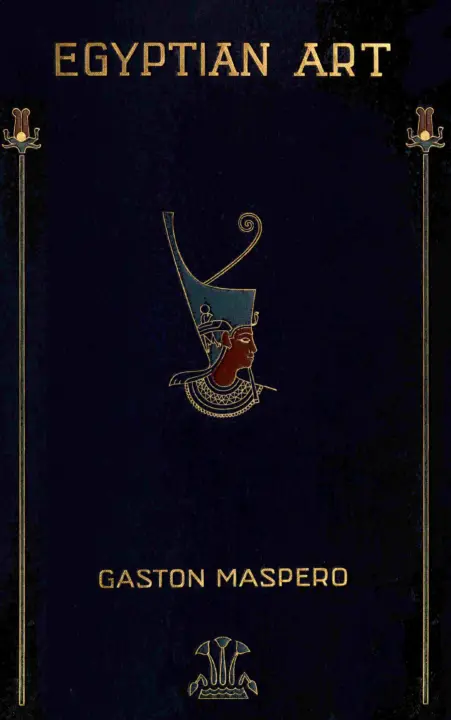
"Egyptian Art: Studies" by Sir Gaston Maspero is a scientific publication written in the early 20th century. This work consists of a collection of essays that explore various aspects of ancient Egyptian art, particularly its statuary and sculpture, and aims to educate the general public on the styles, techniques, and significance of these artworks throughout Egyptian history. The author draws on his extensive expertise and firsthand experiences with Egyptian artifacts to present a thorough understanding of the artistic movements and cultural contexts behind the creation of these works. The opening of the publication introduces the background and purpose of the essays, clarifying that they span over thirty years of work and were written for a wider audience rather than just experts in Egyptology. Maspero discusses the necessity of highlighting the utilitarian aspects of Egyptian art, emphasizing the need to convey the significance of sculpture and its connection to the afterlife. He touches on the evolution of artistic schools in Egypt, citing various local styles and inspirations while lamenting the past neglect of non-literary monuments by Egyptologists. The introductory remarks lay the groundwork for a detailed exploration of significant works, including discussions of pharaohs’ portraits, the techniques used in their creation, and the sociocultural implications of these artistic endeavors.
Introduction adapted from the source catalogue; source summaries may be automatically generated.
Free to read · English · 61,545 words · No account needed
MAKE TIME FOR A GOOD BOOK
On by default. Untick to stop anonymous reading totals. Each page counts after 10 seconds in view. How this works.
Anonymous counting is on unless you have switched it off.
[23] Here are some references to plates in Lepsius where the husband and wife are represented side by side in different positions. The woman of low stature crouches behind her seated husband (“Denkmäler,” ii., 71b); the wife and husband, both of heroic stature, are seated on the same armchair, and the wife puts her right arm round her husband’s neck (“Denkmäler,” ii., 10b, 24, 25b, 41b, 42a-b, 75a, etc.); the wife of low stature stands in front of her husband, who is of heroic stature (“Denkmäler,” ii., 38b); she stands behind him and puts her arm round his left arm (“Denkmäler,” ii., 27, 33a), or she puts her arm round his waist (“Denkmäler,” ii., 38a); and lastly, the husband and wife, of the same stature, are standing, the wife behind her husband and putting her arm round his neck (“Denkmäler,” ii., 13, 20–1, 29b, 32, 34b, 40b, 43b, 46, 58a, 59b), or separated from him (“Denkmäler,” ii., 73, etc.).
[24] Thus in Lepsius (“Denkmäler,” ii., 74e), where the noble Senotmhît, surnamed Mihi, is seated, of heroic stature, while his wife, Khontkaous, is represented crouching and of low stature, although she is a legitimate daughter of the king. In another part of the tomb (Lepsius, “Denkmäler,” ii., 73) the same persons are represented standing side by side and of heroic stature, while their children are of ordinary stature.
[25] See the preceding chapter, pp. 55–59.
[26] See Chapter III, p. 51.
[27] We know now (1912) that the figures described by Mariette as mourners are cooks, who held the spit in one hand and with the other protected their faces from the heat of the brazier where the chickens were roasting.
[28] In examining the eye of the Cheîkh-el-Beled closely, I found that there was no silver nail in it, but that the luminous spangle was produced by a scrap of polished ebony placed under the crystal; it should be the same with the eyes of the Crouching Scribe.
[29] Cf. pp. 55–59.
[30] This article was published in two slightly different forms in the Gazette des Beaux-Arts, 3rd period, 1893, vol. ix., pp. 265–70, and in the Monuments Piot, 1894, vol. i., pp. 1–6: I have combined them for this volume.
[31] The statue is described in the “Visitor’s Guide to the Cairo Museum,” 2nd edition, 1912, p. 58, No. 142.
[32] Maspero, “Visitor’s Guide,” 2nd edition, 1912, pp. 57–8, No. 141.
[33] Cf. p. 61.
[34] Cf. what has already been said regarding statues of private individuals erected by the favour of the Pharaoh, p. 40.
[35] Maspero, “Visitor’s Guide to the Boulaq Museum,” p. 28, and now “Visitor’s Guide to the Cairo Museum,” 2nd edition, 1912, p. 73, No. 227.
Your reading position is saved on this browser. Take it to another device with a library code. Reading pages adapt to text, rather than matching a printed edition.
BEHIND THE BOOK
This eBook is for the use of anyone anywhere in the United States and most other parts of the world at no cost and with almost no restrictions whatsoever. You may copy it, give it away or re-use it under the terms of the Project Gutenberg License included with this eBook or online at www.gutenberg.org. If you are not located in the United States, you will have to check the laws of the country where you are located before using this eBook. Read the source licence.
The original source file, including credits and licence, is retained by this library. Request an original-format copy at no charge. Please include the book title and Project Gutenberg identifier #64387.
KEEP YOUR CURIOSITY GOING
Cécile Tormay

Moritz Busch
John L. Ransom
Frances Wright
Cécile Tormay

Mabel Potter Daggett