THE CLASSIC COLLECTION✦A dead man’s diaryCLASSIC FREE BOOKS
A dead man’s diary
Coulson Kernahan
THE CLASSIC COLLECTION · 1922
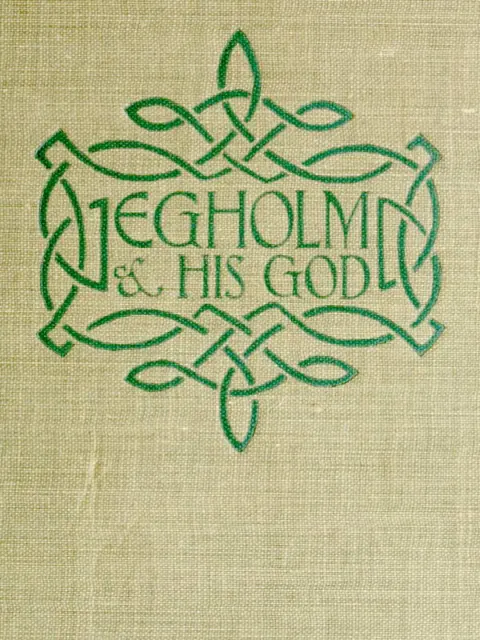
"Egholm and his God" by Johannes Buchholtz is a novel written in the early 20th century. The story revolves around the central character, Egholm, who is deeply enmeshed in the struggles and moral dilemmas of his life as he seeks spiritual clarity and financial stability amid personal and familial turmoil. The narrative explores themes of faith, the burdens of belief, and the impact of religion on relationships and personal choices. The opening of the book introduces us to Sivert, Egholm's son, who is whimsically observing the dreary environment through a window, while his mother, Fru Egholm, is concerned about her husband’s return from a difficult day. Egholm eventually arrives home disheveled and troubled, hinting at deeper issues he's grappling with, particularly his involvement in a religious brotherhood and the financial obligations that come with it. The dynamics within the family unfold as Egholm's intense views on faith conflict with Fru Egholm’s cautious pragmatism, setting up a tension that permeates their interactions. As the family's financial struggles intersect with their spiritual beliefs, the narrative foreshadows significant conflicts and challenges ahead.
Introduction adapted from the source catalogue; source summaries may be automatically generated.
Free to read · English · 66,240 words · No account needed
MAKE TIME FOR A GOOD BOOK
On by default. Untick to stop anonymous reading totals. Each page counts after 10 seconds in view. How this works.
Anonymous counting is on unless you have switched it off.
Anna--yes....
He writhed and twisted in his bed, as if he were on a spit. His heart pumped audibly and irregularly.
To begin with, she had opened the door, letting out all the warmth, and made him nervous with all the things she strewed about the floor.
Then there had been that trouble about the dark-room, which had driven him out of his senses with its insistence.
Why couldn’t she understand that it was not her his blows were aimed
at, but at Fate?
What was a photographer without a dark-room?
No--she could not understand. Not an atom. She could only stand there and say “But, Egholm....” and plague him about her kitchen.
Egholm half raised himself in bed, utterly in the power of his nightmare thoughts, and struck wildly at the air with his clenched fist.
The vision--yes, there it was!
“Herregud!--can’t a man be left to sleep in peace?” he murmured offendedly, yet with a sort of humility at the same time. “I’m so tired....”
But as in the gleam of lightning he saw again and again Jomfru Clara, and at last she stood there clearly, steadfastly, with her great deep and mischievous eyes radiantly upon him.
He groaned and shuddered, flinging himself desperately about as he lay, for he knew what was coming now.
Hastily, mechanically, he ran through the scene once more. There stood Anna, and there he himself....
“But, Egholm....”
“You are the serpent....”
His fist shot out into the dark, and struck, this time, not Anna, but the pale, bright girl who seemed to glide into her place.
“Oh--oh!” He writhed and groaned again, drawing in his breath between closed lips, as one who has suddenly cut a deep wound in his hand.
“Aren’t you well, dear?” It was Anna’s voice, close at hand.
He lay stiff and still, hardly breathing now. The interruption had
driven the horrors away.
Ridiculous--but so it was with him. He remembered, for instance, having been haunted by a snake--one he had seen preserved in spirits at some railway station office or other ... yes. That had stopped, after a while, of itself. But it was worse with Clara’s picture. In a way, it was more beautiful, of course--oh, so beautiful....
He yawned audibly.
But he thought many other things out yet: of his business and his money affairs; of Vang and Vang’s domestic life; of an invention he wanted to get on with--a thing of almost world-revolutionary importance, a steam turbine, that could go forward or back like lightning. It would make him a rich man--a wealthy man....
Your reading position is saved on this browser. Take it to another device with a library code. Reading pages adapt to text, rather than matching a printed edition.
BEHIND THE BOOK
This eBook is for the use of anyone anywhere in the United States and most other parts of the world at no cost and with almost no restrictions whatsoever. You may copy it, give it away or re-use it under the terms of the Project Gutenberg License included with this eBook or online at www.gutenberg.org. If you are not located in the United States, you will have to check the laws of the country where you are located before using this eBook. Read the source licence.
The original source file, including credits and licence, is retained by this library. Request an original-format copy at no charge. Please include the book title and Project Gutenberg identifier #46913.
KEEP YOUR CURIOSITY GOING
Coulson Kernahan

Maurice Baring
Frances Wright
Cécile Tormay

Frederic Jesup Stimson

W. H. P. (William Henry Pope) Jarvis