THE CLASSIC COLLECTION✦A dead man’s diaryCLASSIC FREE BOOKS
A dead man’s diary
Coulson Kernahan
THE CLASSIC COLLECTION · 1922
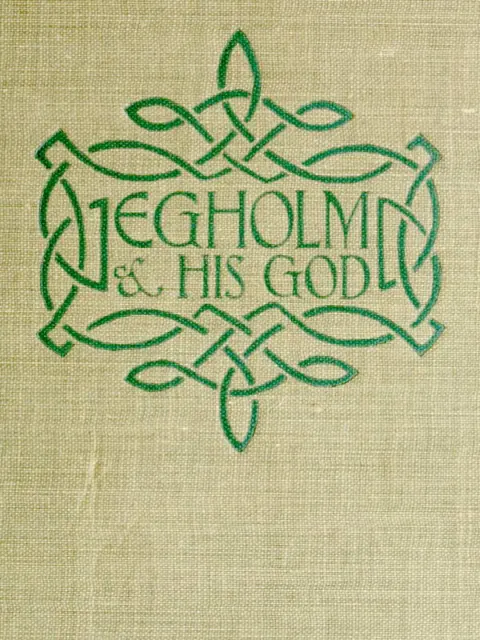
"Egholm and his God" by Johannes Buchholtz is a novel written in the early 20th century. The story revolves around the central character, Egholm, who is deeply enmeshed in the struggles and moral dilemmas of his life as he seeks spiritual clarity and financial stability amid personal and familial turmoil. The narrative explores themes of faith, the burdens of belief, and the impact of religion on relationships and personal choices. The opening of the book introduces us to Sivert, Egholm's son, who is whimsically observing the dreary environment through a window, while his mother, Fru Egholm, is concerned about her husband’s return from a difficult day. Egholm eventually arrives home disheveled and troubled, hinting at deeper issues he's grappling with, particularly his involvement in a religious brotherhood and the financial obligations that come with it. The dynamics within the family unfold as Egholm's intense views on faith conflict with Fru Egholm’s cautious pragmatism, setting up a tension that permeates their interactions. As the family's financial struggles intersect with their spiritual beliefs, the narrative foreshadows significant conflicts and challenges ahead.
Introduction adapted from the source catalogue; source summaries may be automatically generated.
Free to read · English · 66,240 words · No account needed
MAKE TIME FOR A GOOD BOOK
On by default. Untick to stop anonymous reading totals. Each page counts after 10 seconds in view. How this works.
Anonymous counting is on unless you have switched it off.
Egholm had still by no means recovered from his astonishment. He coughed, and began rubbing his neck, speculating the while on some appropriate punishment for the presumptuous girl.
“Well, you’re a nice little beast, you are,” he said. But he could hardly find more to say. There were not actually words in the language for criminals of that sex.
“You overgrown hobbledehoy, falling upon your own father, your own flesh and blood. I never heard of such a thing. If you had your deserts, you’d be bundled off to gaol this minute, you disgraceful young scoundrel.”
Suddenly he began tearing down the planks and cardboard from the window, without a word of explanation, but with emphatic jerks and crashes that fell in time to his words and gave them added weight.
“You wait--I shan’t--forget, you--squat-nosed--little--guttersnipe.”
But for every tug at the flimsy covering, the light poured in more violently, like a wonderful grace of God. Both Hedvig and her mother, despite their indignation, could not help craning their necks to look, as the corner of a garden, with budding trees, came moving, as it were, towards them. Even Emanuel opened his eyes wide, and lifted his little hands towards the light.
Once he had begun, there seemed no end to Egholm’s willingness to oblige. He cut the string by which the door was fastened, and tore away the padding from all sides.
“There! Now, are you satisfied?” he asked, with great politeness.
But there was something wanting yet to render his wife’s satisfaction complete. Those bottles.... All along the shelves and dresser were rows of bottles, in every shape, thickness, and colour. Many of them were ticketed with complicated chemical names, and some bore the awe-inspiring death’s-head poison label. Egholm had strung a tangle of lines from wall to wall, on which his photos hung to dry, exactly as when Hedvig played dolls’ washing-day.
And the kitchen table was a veritable map of stains.
“They cost something, those did,” said Egholm. “That’s my silver nitrate.” And he seemed as proud as if he had paved the way for his wife’s arrival with pieces of eight.
He helped to set the numerous bowls and glass plates aside, and
murmured regretfully:
“Well, well, anyhow, you’ve had your way.”
“Yes, but....”
“I hope you can see now, at any rate. And now, for Heaven’s sake, make haste and get that fowl done. I’ve asked Vang to supper.”
“But, Egholm! You don’t mean to say....” Fru Egholm almost screamed.
Your reading position is saved on this browser. Take it to another device with a library code. Reading pages adapt to text, rather than matching a printed edition.
BEHIND THE BOOK
This eBook is for the use of anyone anywhere in the United States and most other parts of the world at no cost and with almost no restrictions whatsoever. You may copy it, give it away or re-use it under the terms of the Project Gutenberg License included with this eBook or online at www.gutenberg.org. If you are not located in the United States, you will have to check the laws of the country where you are located before using this eBook. Read the source licence.
The original source file, including credits and licence, is retained by this library. Request an original-format copy at no charge. Please include the book title and Project Gutenberg identifier #46913.
KEEP YOUR CURIOSITY GOING
Coulson Kernahan

Maurice Baring
Frances Wright
Cécile Tormay

Frederic Jesup Stimson

W. H. P. (William Henry Pope) Jarvis