THE CLASSIC COLLECTION✦A dead man’s diaryCLASSIC FREE BOOKS
A dead man’s diary
Coulson Kernahan
THE CLASSIC COLLECTION · 1922
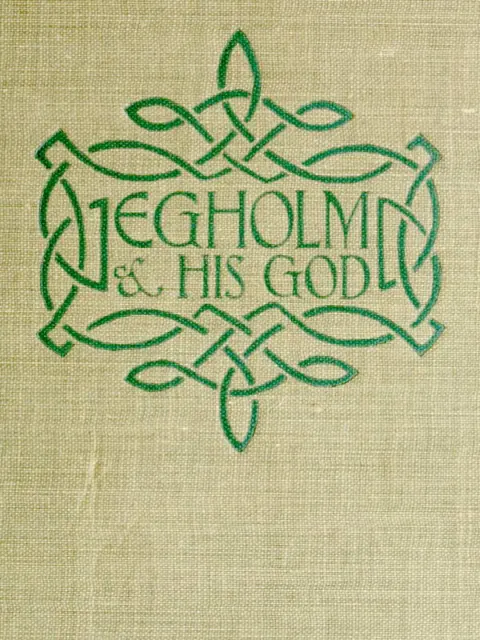
"Egholm and his God" by Johannes Buchholtz is a novel written in the early 20th century. The story revolves around the central character, Egholm, who is deeply enmeshed in the struggles and moral dilemmas of his life as he seeks spiritual clarity and financial stability amid personal and familial turmoil. The narrative explores themes of faith, the burdens of belief, and the impact of religion on relationships and personal choices. The opening of the book introduces us to Sivert, Egholm's son, who is whimsically observing the dreary environment through a window, while his mother, Fru Egholm, is concerned about her husband’s return from a difficult day. Egholm eventually arrives home disheveled and troubled, hinting at deeper issues he's grappling with, particularly his involvement in a religious brotherhood and the financial obligations that come with it. The dynamics within the family unfold as Egholm's intense views on faith conflict with Fru Egholm’s cautious pragmatism, setting up a tension that permeates their interactions. As the family's financial struggles intersect with their spiritual beliefs, the narrative foreshadows significant conflicts and challenges ahead.
Introduction adapted from the source catalogue; source summaries may be automatically generated.
Free to read · English · 66,240 words · No account needed
MAKE TIME FOR A GOOD BOOK
On by default. Untick to stop anonymous reading totals. Each page counts after 10 seconds in view. How this works.
Anonymous counting is on unless you have switched it off.
All else was forgotten now in the anxiety to see the place that was to be their home. It was a long, low house. A gateway, two narrow shop-windows, a door, and four pairs of windows beside. Over the entrance was a placard inscribed with black letters on a white ground: “H. Andreasen. Coffins and Funeral Furnishings.”
A very respectable house it was, plastered with cement. And now they could see the show-case on one side of the entrance, with the photos in. No dream, then, no misunderstanding. It was here they were to live.
“Lord, isn’t it fine!” cried Hedvig.
Anna sighed resignedly, even perhaps in relief.
Saw and plane stopped suddenly. The men wiped the cobwebs from the
panes and looked out, their bare arms gleaming against their blue
overalls.
Anna hurried in through the entrance, but stopped inside, and looked back at her husband inquiringly.
There was someone in there! She could feel it, and it made her ill at ease. She was ready to drop as it was, from weariness, and longed to hide herself between four walls, to get her breath in peace, and set about to make things comfortable for her husband, the children, and herself.
“What are you waiting for? Go along in--the door’s open.”
“But there’s someone ... I thought I....”
“Oh, that’ll be Vang, I suppose,” said Egholm, opening the door himself. “Hullo, Vang, here we are again. Nobody been, I suppose? No, no. Well, here’s my little party.”
Vang was seated in the middle of the bed, with his hat on, and a cold cigar at one corner of his mouth. The bed had sunk under the weight of his heavy frame; the dirty sheets and spotted blankets were twirled up as by a waterspout.
“My husband wrote about you,” Fru Egholm stammered with an effort. She stood holding her flower-pot and her parcels as if dreading to soil the paint of table and seats.
“Him and me,” said Vang in a solemn bass, letting his chin fall forward on his chest--“him and me we’ve been as one. But I’m going now, all right.”
“Why, what for?” said Egholm, touched. “There’s no need....” He took
Vang’s arm.
“Ah, but I must. Henrik Vang can’t stay where there’s women about.”
“What’s turned you so serious all at once?”
Vang smoothed the bedclothes, evidently embarrassed.
“It’s not just making a fuss, to be asked again. I know I’d rather stay. Where should I go to, anyway?”
“You’ve a charming wife at home,” said Egholm mischievously. “But stay here if you like. I’ll be only too pleased.”
Your reading position is saved on this browser. Take it to another device with a library code. Reading pages adapt to text, rather than matching a printed edition.
BEHIND THE BOOK
This eBook is for the use of anyone anywhere in the United States and most other parts of the world at no cost and with almost no restrictions whatsoever. You may copy it, give it away or re-use it under the terms of the Project Gutenberg License included with this eBook or online at www.gutenberg.org. If you are not located in the United States, you will have to check the laws of the country where you are located before using this eBook. Read the source licence.
The original source file, including credits and licence, is retained by this library. Request an original-format copy at no charge. Please include the book title and Project Gutenberg identifier #46913.
KEEP YOUR CURIOSITY GOING
Coulson Kernahan

Maurice Baring
Frances Wright
Cécile Tormay

Frederic Jesup Stimson

W. H. P. (William Henry Pope) Jarvis