THE CLASSIC COLLECTION✦A dead man’s diaryCLASSIC FREE BOOKS
A dead man’s diary
Coulson Kernahan
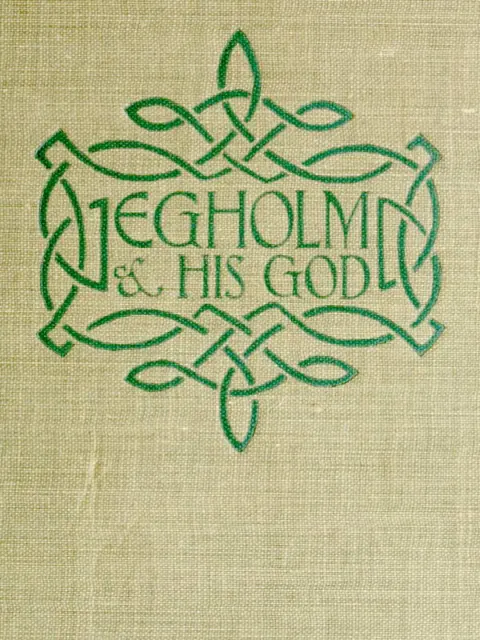
THE CLASSIC COLLECTION · 1922
"Egholm and his God" by Johannes Buchholtz is a novel written in the early 20th century. The story revolves around the central character, Egholm, who is deeply enmeshed in the struggles and moral dilemmas of his life as he seeks spiritual clarity and financial stability amid personal and familial turmoil. The narrative explores themes of faith, the burdens of belief, and the impact of religion on relationships and personal choices. The opening of the book introduces us to Sivert, Egholm's son, who is whimsically observing the dreary environment through a window, while his mother, Fru Egholm, is concerned about her husband’s return from a difficult day. Egholm eventually arrives home disheveled and troubled, hinting at deeper issues he's grappling with, particularly his involvement in a religious brotherhood and the financial obligations that come with it. The dynamics within the family unfold as Egholm's intense views on faith conflict with Fru Egholm’s cautious pragmatism, setting up a tension that permeates their interactions. As the family's financial struggles intersect with their spiritual beliefs, the narrative foreshadows significant conflicts and challenges ahead.
Introduction adapted from the source catalogue; source summaries may be automatically generated.
Free to read · English · 66,240 words · No account needed
MAKE TIME FOR A GOOD BOOK
On by default. Untick to stop anonymous reading totals. Each page counts after 10 seconds in view. How this works.
Anonymous counting is on unless you have switched it off.
He is far away in his dreamings now, without a thought for his
earthbound fellow-creatures.
He stands in his favourite attitude, with one hand on his hip, as if posing to a sculptor. A fine figure of a man. His watch-chain hangs in a golden arc from one waistcoat pocket to the other. Only one who knew of the fact would ever notice that one of the oval links is missing, and a piece of string tied in its place.
After a little he begins walking up and down, stopping now and again at the window, with a gesture of the hand, as if addressing an assembly without.
Then suddenly he swings round, facing his wife, and utters these words:
“Now I know what it means. At last!”
Fru Egholm checks the wheel of her machine, and looks up at him with leaden-grey, shadow-fringed eyes. But he says no more, and she sets the machine whirring once more.
Peace for a little while longer, at any rate, she thinks to herself.
Sivert looks up stealthily every time his father turns his back; the boy is flushed with repressed excitement, the tip of his tongue keeps creeping out.
“Mark you,” says Egholm after a long pause, “I’m wiser perhaps--a good deal wiser--than you take me for.”
He throws out his chest with conscious dignity, lifting his head, and placing one hand on his hip as before.
Oh, so he’s still thinking of that quarrel of theirs this morning. Well, well, of course it would be something to do with the Brotherhood some way or other.
“You said I was wasting my time.”
“I didn’t say that.”
“You said I was throwing money out of the window.”
Fru Egholm shifts in her seat, pulling nervously at her work. She would like to mitigate the sharpness of her words, and yet, if possible, stand by what she had said.
Sivert wakes to the fact that he is dribbling down over his hand, and
sniffs up hastily.
“Didn’t you say it was throwing money out of the window?”
“I said, it was hard taking money where there was none.”
“You said it was throwing money away. But do you know what I’m doing with that money all the time? I’m putting it in the bank.”
“In the bank?...”
“In the Bank of Heaven--where the interest is a thousand--nay, tens of thousands--per cent.! If it wasn’t for that, I’d never have thought of joining the Brotherhood at all.”
“But--I can’t help it, but I don’t believe in him, that Evangelist man. Young Karlsen, I mean.”
Your reading position is saved on this browser. Take it to another device with a library code. Reading pages adapt to text, rather than matching a printed edition.
BEHIND THE BOOK
This eBook is for the use of anyone anywhere in the United States and most other parts of the world at no cost and with almost no restrictions whatsoever. You may copy it, give it away or re-use it under the terms of the Project Gutenberg License included with this eBook or online at www.gutenberg.org. If you are not located in the United States, you will have to check the laws of the country where you are located before using this eBook. Read the source licence.
The original source file, including credits and licence, is retained by this library. Request an original-format copy at no charge. Please include the book title and Project Gutenberg identifier #46913.
KEEP YOUR CURIOSITY GOING
Coulson Kernahan

Maurice Baring
Frances Wright
Cécile Tormay

Frederic Jesup Stimson

W. H. P. (William Henry Pope) Jarvis