THE CLASSIC COLLECTION✦A dead man’s diaryCLASSIC FREE BOOKS
A dead man’s diary
Coulson Kernahan
THE CLASSIC COLLECTION · 1922
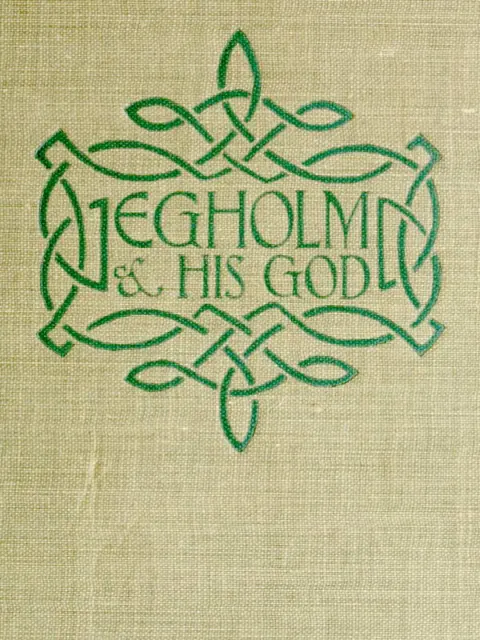
"Egholm and his God" by Johannes Buchholtz is a novel written in the early 20th century. The story revolves around the central character, Egholm, who is deeply enmeshed in the struggles and moral dilemmas of his life as he seeks spiritual clarity and financial stability amid personal and familial turmoil. The narrative explores themes of faith, the burdens of belief, and the impact of religion on relationships and personal choices. The opening of the book introduces us to Sivert, Egholm's son, who is whimsically observing the dreary environment through a window, while his mother, Fru Egholm, is concerned about her husband’s return from a difficult day. Egholm eventually arrives home disheveled and troubled, hinting at deeper issues he's grappling with, particularly his involvement in a religious brotherhood and the financial obligations that come with it. The dynamics within the family unfold as Egholm's intense views on faith conflict with Fru Egholm’s cautious pragmatism, setting up a tension that permeates their interactions. As the family's financial struggles intersect with their spiritual beliefs, the narrative foreshadows significant conflicts and challenges ahead.
Introduction adapted from the source catalogue; source summaries may be automatically generated.
Free to read · English · 66,240 words · No account needed
MAKE TIME FOR A GOOD BOOK
On by default. Untick to stop anonymous reading totals. Each page counts after 10 seconds in view. How this works.
Anonymous counting is on unless you have switched it off.
Egholm had himself been something of a thunderbolt--an ex-official of the railway service suddenly appearing in this assembly of hunchbacked tailors and lame shoemakers, relics from the almshouses, and all that was worn out and faded--always excepting, of course, the prosperous ironmonger at their head. But Fru Westergaard was as an earthquake that sent them flat on their faces at once. Not a child in the town but knew her and her villa and her dog, that took its meals with her at table.
Johannes, the postman, stood leaning against the wall, helpless, as if
in terror.
Madam[1] Kvist, her eyes starting out behind her glasses, asked aloud,
in unaffected wonder:
[1] “Madam,” the title used for elderly--strictly speaking, married--women of the working class, as distinct from “Fru” (Mrs.), which is--or was--reserved for ladies of higher social standing.
“Why--what in the name of mercy will she be wanting here?”
And Madam Strand, the dustman’s wife, a little black figure of a woman, was curtseying and mumbling continually: “Such an honour, did you ever, such an honour....”
Most of those present inwardly endorsed the sentiment.
Egholm drew himself up and sought to catch Fru Westergaard’s eye. He did not manage it, but let off his bow all the same. Only the incorrigible photographer sat swinging his legs on the vaulting-horse, with an expression of cold disapproval on his face.
Angel Karlsen stood by the three steps, ready, like another St. Peter, to receive the approaching soul. He took both the lady’s hands and pressed them warmly.
“There’s rejoicing here on earth and in the mansions of the Lord,” he said, with emotion, “at the coming of this our new disciple.” When he spoke, his great white beard went up and down, as if emphasising his words.
“And now the usual word of thanksgiving. Sit down here in front,
Frue.”
The new disciple was still talking nervously about the dog--it was leaving footmarks all over the place, but then, you know, in such weather.... She had galoshes for it, really, only to-night....
She moved to sit down, but the others rose hurriedly as she did so, and
the bench rocked.
No, no, she couldn’t sit there--no, not there; she couldn’t. No....
Fru Westergaard allowed herself the luxury of some eccentricities. She had remained unmarried until her six-and-fortieth year.
Egholm had been prepared for the trouble about the seat. Sprightly as a youth, he dashed out of the hall and across the courtyard to the taproom in front.
“A chair; lend me a chair, will you? Fru Westergaard’s there.”
“Fru Westergaard!”
“Fru Westergaard!”
He came back, breathless, with an American rocking-chair, which he
proffered humbly.
Your reading position is saved on this browser. Take it to another device with a library code. Reading pages adapt to text, rather than matching a printed edition.
BEHIND THE BOOK
This eBook is for the use of anyone anywhere in the United States and most other parts of the world at no cost and with almost no restrictions whatsoever. You may copy it, give it away or re-use it under the terms of the Project Gutenberg License included with this eBook or online at www.gutenberg.org. If you are not located in the United States, you will have to check the laws of the country where you are located before using this eBook. Read the source licence.
The original source file, including credits and licence, is retained by this library. Request an original-format copy at no charge. Please include the book title and Project Gutenberg identifier #46913.
KEEP YOUR CURIOSITY GOING
Coulson Kernahan

Maurice Baring
Frances Wright
Cécile Tormay

Frederic Jesup Stimson

W. H. P. (William Henry Pope) Jarvis