THE CLASSIC COLLECTION✦A dead man’s diaryCLASSIC FREE BOOKS
A dead man’s diary
Coulson Kernahan
THE CLASSIC COLLECTION · 1922
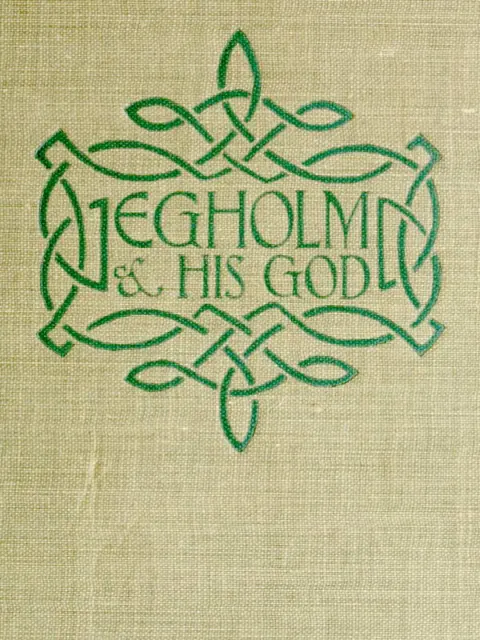
"Egholm and his God" by Johannes Buchholtz is a novel written in the early 20th century. The story revolves around the central character, Egholm, who is deeply enmeshed in the struggles and moral dilemmas of his life as he seeks spiritual clarity and financial stability amid personal and familial turmoil. The narrative explores themes of faith, the burdens of belief, and the impact of religion on relationships and personal choices. The opening of the book introduces us to Sivert, Egholm's son, who is whimsically observing the dreary environment through a window, while his mother, Fru Egholm, is concerned about her husband’s return from a difficult day. Egholm eventually arrives home disheveled and troubled, hinting at deeper issues he's grappling with, particularly his involvement in a religious brotherhood and the financial obligations that come with it. The dynamics within the family unfold as Egholm's intense views on faith conflict with Fru Egholm’s cautious pragmatism, setting up a tension that permeates their interactions. As the family's financial struggles intersect with their spiritual beliefs, the narrative foreshadows significant conflicts and challenges ahead.
Introduction adapted from the source catalogue; source summaries may be automatically generated.
Free to read · English · 66,240 words · No account needed
MAKE TIME FOR A GOOD BOOK
On by default. Untick to stop anonymous reading totals. Each page counts after 10 seconds in view. How this works.
Anonymous counting is on unless you have switched it off.
The Evangelist laughed heartily. “If spades are trumps, a bit of a smudgy black knave’s enough to do for your ace of clubs. There’s one coming along this evening--I’ve been working on her for over two years now, and all she cared for was the fear of Hell. You’ve got to deal with them according to their lights, and there’s a power of difference sometimes. Now, you, for instance--you were easy enough. Windows of heaven opening, that was your line. Ho, I remember! Well, well, it’s all the same, as long as....”
Karlsen broke off in distraction every time the door opened.
“As long as the Lord gets your souls. And Father, he’ll see to that.”
Egholm began to feel uncomfortable.
The congregation had broken up into groups, centring more particularly about the neighbourhood of the Angel. Johannes, the postman, glared furiously, with distended greenish eyes, at Fru Laursen wading like a cow among the reeds.
“If I can keep behind her,” thought Egholm to himself as he rose, “I might get through. Just to thank him....”
“Thought it was her,” whispered Karlsen in his ear.
“Eh?”
With a look of unspeakable cunning, Karlsen brought his face closer, blinked his eyes, and whispered again:
“A goldfish! And, on my word, the best we’ve had up to now. The one I told you about before.”
Egholm forgot all else. “A lady, you mean? Who? Coming to-night?”
“A lady, yes,” said Karlsen, almost stifling with pride. “A real lady, and no fudge.” He made a gesture that might have been mere helplessness. “But whether she’ll come or not, well, time will show.”
A little after, he lapsed into his natural dialect, and said frankly:
“I’m simply bursting to see if she’ll come.”
“But who is it?” asked Egholm impatiently.
“Her name--is--Fru Westergaard!”
“What? You don’t mean--the Distillery?”
“Hundred thousand,” said Karlsen, patting an imaginary pocket-book. “Widow of the late Distiller Westergaard, yes!” Then suddenly he broke into his platform tone, an imitation of Angel Karlsen’s tear-stifled voice.
“Fru Westergaard’s soul was hungered and athirst after Zion. And for two years past I’ve cried aloud to her in the wilderness, making ready the way before her--the way to the blessed Brotherhood of St. John. And now, at last, my words have brought forth fruit in her heart. Yes, and I’ve been to the villa!”
He grasped Egholm’s hand and pressed it in a long, firm grip--a way they had among the Brethren.
Again the door opened, but it was only Meilby, the photographer. The Evangelist turned up his nose in scorn, and looked another way.
Your reading position is saved on this browser. Take it to another device with a library code. Reading pages adapt to text, rather than matching a printed edition.
BEHIND THE BOOK
This eBook is for the use of anyone anywhere in the United States and most other parts of the world at no cost and with almost no restrictions whatsoever. You may copy it, give it away or re-use it under the terms of the Project Gutenberg License included with this eBook or online at www.gutenberg.org. If you are not located in the United States, you will have to check the laws of the country where you are located before using this eBook. Read the source licence.
The original source file, including credits and licence, is retained by this library. Request an original-format copy at no charge. Please include the book title and Project Gutenberg identifier #46913.
KEEP YOUR CURIOSITY GOING
Coulson Kernahan

Maurice Baring
Frances Wright
Cécile Tormay

Frederic Jesup Stimson

W. H. P. (William Henry Pope) Jarvis