THE CLASSIC COLLECTION✦A dead man’s diaryCLASSIC FREE BOOKS
A dead man’s diary
Coulson Kernahan
THE CLASSIC COLLECTION · 1922
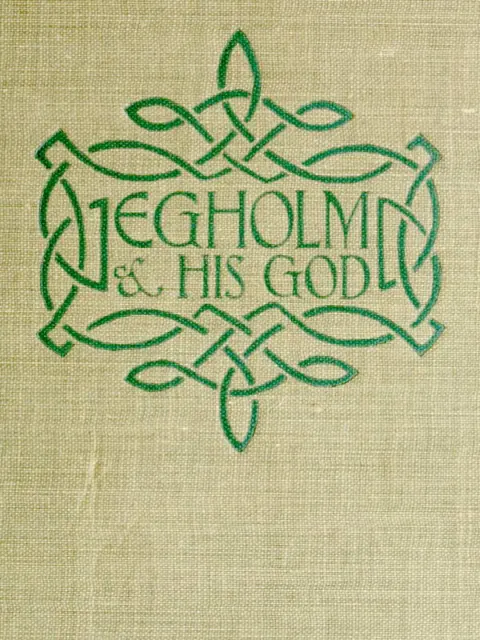
"Egholm and his God" by Johannes Buchholtz is a novel written in the early 20th century. The story revolves around the central character, Egholm, who is deeply enmeshed in the struggles and moral dilemmas of his life as he seeks spiritual clarity and financial stability amid personal and familial turmoil. The narrative explores themes of faith, the burdens of belief, and the impact of religion on relationships and personal choices. The opening of the book introduces us to Sivert, Egholm's son, who is whimsically observing the dreary environment through a window, while his mother, Fru Egholm, is concerned about her husband’s return from a difficult day. Egholm eventually arrives home disheveled and troubled, hinting at deeper issues he's grappling with, particularly his involvement in a religious brotherhood and the financial obligations that come with it. The dynamics within the family unfold as Egholm's intense views on faith conflict with Fru Egholm’s cautious pragmatism, setting up a tension that permeates their interactions. As the family's financial struggles intersect with their spiritual beliefs, the narrative foreshadows significant conflicts and challenges ahead.
Introduction adapted from the source catalogue; source summaries may be automatically generated.
Free to read · English · 66,240 words · No account needed
MAKE TIME FOR A GOOD BOOK
On by default. Untick to stop anonymous reading totals. Each page counts after 10 seconds in view. How this works.
Anonymous counting is on unless you have switched it off.
The subject was wisely chosen. And it did draw off attention for the moment from the matter in hand, but then her husband lapsed into his gloomy thoughts once more.
“No--we’ll never get rid of him now. Who’d ever have him? What can you use a head like that for, anyway? He’s little better than a lunatic. Eh? What do you say?”
Here Fru Egholm suddenly appeared unwontedly versed in the Scriptures. She answered boldly, and with emphasis:
“Well, there’s one place where Sivert won’t be set behind the rest--even if they’re ever so much of a genius.”
“Eh, what--what do you say?”
“I say: Blessed are the poor in spirit, for theirs is the Kingdom of
Heaven!”
Egholm gasped, utterly at a loss, and made no answer.
Sivert slept in the little back room where Hedvig had her couch. He lay on the floor, upon a sort of bed of some nondescript material, and slept in his clothes to keep warm. Nevertheless, he went to bed with a smile on his lips. His father’s persecution could not shatter his joy at being at home. Even the blows and kicks he got beat into him the fact that he was at home, and he took them without complaint. Yes, all was well, everything.
Next morning, as Egholm was gulping down his tea, he caught sight of Sivert’s bowed and huddled figure slipping across the yard. Ordinarily, Sivert stole out of his room by the window, and kept out of the way till his father had gone out--there was no sense in giving him the trouble of getting angry if it could be avoided. But to-day the boy had overslept himself.
Egholm reached out and rapped at the window, at the imminent risk of
breaking the glass.
Sivert stopped, gave a sickly smile, turned round twice where he stood, and made towards the gate.
“Here, you fool!” roared his father, and Sivert stopped again.
“Be quick and come in,” whispered his mother out from the kitchen door.
“Well, why don’t you come? Put on your cap and come along with me.”
Sivert obeyed without a word.
Egholm held the boy close to his side, and they marched down the path
towards the beach.
“Go on ahead, so I can keep an eye on you,” he commands. And Sivert walks on ahead with the transcendent smile of the martyr-about-to-be. He knows now he is to die, but it doesn’t matter so much, after all. Going to drown him, he supposes, since they are making towards the water.
“Know what you’ve got to do?” asks his father.
Your reading position is saved on this browser. Take it to another device with a library code. Reading pages adapt to text, rather than matching a printed edition.
BEHIND THE BOOK
This eBook is for the use of anyone anywhere in the United States and most other parts of the world at no cost and with almost no restrictions whatsoever. You may copy it, give it away or re-use it under the terms of the Project Gutenberg License included with this eBook or online at www.gutenberg.org. If you are not located in the United States, you will have to check the laws of the country where you are located before using this eBook. Read the source licence.
The original source file, including credits and licence, is retained by this library. Request an original-format copy at no charge. Please include the book title and Project Gutenberg identifier #46913.
KEEP YOUR CURIOSITY GOING
Coulson Kernahan

Maurice Baring
Frances Wright
Cécile Tormay

Frederic Jesup Stimson

W. H. P. (William Henry Pope) Jarvis