THE CLASSIC COLLECTION✦A dead man’s diaryCLASSIC FREE BOOKS
A dead man’s diary
Coulson Kernahan
THE CLASSIC COLLECTION · 1922
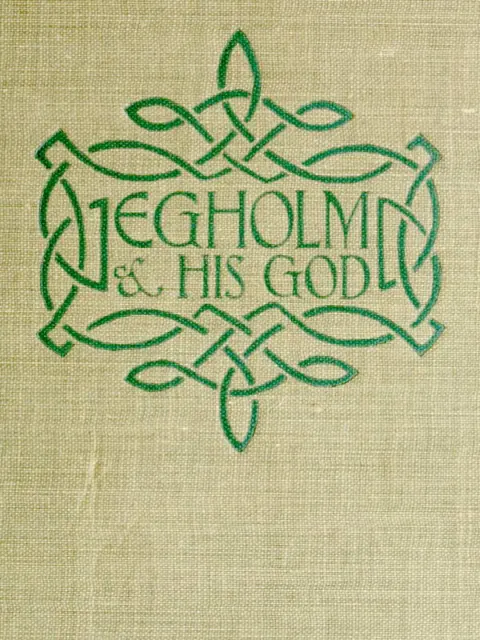
"Egholm and his God" by Johannes Buchholtz is a novel written in the early 20th century. The story revolves around the central character, Egholm, who is deeply enmeshed in the struggles and moral dilemmas of his life as he seeks spiritual clarity and financial stability amid personal and familial turmoil. The narrative explores themes of faith, the burdens of belief, and the impact of religion on relationships and personal choices. The opening of the book introduces us to Sivert, Egholm's son, who is whimsically observing the dreary environment through a window, while his mother, Fru Egholm, is concerned about her husband’s return from a difficult day. Egholm eventually arrives home disheveled and troubled, hinting at deeper issues he's grappling with, particularly his involvement in a religious brotherhood and the financial obligations that come with it. The dynamics within the family unfold as Egholm's intense views on faith conflict with Fru Egholm’s cautious pragmatism, setting up a tension that permeates their interactions. As the family's financial struggles intersect with their spiritual beliefs, the narrative foreshadows significant conflicts and challenges ahead.
Introduction adapted from the source catalogue; source summaries may be automatically generated.
Free to read · English · 66,240 words · No account needed
MAKE TIME FOR A GOOD BOOK
On by default. Untick to stop anonymous reading totals. Each page counts after 10 seconds in view. How this works.
Anonymous counting is on unless you have switched it off.
“Exactly. He lives in London. Don’t you know it’s written: ‘If he tarry till I come, what is that to thee?’ Yes, he’ll be here all right, up to the day of the coming again. Father’s got his address, but he keeps himself quiet, you understand, mostly. And Father doesn’t say where he is, but I managed to get hold of it, all the same. I sent him a picture post card from Veile only yesterday.”
Egholm ran in to borrow a pipe from Marinus. On the way he whispered to
his wife:
“He’s the biggest liar on earth. But if only he’d hand over that money.... I can’t stand the suspense. Put in a prayer meanwhile.”
The Evangelist puffed great clouds, and delivered another turn or so.
“I’ve something to tell you, my dear friend--in confidence, that is. The Star of Bethlehem’s been seen!”
He bent over Egholm and stared full into his eyes.
“Yes, the Star of Bethlehem--right over Odense, it was.”
And he puffed a spurt of smoke into Egholm’s face, his own contracting into an unconcealed grin.
“My father, the Angel, was standing in his office, and he saw it. It isn’t everyone that can see it, you know. But I could. It was the hugest star I’ve ever seen.”
Egholm condescended to shake his head as if deeply impressed. For the rest, his every nerve-cell was concentrating in an effort to hypnotise Karlsen’s hand into Karlsen’s pocket for that bundle of notes.
At eleven minutes past seven the Evangelist laid down his pipe and
buttoned his coat.
“The money! Er--you’ll excuse me, but--you’re not forgetting ... that gift.... No hurry, of course, not in the least....”
“You shall have it. I’m not forgetting it, no,” said Karlsen, with unction. “It’s not a great sum, but with the blessing of the Lord it may go a long way.”
He drew out a leather purse with a string from his pocket, unfastened the lace with exasperating care, and flung out a hand with a two-kroner piece.
“Two kroner! Is that--the gift? Karlsen, you don’t mean it!” said
Egholm, weeping.
“One daler, yes,” said Karlsen, laughing heartily. But his expression changed suddenly, possibly influenced by Egholm’s threatening look, and, resuming his dignified manner, he went on:
“The gift was originally forty-two kroner altogether, that being the sum found when the box was opened. Fru Westergaard gave thirty-five herself. You were in her good books, my friend.”
Karlsen allowed himself a momentary lapse from dignity to the extent of
a single wink.
“The rocking-chair,” murmured Egholm reminiscently.
Your reading position is saved on this browser. Take it to another device with a library code. Reading pages adapt to text, rather than matching a printed edition.
BEHIND THE BOOK
This eBook is for the use of anyone anywhere in the United States and most other parts of the world at no cost and with almost no restrictions whatsoever. You may copy it, give it away or re-use it under the terms of the Project Gutenberg License included with this eBook or online at www.gutenberg.org. If you are not located in the United States, you will have to check the laws of the country where you are located before using this eBook. Read the source licence.
The original source file, including credits and licence, is retained by this library. Request an original-format copy at no charge. Please include the book title and Project Gutenberg identifier #46913.
KEEP YOUR CURIOSITY GOING
Coulson Kernahan

Maurice Baring
Frances Wright
Cécile Tormay

Frederic Jesup Stimson

W. H. P. (William Henry Pope) Jarvis