THE CLASSIC COLLECTION✦A dead man’s diaryCLASSIC FREE BOOKS
A dead man’s diary
Coulson Kernahan
THE CLASSIC COLLECTION · 1922
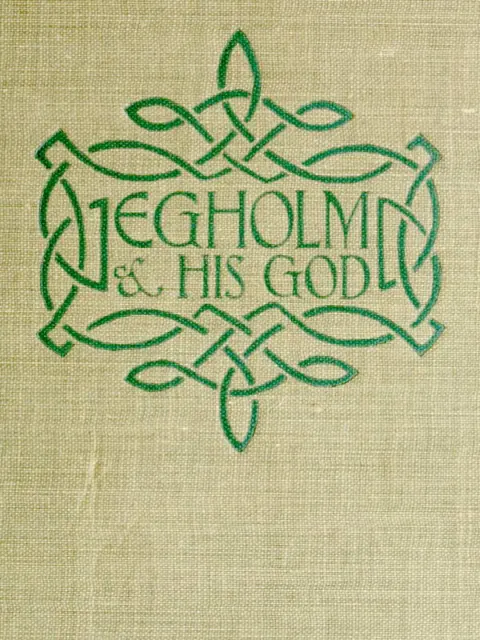
"Egholm and his God" by Johannes Buchholtz is a novel written in the early 20th century. The story revolves around the central character, Egholm, who is deeply enmeshed in the struggles and moral dilemmas of his life as he seeks spiritual clarity and financial stability amid personal and familial turmoil. The narrative explores themes of faith, the burdens of belief, and the impact of religion on relationships and personal choices. The opening of the book introduces us to Sivert, Egholm's son, who is whimsically observing the dreary environment through a window, while his mother, Fru Egholm, is concerned about her husband’s return from a difficult day. Egholm eventually arrives home disheveled and troubled, hinting at deeper issues he's grappling with, particularly his involvement in a religious brotherhood and the financial obligations that come with it. The dynamics within the family unfold as Egholm's intense views on faith conflict with Fru Egholm’s cautious pragmatism, setting up a tension that permeates their interactions. As the family's financial struggles intersect with their spiritual beliefs, the narrative foreshadows significant conflicts and challenges ahead.
Introduction adapted from the source catalogue; source summaries may be automatically generated.
Free to read · English · 66,240 words · No account needed
MAKE TIME FOR A GOOD BOOK
On by default. Untick to stop anonymous reading totals. Each page counts after 10 seconds in view. How this works.
Anonymous counting is on unless you have switched it off.
Sivert sang all the smørrebrød off one dish, and then went out with the porter to a little room where they cleaned the lamps, and here he talked of many remarkable things, helping to clean lamps the while. At last he brought out his brass tap, and polished that up till it shone. Then suddenly he stole off unobserved.
Down the street and across Andreasen’s yard, walking awkwardly and shuffling like an epileptic, his mouth running over all the time with prayers and verses of hymns.
In the little entry he stood still and laid one ear to the crack of the door, listening breathlessly.
Yes, there was Emanuel prattling away, and his mother answering with a
few low words.
Was it to be his luck to find them alone? He listened again, with his head on one side, and heard now another sound--a long-drawn, sucking sound, almost like a snore, and then the rattle of a cup, repeated at regular intervals. Ah ... now he knew who was there besides!
Sivert knelt down where he stood, with his face against the door and his hands folded piously. He had knelt that way once before, when he had happened to upset a lamp. So, too, Knud, the Martyr-King, had knelt waiting for death. It was the proper thing on such occasions, and no doubt looked well. But was his hair all right?
He drew forth the brass tap, and tried to make out his own reflection swimming unsteadily in the polished metal.
Perhaps he had spoken aloud. For suddenly his father appeared in the open door. The first astonishment in his face changed to inflamed fury, and he swung back his boot ready for a blow.
Sivert, terrified, held up the brass tap like a crucifix above his
head, as if to guard.
His thoughts were scattered in flight like sparrows at a shot, but some instinct came to his aid, and he cried out in his cracked voice, echoing through the house:
“Oh, Lord my God, I’ve brought your brass tap.”
Sivert’s ideas as to his father on earth and his Father in heaven had always been somewhat vague; now, they seemed fused into one.
The effect of his words was beyond comprehension. The threatened kick did not fall; his father snatched up the tap instead, and said:
“Wherever did you find it? I’ve been wanting it all the time.”
“In the cellar,” said Sivert. “But it wasn’t me that didn’t bring it
along.”
And with an idiot laugh he collapsed in his mother’s arms.
Your reading position is saved on this browser. Take it to another device with a library code. Reading pages adapt to text, rather than matching a printed edition.
BEHIND THE BOOK
This eBook is for the use of anyone anywhere in the United States and most other parts of the world at no cost and with almost no restrictions whatsoever. You may copy it, give it away or re-use it under the terms of the Project Gutenberg License included with this eBook or online at www.gutenberg.org. If you are not located in the United States, you will have to check the laws of the country where you are located before using this eBook. Read the source licence.
The original source file, including credits and licence, is retained by this library. Request an original-format copy at no charge. Please include the book title and Project Gutenberg identifier #46913.
KEEP YOUR CURIOSITY GOING
Coulson Kernahan

Maurice Baring
Frances Wright
Cécile Tormay

Frederic Jesup Stimson

W. H. P. (William Henry Pope) Jarvis