THE CLASSIC COLLECTION✦A dead man’s diaryCLASSIC FREE BOOKS
A dead man’s diary
Coulson Kernahan
THE CLASSIC COLLECTION · 1922
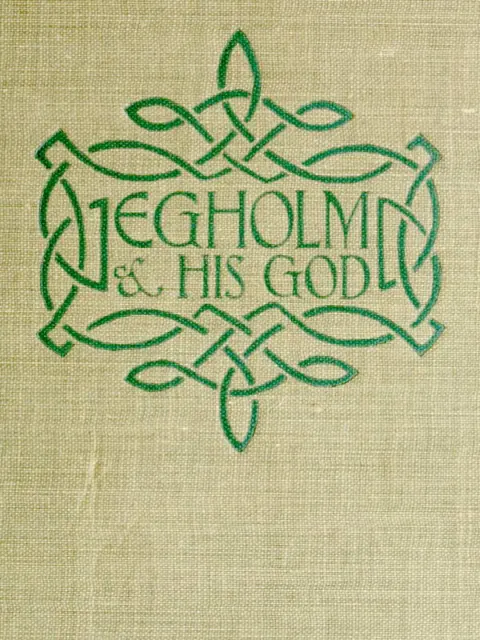
"Egholm and his God" by Johannes Buchholtz is a novel written in the early 20th century. The story revolves around the central character, Egholm, who is deeply enmeshed in the struggles and moral dilemmas of his life as he seeks spiritual clarity and financial stability amid personal and familial turmoil. The narrative explores themes of faith, the burdens of belief, and the impact of religion on relationships and personal choices. The opening of the book introduces us to Sivert, Egholm's son, who is whimsically observing the dreary environment through a window, while his mother, Fru Egholm, is concerned about her husband’s return from a difficult day. Egholm eventually arrives home disheveled and troubled, hinting at deeper issues he's grappling with, particularly his involvement in a religious brotherhood and the financial obligations that come with it. The dynamics within the family unfold as Egholm's intense views on faith conflict with Fru Egholm’s cautious pragmatism, setting up a tension that permeates their interactions. As the family's financial struggles intersect with their spiritual beliefs, the narrative foreshadows significant conflicts and challenges ahead.
Introduction adapted from the source catalogue; source summaries may be automatically generated.
Free to read · English · 66,240 words · No account needed
MAKE TIME FOR A GOOD BOOK
On by default. Untick to stop anonymous reading totals. Each page counts after 10 seconds in view. How this works.
Anonymous counting is on unless you have switched it off.
With a strangely sweet horror her father noted all: her guilty mouth, half-open, with lips pale and narrow, yet fresh, and teeth white as almonds, whence issued that hell-born defiance. Her blood must be evil as smoking brimstone.
Egholm sank back powerless in his chair.
But a moment later a new feeling came over him. How great a thing would it be to bring this child of sin to God, with bowed head and folded hands. “There is more joy in heaven over one sinner that repenteth, than of the ninety and nine which need no repentance.” So the Scripture said. Hedvig would be a heavenly subject for conversion.
And there could be no doubt but that God would appreciate the efforts of the one who had borne the trial of that conversion.
Hedvig stood with her back to him, slightly stooping, as if awaiting the blow. She started when her father came out and laid his hand on her shoulder instead.
The conversion process appeared strangely easy; yes, she should always find something to say to the bakers by way of excuse. She set to work at once pulling the chairs aside to make room.
Her father looked crestfallen and unsatisfied. He had been prepared for a struggle--but this was too easy.
Still, he had something in reserve. Little Emanuel, whose inconsiderable length of days might serve as warrant for his innocence, was set on a pillow in the middle of the floor.
“Put something under your knees, Hedvig dear,” said her mother.
“No need of that,” said Egholm, thumping his own on the floor with
unnecessary force.
“Oh, great and merciful God....”
“You’ve got your hat on, dear,” said Fru Egholm mildly.
He sent her a wrathful glance, but laid aside his hat with much dignity.
“Almighty God, Lord of Heaven and Earth....”
Egholm’s prayer began as a sonorous commonplace, an echo from the halls of the Brethren of St. John. But gradually, as his subject grew on him, his own individual religious view for the time being showed through.
It was to God as the Owner of great possessions that he prayed.
If any had asked him who was the greatest inventor in the world, he would have confessed, with a pious bend of the head, that it was one of the least of God’s servants, an unworthy creature by the name of Egholm. But at the thought that God owned the fields, the woods, and the cities--the lands and the seas, Egholm, who had never owned more than the poor clothes he wore and a trifle of old furniture, was moved to prostrate himself before that mighty power.
Your reading position is saved on this browser. Take it to another device with a library code. Reading pages adapt to text, rather than matching a printed edition.
BEHIND THE BOOK
This eBook is for the use of anyone anywhere in the United States and most other parts of the world at no cost and with almost no restrictions whatsoever. You may copy it, give it away or re-use it under the terms of the Project Gutenberg License included with this eBook or online at www.gutenberg.org. If you are not located in the United States, you will have to check the laws of the country where you are located before using this eBook. Read the source licence.
The original source file, including credits and licence, is retained by this library. Request an original-format copy at no charge. Please include the book title and Project Gutenberg identifier #46913.
KEEP YOUR CURIOSITY GOING
Coulson Kernahan

Maurice Baring
Frances Wright
Cécile Tormay

Frederic Jesup Stimson

W. H. P. (William Henry Pope) Jarvis