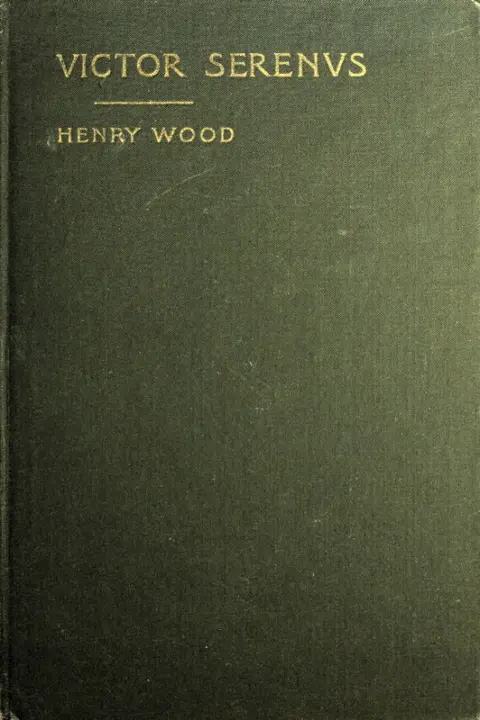
Victor Serenus: A Story of the Pauline Era
Henry Wood
THE CLASSIC COLLECTION · 1890
Edward Burton by Henry Wood is a novel written in the late 19th century. It follows a gifted, devout New Englander whose path toward the ministry is upended by illness and redirected by a turn to spiritual idealism, set against seaside society scenes where skeptics and believers debate evolution, marriage, and reform. Expect a blend of Bar Harbor social life, theological questioning, and a challenge to strict materialism.
The opening of the novel moves from a languid canoe ride on Frenchman’s Bay into a lively dinner party where Miss Jenness spars with medical student Junius Van Roden over evolution and materialism, and the guests argue about woman suffrage, state power, and social “reforms.” The narrative then shifts back in time to New Hampshire, tracing Edward’s pious upbringing, his mother’s plan for the pulpit, and his diligent progress through academy and college. Guided away from Andover to Princeton by a conservative pastor, Edward excels in theology but collapses at graduation and endures a severe illness in Boston. There, aided by his friend William Tapley’s quiet, metaphysical counsel, he journals a hard passage from narcotics and despair toward calm, prayerful receptivity to divine love, regaining strength and preparing to return home with a newly awakened inner spirituality.
Introduction adapted from the source catalogue; source summaries may be automatically generated.
Free to read · English · 87,768 words · No account needed
MAKE TIME FOR A GOOD BOOK
On by default. Untick to stop anonymous reading totals. Each page counts after 10 seconds in view. How this works.
Anonymous counting is on unless you have switched it off.
“Yes, I love bad people too, but not the bad things they do. Loving everybody is what makes me so happy, and I know that I can love just as hard without a body as with one. When I get through with this back that was hurt, I shall be so free that I can just skip around and be light-hearted, for all the love lives and is lively, and that is me, while my back is only a part of what I wear, just as I wear clothes.”
“Did Miss Bonbright tell you all these things, May?”
“Oh, yes, and a great deal more. She says that God is love, and that the great Apostle says, that nothing in the whole world can separate us from His love, and I believe it, because I feel inside that it is true, and that I know it already.”
“Here is wisdom which sages have longed for, and often missed,” said Burton to himself. “Surely, ‘Out of the mouth of babes and sucklings thou hast perfected praise.’”
“She told me,” continued the child, “that heaven is not a place away off ever so far, as I used to think, but that it, and Christ also, is in us. I know that she is right, for when I love everybody I can feel heaven now, right here in this cot. Sometimes when I am all by myself and begin to feel lonely, I just shut my eyes, and love God real hard, and then all the loneliness goes away, and I feel so happy that I really forget whether I have a body or not.”
Burton thought that the little pale form seemed almost transparent,
from spiritualization.
“Miss Bonbright taught me a beautiful verse,” continued the child.
“Will you repeat it to me?”
“Oh, yes; it is this:”--
“‘Be like the bird that halting in her flight
Awhile, on boughs too slight,
Feels them give way beneath her, and yet sings,
Knowing that she hath wings.’”
“What do you think it means, May?”
“Oh, that is very easy. Our bodies, and the things around us, are the things that give way; but we don’t care, because our souls are the wings. When our wings are strong enough to fly, we don’t need the boughs any more.”
“My dear little girl,” said Burton, “I must not remain longer now, for so much talking may tire you.”
“Oh, no, Mr. Burton. I am pretty weak, but talking about those things rests me and makes me lively; but sometimes the nurse thinks that I talk too much.”
“Perhaps I will come and see you again.”
Your reading position is saved on this browser. Take it to another device with a library code. Reading pages adapt to text, rather than matching a printed edition.
BEHIND THE BOOK
This eBook is for the use of anyone anywhere in the United States and most other parts of the world at no cost and with almost no restrictions whatsoever. You may copy it, give it away or re-use it under the terms of the Project Gutenberg License included with this eBook or online at www.gutenberg.org. If you are not located in the United States, you will have to check the laws of the country where you are located before using this eBook. Read the source licence.
The original source file, including credits and licence, is retained by this library. Request an original-format copy at no charge. Please include the book title and Project Gutenberg identifier #77430.
KEEP YOUR CURIOSITY GOING
Coulson Kernahan

Maurice Baring
Frances Wright
Cécile Tormay

Frederic Jesup Stimson

W. H. P. (William Henry Pope) Jarvis