
The William Henry Letters
Abby Morton Diaz
THE CLASSIC COLLECTION · 1918
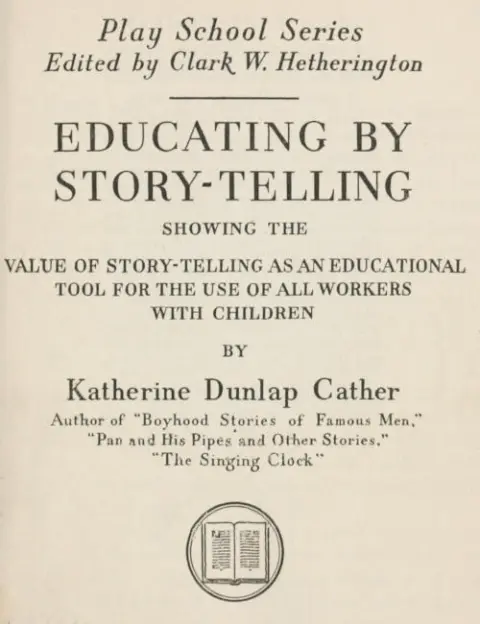
"Educating by Story-Telling" by Katherine Dunlap Cather is an educational guide written in the early 20th century. This book advocates for the use of storytelling as a powerful educational tool for those working with children, emphasizing its role in enhancing learning experiences and moral development. The author presents the value of storytelling not just as entertainment, but as a means to enrich children’s lives and education across various subjects, promoting a deeper understanding of literature and life principles. The opening of the work establishes the author's extensive experience with children and outlines the intention behind the book, which seeks to provide a structured approach to effective storytelling in educational settings. The author discusses how storytelling can be a vessel for cultural heritage and moral values, illuminating children's imaginations and interests. Cather proposes that an understanding of children's developmental stages and interests is crucial for selecting stories that will resonate with them, encouraging educators to adeptly match narratives to the psychological needs of their students. Overall, the beginning sets a foundation for the exploration of storytelling’s transformative potential in both the classroom and home environments.
Introduction adapted from the source catalogue; source summaries may be automatically generated.
Free to read · English · 121,766 words · No account needed
MAKE TIME FOR A GOOD BOOK
On by default. Untick to stop anonymous reading totals. Each page counts after 10 seconds in view. How this works.
Anonymous counting is on unless you have switched it off.
Sometimes the elimination or modification of a cruel feature of a tale makes it suitable for telling to children, as in “Hansel and Gretel.” The ending Humperdinck uses in his opera, wherein the old witch turns to gingerbread instead of being baked in the oven by the orphans, is far better ethically than the original one, yet the elemental part of the story is left unspoiled. Narrators cannot be too careful in this respect; for the function of story-telling is to refine rather than to brutalize, to give pleasure and not to shock, and there is no excuse for using tales that corrupt or injure in any way when there are enough lovely ones to satisfy every normal desire of the child. Let the test of selection be the question, Does this story contain an element or picture that will shock a sensitive child or whet the cruel tendencies of a rough, revengeful one? If it does, do not use it even though the list of fairy tales may be reduced to a very limited one, but choose the other material for this period from the lore of science that will feed the fancy and not warp the soul or distort the character. (See Part II, Chapter XVI, “Story-Telling to Intensify Interest in Nature Study.”)
ANDERSEN, HANS CHRISTIAN: Wonder Stories Told to Children.
ASBJØRNSEN, PETER CHRISTEN: Fairy Tales from the Far North.
BALLARD, SUSAN: Fairy Tales from Far Japan.
BLUMENTHAL, VERRA X. K. DE: Folk Tales from the Russian.
BUNCE, JOHN THACKERAY: Fairy Tales: Their Origin and Meaning.
CHODZKO, ALEXANDER E. B.: Fairy Tales of the Slav Peasants and
Herdsmen.
CROKER, THOMAS CROFTON: Legends and Fairy Tales of Ireland.
CURTIN, JEREMIAH: Myths and Folk Tales of the Russians,
Western Slavs, and Magyars.
DUMAS, ALEXANDRE: Black Diamonds; The Golden Fairy Book.
EDWARDS, CHARLES LINCOLN: Bahama Songs and Stories.
FORTIER, ALCÉE: Louisiana Folk Tales.
GRAVES, ALFRED PERCEVAL: The Irish Fairy Book.
GRIMM, JACOB: German Household Tales.
HAIGHT, RACHEL WEBB: Index of Fairy Tales.
HARTLAND, E. SIDNEY: The Science of Fairy Tales.
JACOBS, JOSEPH: Europa’s Fairy Book; English Fairy Tales;
Celtic Fairy Tales.
KEIGHTLEY, THOMAS: Fairy Mythology.
KENNEDY, HOWARD ANGUS: The New World Fairy Book.
LABOULAYE, EDOUARD RENÉ: The Fairy Book; Last Fairy Tales.
LANG, ANDREW: The Blue Fairy Book; The Orange Fairy Book; The Lilac Fairy Book; The Green Fairy Book; The Yellow Fairy Book; The Red Fairy Book.
MACDONNELL, ANNE: The Italian Fairy Book.
MACMANUS, SEUMAS: Donegal Fairy Stories.
MITFORD, FREEMAN: Tales of Old Japan.
OZAKI, YEI THEODORA: Japanese Fairy Tales.
PERRAULT, CHARLES: Tales for Children from Many Lands.
PYLE, HOWARD: The Wonder Clock.
RAMASWAMI RAJU: Indian Fables.
Your reading position is saved on this browser. Take it to another device with a library code. Reading pages adapt to text, rather than matching a printed edition.
BEHIND THE BOOK
This eBook is for the use of anyone anywhere in the United States and most other parts of the world at no cost and with almost no restrictions whatsoever. You may copy it, give it away or re-use it under the terms of the Project Gutenberg License included with this eBook or online at www.gutenberg.org. If you are not located in the United States, you will have to check the laws of the country where you are located before using this eBook. Read the source licence.
The original source file, including credits and licence, is retained by this library. Request an original-format copy at no charge. Please include the book title and Project Gutenberg identifier #58255.
KEEP YOUR CURIOSITY GOING
Abby Morton Diaz
Helen Hunt Jackson
Mary Frances Blaisdell
Stuart Dodgson Collingwood

Kate Douglas Smith Wiggin
Hesba Stretton