
The William Henry Letters
Abby Morton Diaz
THE CLASSIC COLLECTION · 1918
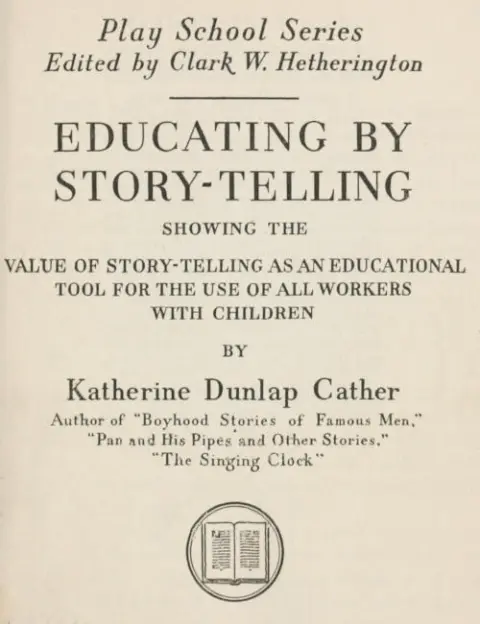
"Educating by Story-Telling" by Katherine Dunlap Cather is an educational guide written in the early 20th century. This book advocates for the use of storytelling as a powerful educational tool for those working with children, emphasizing its role in enhancing learning experiences and moral development. The author presents the value of storytelling not just as entertainment, but as a means to enrich children’s lives and education across various subjects, promoting a deeper understanding of literature and life principles. The opening of the work establishes the author's extensive experience with children and outlines the intention behind the book, which seeks to provide a structured approach to effective storytelling in educational settings. The author discusses how storytelling can be a vessel for cultural heritage and moral values, illuminating children's imaginations and interests. Cather proposes that an understanding of children's developmental stages and interests is crucial for selecting stories that will resonate with them, encouraging educators to adeptly match narratives to the psychological needs of their students. Overall, the beginning sets a foundation for the exploration of storytelling’s transformative potential in both the classroom and home environments.
Introduction adapted from the source catalogue; source summaries may be automatically generated.
Free to read · English · 121,766 words · No account needed
MAKE TIME FOR A GOOD BOOK
On by default. Untick to stop anonymous reading totals. Each page counts after 10 seconds in view. How this works.
Anonymous counting is on unless you have switched it off.
Grimm Brothers,
appearance of, as collectors and preservers of Thuringian folklore,
27;
beginnings of stories by, 54;
stories retold from, 209, 212, 218.
Guerber, Helène A., Legends of the Middle Ages by, 44.
Halévy, Ludovic, fascination of stories by, 50.
“Half-Chick,” source of, 25.
Hall, G. Stanley, plea of, in behalf of Bible stories, 118-119.
“Hansel and Gretel,” modification of, for children, 30.
Heroic period,
story interests in, 32-41;
works of art suitable for, 104-105;
Bible stories for, 123;
Old Testament stories suitable for, 124.
Hiawatha,
as material for stories for heroic period, 38;
material for dramatic work in, 114.
History, stories from, suitable for children in heroic period, 38-40; plays and pageants to be used in connection with, 115; material found in stories from, for teaching of ethics, 140; story-telling to intensify interest in, 143-167; stories to use in teaching, 263, 326.
Honesty, story to teach, 203.
Hood, Margaret Graham, “The Search for the Seven Cities” by, 149-167.
“Hop o’ My Thumb,” first appearance of, 27.
“How They Came to Have Kite Day in China,” Chinese folk tale, 330.
Iliad,
stories from, suitable for children in heroic period, 35;
material for romantic period in, 44.
Imaginative period, story interests in, 20-30.
Indian legends, stories based on, 174, 299.
Jacques, introducing children to paintings by, 103-104.
Japanese legend, “Why the Japanese Love the Stork,” 296.
Jerusalem Delivered, material for romantic period in, 44.
John of Hildesheim, works of, a help to the Bible story-teller, 123.
Jordan, David Starr,
science stories by, 182-183;
“The Story of a Salmon” by, 255;
“The Story of a Stone” by, 331.
Joshua, book of, as an adventure story, 125.
Judges, book of, viewed as a collection of narratives, 126.
“Jussieu and the Heliotrope,” story of, 325.
Key, Ellen, use of love stories in romantic period advocated by, 48.
Kindness, story teaching, 218.
Labor, artists and paintings that lead to respect for, 104.
“Lady of Stavoren, The,” story of, 289.
Lagerlöf, Selma,
works of, a help to the Bible story-teller, 123;
legend of “The Emperor’s Vision” adapted from, 306.
Landseer, Sir Edwin, pictures by, suitable for little children, 98-99.
Lang, Andrew, totemistic theory of, 3, 25.
Langobardian myths, interesting in romantic period, 45.
Lanier, Sidney,
The Boy’s Mabinogion by, 36;
The Boy’s King Arthur by, 44.
“Last Lesson,” Daudet’s, climax of, 56.
Libraries, story-telling in, 9.
Literature, story-telling to lead to appreciation of, 69-82.
“Little Stepmother, The,” story of, 227.
“London Bridge, The Fall of,” story of, 326.
Longfellow, H. W., study of poems of, by story method, 78-80.
Love stories, use of, with children in romantic period, 48-49.
“Luck Boat of Lake Geneva, The,”
Swiss legend, 5;
retold, 295.
“Luck Boy of Toy Valley, The,” story of, 302.
Lying, fairy tales and, 22-24.
Mabinogion,
stories from, suitable for heroic period, 35, 36;
material for dramatic work in, 114.
MacManus, Seumas, quoted, 7.
Madonna pictures, use of, with little children, 100-101.
“Man in the Moon, The Story of the,” 203-204.
Your reading position is saved on this browser. Take it to another device with a library code. Reading pages adapt to text, rather than matching a printed edition.
BEHIND THE BOOK
This eBook is for the use of anyone anywhere in the United States and most other parts of the world at no cost and with almost no restrictions whatsoever. You may copy it, give it away or re-use it under the terms of the Project Gutenberg License included with this eBook or online at www.gutenberg.org. If you are not located in the United States, you will have to check the laws of the country where you are located before using this eBook. Read the source licence.
The original source file, including credits and licence, is retained by this library. Request an original-format copy at no charge. Please include the book title and Project Gutenberg identifier #58255.
KEEP YOUR CURIOSITY GOING
Abby Morton Diaz
Helen Hunt Jackson
Mary Frances Blaisdell
Stuart Dodgson Collingwood

Kate Douglas Smith Wiggin
Hesba Stretton