
The William Henry Letters
Abby Morton Diaz
THE CLASSIC COLLECTION · 1918
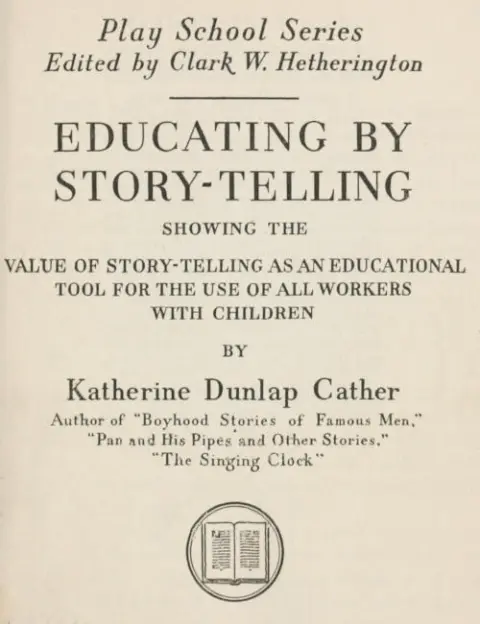
"Educating by Story-Telling" by Katherine Dunlap Cather is an educational guide written in the early 20th century. This book advocates for the use of storytelling as a powerful educational tool for those working with children, emphasizing its role in enhancing learning experiences and moral development. The author presents the value of storytelling not just as entertainment, but as a means to enrich children’s lives and education across various subjects, promoting a deeper understanding of literature and life principles. The opening of the work establishes the author's extensive experience with children and outlines the intention behind the book, which seeks to provide a structured approach to effective storytelling in educational settings. The author discusses how storytelling can be a vessel for cultural heritage and moral values, illuminating children's imaginations and interests. Cather proposes that an understanding of children's developmental stages and interests is crucial for selecting stories that will resonate with them, encouraging educators to adeptly match narratives to the psychological needs of their students. Overall, the beginning sets a foundation for the exploration of storytelling’s transformative potential in both the classroom and home environments.
Introduction adapted from the source catalogue; source summaries may be automatically generated.
Free to read · English · 121,766 words · No account needed
MAKE TIME FOR A GOOD BOOK
On by default. Untick to stop anonymous reading totals. Each page counts after 10 seconds in view. How this works.
Anonymous counting is on unless you have switched it off.
Arabian folk tales retold, 195, 269.
Art,
story-telling to awaken an appreciation of, 95-106;
music and, to be drawn upon by the Bible story-teller, 129-130;
story to use in connection with teaching, 283.
Arthur, King, stories of,
as sources of material for heroic period, 35-36;
enjoyed in romantic period 43;
care necessary in use of tales from, 43-44;
material for dramatic work in, 114.
Aryan theory, Max Müller’s, 3.
Bailey, Carolyn Sherwin, Stories for Sunday Telling by, 137.
Bancroft, George, legend “Why Grizzly Bear Goes on All Fours” adapted
from, 299.
Basile, Giambattista, early collector of fairy tales, 26.
“Bat and His Partners, The,” story of, 208.
Bavarian folk tales, 208, 228.
Bayard, story of, admirable for heroic period, 38.
Beginnings of stories, 54-55.
“Belle au Bois Dormant,” Perrault’s, 26.
Ben Hur, to be read by tellers of Bible stories, 123.
Bible stories,
history tales suitable for heroic period found among, 40;
in The Courtship of Miles Standish, 79-80;
discussion of use of, in story-telling, 118-130.
Biographical stories,
suitable for heroic period, 38-39;
types of, suited to romantic period, 45-47;
as a means of interesting children in authors’ works, 71-73;
use of, in field of art, 98-101;
material in, for teaching of ethics, 140;
use of, in history teaching, 145-146;
story of “The Duty That Wasn’t Paid,” 278;
story of “Wilhelmina’s Wooden Shoes,” 283.
“Blue Beard,”
first appearance of, 26;
not suitable for children, 29.
Bonheur, Rosa, pictures by, suitable for little children, 99.
“Boy of Old Vienna, A,” story of, 89-93.
Bradley, Will, “The Wonder Box” by, 28.
Breton, Jules, introducing children to paintings by, 103-104.
“Brier Rose,”
story of, 25;
retelling of, 209-212.
Building the story, 52-57.
Cabot, Ella Lyman, Ethics for Children by, 136.
Chapin, Anna Alice, The Story of Parsifal by, 44.
Charlemagne,
stories of time of, suitable for heroic period, 37-38;
stories of, suitable for romantic period, 45.
Children,
story interests of, in rhythmic period, 12 ff.;
stages of mental growth of, determining story interests, 13;
story interests in imaginative period, 20-30;
story interests in heroic period, 32-41;
story interests in romantic period, 42-50.
Children’s Crusade, story of, 46.
Chinese folk tale, “How They Came to Have Kite Day in China,” 330.
Christmas stories, 203.
Chubb, Festivals and Plays by, 114.
Cid, story of the, suitable for heroic period, 38.
“Cinderella,”
common to many lands, 25;
published by Perrault, 27.
Classics,
mistake of studying by dissecting process, 75-76;
study of, by story method, 77-81.
Claude Lorrain, works of, for children of intermediate period, 102.
Climax,
working up to a, 55-57;
rapid closing of story after reaching, 57.
“Coat of All Colors, The,” story of, retold from Grimm, 212.
Coffee, story of discovery of, 195-197.
“Coming of the Wonder Tree, The,” story of, 269.
Composers, introducing children to, by story-telling, 86-89.
Contentment, stories teaching, 204, 251.
Contes du Temps Passé avec Moralités, publication of, 27.
Coral polyp, story of the, 185-186, 188-190.
Your reading position is saved on this browser. Take it to another device with a library code. Reading pages adapt to text, rather than matching a printed edition.
BEHIND THE BOOK
This eBook is for the use of anyone anywhere in the United States and most other parts of the world at no cost and with almost no restrictions whatsoever. You may copy it, give it away or re-use it under the terms of the Project Gutenberg License included with this eBook or online at www.gutenberg.org. If you are not located in the United States, you will have to check the laws of the country where you are located before using this eBook. Read the source licence.
The original source file, including credits and licence, is retained by this library. Request an original-format copy at no charge. Please include the book title and Project Gutenberg identifier #58255.
KEEP YOUR CURIOSITY GOING
Abby Morton Diaz
Helen Hunt Jackson
Mary Frances Blaisdell
Stuart Dodgson Collingwood

Kate Douglas Smith Wiggin
Hesba Stretton