
The William Henry Letters
Abby Morton Diaz
THE CLASSIC COLLECTION · 1918
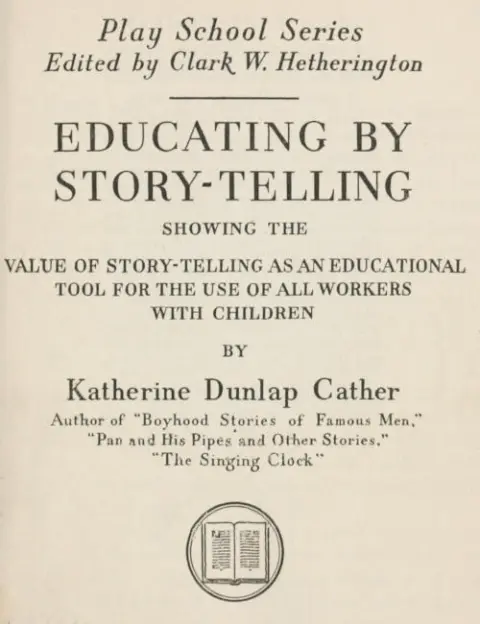
"Educating by Story-Telling" by Katherine Dunlap Cather is an educational guide written in the early 20th century. This book advocates for the use of storytelling as a powerful educational tool for those working with children, emphasizing its role in enhancing learning experiences and moral development. The author presents the value of storytelling not just as entertainment, but as a means to enrich children’s lives and education across various subjects, promoting a deeper understanding of literature and life principles. The opening of the work establishes the author's extensive experience with children and outlines the intention behind the book, which seeks to provide a structured approach to effective storytelling in educational settings. The author discusses how storytelling can be a vessel for cultural heritage and moral values, illuminating children's imaginations and interests. Cather proposes that an understanding of children's developmental stages and interests is crucial for selecting stories that will resonate with them, encouraging educators to adeptly match narratives to the psychological needs of their students. Overall, the beginning sets a foundation for the exploration of storytelling’s transformative potential in both the classroom and home environments.
Introduction adapted from the source catalogue; source summaries may be automatically generated.
Free to read · English · 121,766 words · No account needed
MAKE TIME FOR A GOOD BOOK
On by default. Untick to stop anonymous reading totals. Each page counts after 10 seconds in view. How this works.
Anonymous counting is on unless you have switched it off.
PIERSON, C. D.: The Story That Swallow Didn’t Tell (Among the
Farmyard People).
STODDARD, JOHN L.: The Story of St. Valentine (Lectures—South
Tyrol).
WIGGIN, K. D., and SMITH, N. A.: Little George Washington, Big George Washington (The Story Hour).
March
BRYANT, SARA CONE: Little Tavwots (How to Tell Stories to
Children).
COOKE, FLORA J.: An Indian Story of the Mole (Nature Myths).
HOLBROOK, FLORENCE: Why the Evergreen Trees Never Lose Their Leaves (A Book of Nature Myths).
O’GRADY, ALICE: Titty Mouse and Tatty Mouse, The Sheep and
the Pig That Built a House, The Straw Ox (The Story-Teller’s
Book).
OLCOTT, F. J.: The Little Tree That Longed for Leaves (Good
Stories for Great Holidays).
SLY, W. R.: Why Boys Take off Their Hats in Church (World
Stories Retold).
April
ÆSOP: The Fox and the Crow, The Jay and the Peacock (ADAMS:
Fables and Rhymes).
BAILEY, C. S., and LEWIS, C. M.: The Red-Headed Woodpecker
(For the Children’s Hour).
COOKE, FLORA J.: How the Robin’s Breast Became Red (Nature
Myths).
LINDSAY, MAUD: Out of the Nest (More Mother Stories).
PIERSON, C. D.: The Wonderful, Shiny Egg (Among the Farmyard
People).
SCUDDER, HORACE E.: The Jackdaw and the Doves (Fables and Folk
Stories).
SLY, W. R.: The Woman Who Shared Her Last Loaf (World Stories
Retold).
May
ANDERSEN, H. C.: The Snowdrop, The Little Butterfly Brothers, The Water Drop (OLCOTT: Good Stories for Great Holidays).
BRYANT, SARA CONE: How Brother Rabbit Fooled the Whale (Best
Stories to Tell to Children).
COE, FANNY E.: The Story of the Anemone (First Book of Stories
for the Story-Teller).
HART, A. S., and STEVENS, E.: A Boy Who Won the Cross (Romance
of the Civil War).
HOLBROOK, FLORENCE: The Story of the First Butterflies (Book
of Nature Myths).
SLY, W. R.: The Prince Who Hated Spiders and Flies (World
Stories Retold).
June
BALDWIN, JAMES: The Boy and the Wolf, Another Bird Story, Speaking a Piece (Fifty Famous People).
BRYANT, SARA CONE: Epaminondas and His Auntie (How to Tell
Stories to Children).
BRYCE, C. T.: The Four-Leaf Clover (That’s Why Stories).
GRIMM, JACOB: The Valiant Little Tailor, Snow White and the Seven Dwarfs (German Household Tales).
O’GRADY, ALICE: The Hop-About Man (The Story-Teller’s Book).
PARTRIDGE, E. N. and G. E.: The Story of Harriet Ann, The Fox
and the Crab, The Fairy Bird (Story-Telling in the Home and
School).
September
BALDWIN, JAMES: Coco (Second Fairy Reader); Writing a Composition (Longfellow), The Whistle (Franklin), the Ettrick Shepherd (James Hogg) (Fifty Famous People).
CABOT, ELLA L.: How Little Cedric Became a Knight, The Boy Who Wanted to Learn Climbing Alone, Hans, the Shepherd Boy (Ethics for Children).
Your reading position is saved on this browser. Take it to another device with a library code. Reading pages adapt to text, rather than matching a printed edition.
BEHIND THE BOOK
This eBook is for the use of anyone anywhere in the United States and most other parts of the world at no cost and with almost no restrictions whatsoever. You may copy it, give it away or re-use it under the terms of the Project Gutenberg License included with this eBook or online at www.gutenberg.org. If you are not located in the United States, you will have to check the laws of the country where you are located before using this eBook. Read the source licence.
The original source file, including credits and licence, is retained by this library. Request an original-format copy at no charge. Please include the book title and Project Gutenberg identifier #58255.
KEEP YOUR CURIOSITY GOING
Abby Morton Diaz
Helen Hunt Jackson
Mary Frances Blaisdell
Stuart Dodgson Collingwood

Kate Douglas Smith Wiggin
Hesba Stretton