
The William Henry Letters
Abby Morton Diaz
THE CLASSIC COLLECTION · 1918
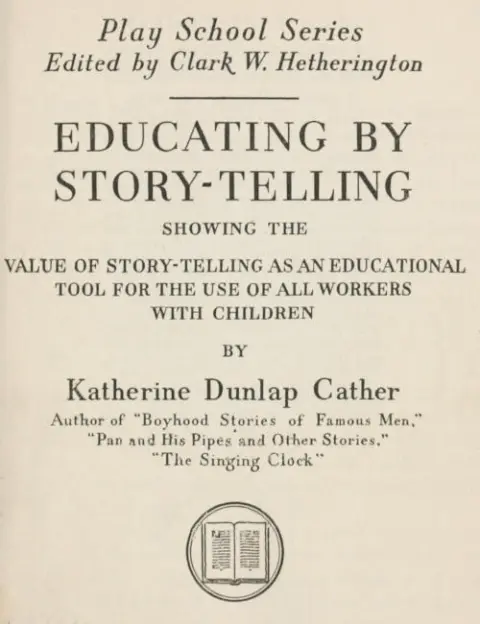
"Educating by Story-Telling" by Katherine Dunlap Cather is an educational guide written in the early 20th century. This book advocates for the use of storytelling as a powerful educational tool for those working with children, emphasizing its role in enhancing learning experiences and moral development. The author presents the value of storytelling not just as entertainment, but as a means to enrich children’s lives and education across various subjects, promoting a deeper understanding of literature and life principles. The opening of the work establishes the author's extensive experience with children and outlines the intention behind the book, which seeks to provide a structured approach to effective storytelling in educational settings. The author discusses how storytelling can be a vessel for cultural heritage and moral values, illuminating children's imaginations and interests. Cather proposes that an understanding of children's developmental stages and interests is crucial for selecting stories that will resonate with them, encouraging educators to adeptly match narratives to the psychological needs of their students. Overall, the beginning sets a foundation for the exploration of storytelling’s transformative potential in both the classroom and home environments.
Introduction adapted from the source catalogue; source summaries may be automatically generated.
Free to read · English · 121,766 words · No account needed
MAKE TIME FOR A GOOD BOOK
On by default. Untick to stop anonymous reading totals. Each page counts after 10 seconds in view. How this works.
Anonymous counting is on unless you have switched it off.
“Madame!” he exclaimed, “surely you do not command me to do that! Wheat is precious. If you will not have it yourself, give it to the poor and hungry, of whom there are many in Stavoren.”
But she drove him from the house, saying, “Do as I bid you. In a few minutes I shall come myself to see if you have carried out my order.”
Sadly the man went down the street, wondering how one so rich and beautiful could be so hard and unkind. But he had no thought of executing the order. Instead, he told all the poor he met, and dispatched messengers to tell others, that his mistress had refused to accept the cargo of wheat and perhaps, if they came to the port and asked her, she would give it to them.
A little later the great lady of Stavoren drove in her gold-emblazoned carriage to the shipyard, where a group of men, women, and children had joined the sailors and stood looking at the splendid vessel piled high with the best wheat that ever came out of Dantzic. But when she saw them her anger increased.
“Have you carried out my orders?” she said to the captain, as he came in answer to her summons and stood beside the carriage.
“No, madame, not yet,” he replied.
“Then,” the woman commanded, “do it at once. Throw the cargo of wheat into the sea. I want to see, myself.”
But the captain shook his head. “See these poor people,” he said, pointing to the hollow-eyed men, women, and children who were standing there. “Give them the wheat, for they are hungry.”
But the haughty woman silenced him and commanded, “Throw it into the sea!”
Then the captain seemed afraid no longer. He stood straight and fearless before her and declared, “Never, madame!”
But she shouted word to the officers, who dared not disobey, and amid the cries and pleas of the poor, the cargo that would have meant bread for thousands, was thrown into the sea.
The woman watched the waters swallow it up and smiled heartlessly. Then she called to the people, “Did you see it go into the waves?”
“Yes, madame,” they answered sadly.
“Yes, madame,” repeated the captain, “and a day will come when you will regret what you have done. A day will come when you will be hungry, and no one will pity and help you.”
The mistress looked at him in amazement. Then she laughed loudly. “I, go hungry,” she exclaimed, “I, the richest of all the rich of Stavoren! It is impossible!”
Your reading position is saved on this browser. Take it to another device with a library code. Reading pages adapt to text, rather than matching a printed edition.
BEHIND THE BOOK
This eBook is for the use of anyone anywhere in the United States and most other parts of the world at no cost and with almost no restrictions whatsoever. You may copy it, give it away or re-use it under the terms of the Project Gutenberg License included with this eBook or online at www.gutenberg.org. If you are not located in the United States, you will have to check the laws of the country where you are located before using this eBook. Read the source licence.
The original source file, including credits and licence, is retained by this library. Request an original-format copy at no charge. Please include the book title and Project Gutenberg identifier #58255.
KEEP YOUR CURIOSITY GOING
Abby Morton Diaz
Helen Hunt Jackson
Mary Frances Blaisdell
Stuart Dodgson Collingwood

Kate Douglas Smith Wiggin
Hesba Stretton