
Piccino, and other child stories
Frances Hodgson Burnett
THE CLASSIC COLLECTION · 1888
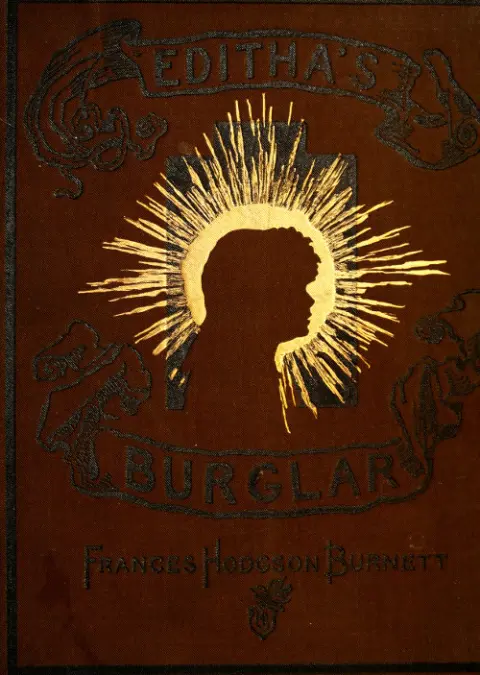
"Editha's Burglar: A Story for Children" by Frances Hodgson Burnett is a children's story written in the late 19th century. The book tells the charming tale of a young girl named Editha who encounters a burglar in her home. The story navigates themes of kindness, bravery, and misunderstanding, showcasing the perspective of a child who thinks compassionately about others, even those deemed as villains. In this narrative, Editha is a peculiar and thoughtful seven-year-old girl who, while grappling with the concept of burglars, finds herself face-to-face with one in her own home. Instead of panicking, she approaches the burglar with curiosity and concern for her mother, who is asleep. Editha’s polite and rational demeanor surprises the burglar, leading to humorous exchanges as she offers to help him select items to steal while protecting her family's valuables. Throughout their encounter, Editha realizes the burglar may not be as 'bad' as society depicts him, showcasing her innocence and capacity for compassion. Ultimately, the tale concludes with surprising outcomes, including the eventual return of her cherished belongings, reinforcing the power of empathy and understanding across social divides.
Introduction adapted from the source catalogue; source summaries may be automatically generated.
Free to read · English · 5,940 words · No account needed
MAKE TIME FOR A GOOD BOOK
On by default. Untick to stop anonymous reading totals. Each page counts after 10 seconds in view. How this works.
Anonymous counting is on unless you have switched it off.
"Don't be frightened," she said, in a soft voice. "I don't want to hurt you; I came to ask a favor of you."
The burglar was so amazed that he actually forgot he was a burglar, and staggered back against the wall. I think he thought at first that Editha was a little ghost. "You see I couldn't hurt you if I wanted to," she went on, wishing to encourage him. "I'm too little. I'm only seven,--and a little over,--and I'm not going to scream, because that would waken mamma, and that's just what I don't want to do."
That did encourage the burglar, but still he was so astonished that he
did not know what to do.
"Well, I'm blowed," he said in a whisper, "if this ain't a rummy go!" which was extremely vulgar language; but, unfortunately, he was one of those burglars who, as Miss Lane said, "had not had any advantages," which is indeed the case with the majority of the burglars of my acquaintance.
Then he began to laugh,--in a whisper also, if one can be said to laugh in a whisper. He put his hand over his mouth, and made no noise, but he laughed so hard that he doubled up and rocked himself to and fro.
"The rummiest go!" he said, in his uneducated way. "An' she haint agoin' to 'urt me. Oh, my heye!"
He was evidently very badly educated, indeed, for he not only used singular words, but sounded his h's all in the wrong places. Editha noticed this, even in the midst of her surprise at his laughter. She could not understand what he was laughing at. Then it occurred to her that she might have made a mistake.
"If you please," she said with great delicacy, "are you really a
burglar?"
He stopped laughing just long enough to answer her.
"Lor' no, miss," he said, "by no manner o' means. I'm a dear friend o' yer Par's, come to make a evenin' call, an' not a wishin' to trouble the servants, I stepped in through the winder."
"Ah!" said Editha, looking very gravely at him; "I see you are joking with me, as papa does sometimes. But what I wanted to say to you was this: Papa has gone to Scotland, and all our servants are women, and mamma would be so frightened if you were to waken her, that I am sure it would make her ill. And if you are going to burgle, would you please burgle as quietly as you can, so that you wont disturb her?"
The burglar stopped laughing, and, staring at her, once more uttered his
vulgar exclamation:
Your reading position is saved on this browser. Take it to another device with a library code. Reading pages adapt to text, rather than matching a printed edition.
Frances Hodgson Burnett

Frances Hodgson Burnett

Frances Hodgson Burnett

Frances Hodgson Burnett
BEHIND THE BOOK
This eBook is for the use of anyone anywhere in the United States and most other parts of the world at no cost and with almost no restrictions whatsoever. You may copy it, give it away or re-use it under the terms of the Project Gutenberg License included with this eBook or online at www.gutenberg.org. If you are not located in the United States, you will have to check the laws of the country where you are located before using this eBook. Read the source licence.
The original source file, including credits and licence, is retained by this library. Request an original-format copy at no charge. Please include the book title and Project Gutenberg identifier #56692.
KEEP YOUR CURIOSITY GOING
Coulson Kernahan

Maurice Baring
Frances Wright
Cécile Tormay

Frederic Jesup Stimson

W. H. P. (William Henry Pope) Jarvis