
Piccino, and other child stories
Frances Hodgson Burnett
THE CLASSIC COLLECTION · 1888
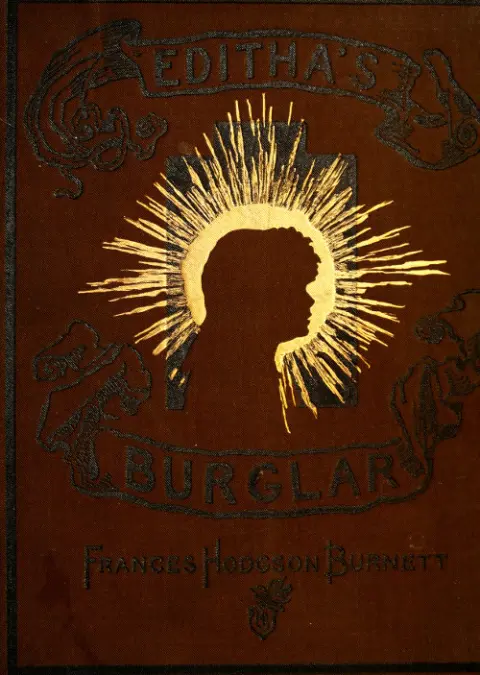
"Editha's Burglar: A Story for Children" by Frances Hodgson Burnett is a children's story written in the late 19th century. The book tells the charming tale of a young girl named Editha who encounters a burglar in her home. The story navigates themes of kindness, bravery, and misunderstanding, showcasing the perspective of a child who thinks compassionately about others, even those deemed as villains. In this narrative, Editha is a peculiar and thoughtful seven-year-old girl who, while grappling with the concept of burglars, finds herself face-to-face with one in her own home. Instead of panicking, she approaches the burglar with curiosity and concern for her mother, who is asleep. Editha’s polite and rational demeanor surprises the burglar, leading to humorous exchanges as she offers to help him select items to steal while protecting her family's valuables. Throughout their encounter, Editha realizes the burglar may not be as 'bad' as society depicts him, showcasing her innocence and capacity for compassion. Ultimately, the tale concludes with surprising outcomes, including the eventual return of her cherished belongings, reinforcing the power of empathy and understanding across social divides.
Introduction adapted from the source catalogue; source summaries may be automatically generated.
Free to read · English · 5,940 words · No account needed
MAKE TIME FOR A GOOD BOOK
On by default. Untick to stop anonymous reading totals. Each page counts after 10 seconds in view. How this works.
Anonymous counting is on unless you have switched it off.
"Papa," she said, in a solemn little voice, and looking at him in a very solemn manner, "papa dear, what do you think of burglars--as a class?" (She said "as a class," because she had heard one of her papa's friends say it, and as he was a gentleman she admired very much, she liked to talk as he did.) Her papa gave a little jump in his chair, as if she had startled him, and then he pushed his hair off his forehead and stared at her.
"Burglars! As a class!" he said, and then he stared at her a minute again in rather a puzzled way. "Bless my soul!" he said. "As a class, Nixie!" (that was his queer pet name for her.) "Nixie, where is your mother?"
"She is in bed, papa dear, and we mustn't disturb her," said Editha. "The party last night tired her out. I peeped into her room softly as I came down. She looks so pretty when she is asleep. What do you think of burglars, papa?"
"I think they're a bad lot, Nixie," said her papa, "a bad lot."
"Are there no good burglars, papa?"
"Well, Nixie," answered papa, "I should say not. As a rule you know,--" and here he began to smile, as people often smiled at Editha when she asked questions--"As a rule burglars are not distinguished for moral perspicuity and blameless character."
But Editha did not understand what moral perspicuity meant, and besides
she was thinking again.
"Miss Lane was talking to me the other day, about some poor children who had never been taught anything; they had never had any French or music lessons, and scarcely knew how to read, and she said they had never had any advantages. Perhaps that is the way with the burglars, papa,--perhaps they have never had any advantages,--perhaps if they had had advantages they mightn't have been burglars."
"Lessons in French and music are very elevating to the mind, my dear Nixie," papa began in his laughing way, which was always a trial to Editha, but suddenly he stopped, and looked at her rather sadly.
"How old are you, Nixie?" he asked.
"I am seven," answered Editha, "seven years, going on eight."
Papa sighed.
"Come here, little one," he said, holding out his strong white hand to
her.
She left her chair and went to him, and he put his arms around her, and kissed her, and stroked her long brown hair.
"Don't puzzle your little brain too much," he said, "never mind about
the burglars, Nixie."
Your reading position is saved on this browser. Take it to another device with a library code. Reading pages adapt to text, rather than matching a printed edition.
Frances Hodgson Burnett

Frances Hodgson Burnett

Frances Hodgson Burnett

Frances Hodgson Burnett
BEHIND THE BOOK
This eBook is for the use of anyone anywhere in the United States and most other parts of the world at no cost and with almost no restrictions whatsoever. You may copy it, give it away or re-use it under the terms of the Project Gutenberg License included with this eBook or online at www.gutenberg.org. If you are not located in the United States, you will have to check the laws of the country where you are located before using this eBook. Read the source licence.
The original source file, including credits and licence, is retained by this library. Request an original-format copy at no charge. Please include the book title and Project Gutenberg identifier #56692.
KEEP YOUR CURIOSITY GOING
Coulson Kernahan

Maurice Baring
Frances Wright
Cécile Tormay

Frederic Jesup Stimson

W. H. P. (William Henry Pope) Jarvis