THE CLASSIC COLLECTION✦My diaries, being a personal narrative of events 1888-1914, Part 2 (1900-1914)CLASSIC FREE BOOKS
My diaries, being a personal narrative of events 1888-1914, Part 2 (1900-1914)
Wilfrid Scawen Blunt
THE CLASSIC COLLECTION · 1904
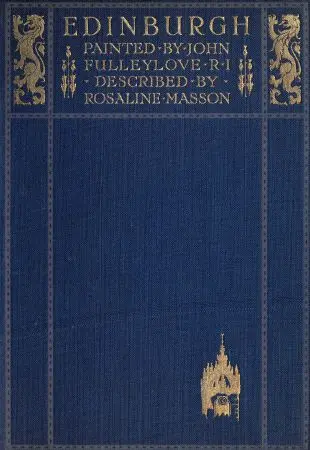
"Edinburgh" by Rosaline Masson is a historical account written in the early 20th century. The text intricately explores the rich history and cultural significance of Edinburgh, focusing on its landmarks, legends, and the impactful figures associated with the city. The work delves into key historical events tied to locations such as Edinburgh Castle and Holyrood Palace, creating a vivid portrait of the city’s past. The opening of the book introduces several historical narratives centered around Edinburgh Castle, emphasizing its legendary status and storied past. Masson recounts tales of royal figures such as Malcolm Canmore and Queen Margaret, illustrating their significance in shaping the castle's history. Throughout this section, the author presents a tapestry of events, from battles and sieges to romantic dramas, showcasing the castle as a symbol of Scottish resilience and heritage. This foundational chapter sets the tone for an exploration of the city's evolution, inviting readers to further discover Edinburgh's rich historical landscape.
Introduction adapted from the source catalogue; source summaries may be automatically generated.
Free to read · English · 47,085 words · No account needed
MAKE TIME FOR A GOOD BOOK
On by default. Untick to stop anonymous reading totals. Each page counts after 10 seconds in view. How this works.
Anonymous counting is on unless you have switched it off.
Riddle’s Close, 70, 101
Robertson, Principal, 108, 109
Ronsard (the French poet), 34
Rose, Abernethy, Bishop of Edinburgh, 54
Rosebery, the Earl of, 68
Rosehaugh Close, 95-96
Roslin, Boswell takes Dr. Johnson to, 109;
Scott takes Wordsworth to, 136, 164
Ross, the Lords, and Ross House, 122
Rothesay, the Duke of, eldest son of Robert III., 11
Royal Scottish Academy, 142
Royal Scottish Society, 142
Rullion Green, battle of, 59, 160
Ruskin, John, 151
Russel, Alexander, 151
Ruthven, Earl of, 41
St. Andrew’s Church in George Street, 150
St. Andrew Square, 124, 125
St. Cecilia’s Hall, 74-75
St. David Street, 125, 145
St. Giles, Church of, 24, 27, 45-61, 63,
65, 72, 86, 87, 94, 120, 144, 155, 164
St. John Street, 107
Salamander Land, 105
Salisbury Crags, 26, 165
Sandilands’ Close, 85
Scott, Anne, 145
Scott, General, 125-126, 152
Scott, Sir Gilbert, 154
Scott of Harden, Hugh, 135
Scott, Lady, wife of Sir Walter Scott, 135, 137;
death of, 145
Scott, Mr. and Mrs., parents of Sir Walter, 131
Scott, Sophia, 140
Scott, Sir Walter, 11, 20, 65, 69-70, 113, 129-146, 147, 160;
his homes in and near Edinburgh, 135-139, 141, 143, 145;
his later places of residence, 145;
his circle of friends, 148-150;
the Scott Monument, 153-154
Scottish Regalia. See Regalia
Scougall, John, artist, 73
“Seven Sisters of Borthwick,” 20, 27
Simpson, Sir James Y., 151
Shakespeare, 5;
was he in Edinburgh? 103
Shandwick Place, 145
Sharpe, Kirkpatrick, 138, 149
Shoemaker’s Land, 78
Six Feet Club, 160
Skelton, John, 151
Skene of Rubislaw, 135, 145
Skene, W. F., 151
Smith, Adam, 100
Smith, Alexander, 151
Smith, Sydney, 138
Smollett, Tobias, 107
Solway Moss, battle of, 35
South Gray’s Close, 76
Spottiswoode, Archbishop, 56
Stair, the Earl of, 69
Stair, Lady, and Lady Stair’s Close, 68-70
Stamp Office Close, 75-76, 99
Steele, Richard, 105
Stevenson, Robert Louis, 77, 78, 156-162
Stewart, Dugald, 149
Strichen’s Close, 76, 95
Stuart, Sir John (the “Black Knight of Lorn”), 12
Swanston, 156, 159-160, 161
Syme, Professor, 151
Tait, Professor, 151
“Tam o’ the Cowgate.” See Haddington, Earl of
Taylor, “the Water Poet,” 64, 104
Telfer, Mrs., of Scotstoun, 107
Tercentenary of the University, 152
Thackeray, 151
Thomson, Thomas, legal antiquary, 133
Tinwald, Lord Justice Clerk, 124
“Tolbooth Kirk, the” (in St. Giles’s), 51 note
Tolbooth, the, 53, 59, 63, 65, 69, 80, 155 note
Topham, Captain, 73, 109-111
Trollope, Anthony, 151
Tron Church, the, 132
“Tulzie,” a, 66
Turgot, Bishop, 6, 7, 8
Tweeddale Close, 77
Tytlers of Woodhouselee, the, 136
Union, the (1707), 64, 76;
Treaty of, 80, 81
Union, the Students’ University, 154
United Free Assembly Hall, 90
University, the, 85, 92, 109, 111, 120, 151, 152, 154, 159, 167
Vasa, Prince Gustavus, and the Baron Polier, 141
Victoria, Queen, her first visit to Edinburgh (1842), 147, 150
Volunteers, the Scottish Light Horse, 135
Walker Street, 145
Wallace, Sir William, 9, 24
Warbeck, Perkin, at the Court of James IV., 28
Watt, the Republican, 134
Webber, his attempt on Scott’s life, 139
Weir, Major, and his sister Grisel, 96-97
West Bow, 97
West Port, 92
Whiteford, Sir John, 112
Whiteford, Miss, 114
Whitehorse Close, 54, 81-82, and 82 note
Whitehorse Inn. See Boyd’s Close
Wilson, Professor (“Christopher North”), 149
Wishart, Chaplain to Montrose, and afterward Bishop of Edinburgh, 59
Wood, Sir Andrew, 27-28
Wordsworth and his sister Dorothy visit Scott in 1803, 136
World’s End Close, 76
Wynds (of Edinburgh). See Closes
Printed by R. & R. CLARK, LIMITED, Edinburgh.
Books by Rosaline Masson
In Our Town.
Your reading position is saved on this browser. Take it to another device with a library code. Reading pages adapt to text, rather than matching a printed edition.
BEHIND THE BOOK
This eBook is for the use of anyone anywhere in the United States and most other parts of the world at no cost and with almost no restrictions whatsoever. You may copy it, give it away or re-use it under the terms of the Project Gutenberg License included with this eBook or online at www.gutenberg.org. If you are not located in the United States, you will have to check the laws of the country where you are located before using this eBook. Read the source licence.
The original source file, including credits and licence, is retained by this library. Request an original-format copy at no charge. Please include the book title and Project Gutenberg identifier #47466.
KEEP YOUR CURIOSITY GOING
Wilfrid Scawen Blunt
Wilfrid Scawen Blunt

E. W. (Edgar Watson) Howe
Cécile Tormay

Moritz Busch
John L. Ransom