Things to be Remembered in Daily Life With Personal Experiences and Recollections
John Timbs
THE CLASSIC COLLECTION · 1869
"Eccentricities of the Animal Creation" by John Timbs is a zoological treatise written in the late 19th century. This work delves into the peculiar characteristics and behaviors of various animals, blending observations from natural history with engaging anecdotes. The book appears to aim at educating readers about fascinating facts surrounding animals, capturing both their whimsical traits and significant historical contexts. The opening of the book introduces the topic of zoological curiosities, highlighting humankind's long-standing interest in animal life across different cultures and eras. It references historical accounts of zoological gardens dating back thousands of years, discussing their origins and the exotic creatures kept within them. Timbs specifically emphasizes the rich history of zoological collections in places like China, Greece, and England, noting earlier examples such as the famous menagerie in the Tower of London. Additionally, the introduction sets the stage for subsequent chapters that promise to explore various eccentricities and remarkable habits of animals, indicating a blend of education and storytelling aimed at both young and adult audiences.
Introduction adapted from the source catalogue; source summaries may be automatically generated.
Free to read · English · 87,626 words · No account needed
MAKE TIME FOR A GOOD BOOK
On by default. Untick to stop anonymous reading totals. Each page counts after 10 seconds in view. How this works.
Anonymous counting is on unless you have switched it off.
The Zoological Society of London was instituted in 1826, and occupies now about seventeen acres of gardens in the Regent's Park. Among the earliest tenants of the Menagerie were a pair of emues from New Holland; two Arctic bears and a Russian bear; a herd of kangaroos; Cuban mastiffs and Thibet watch-dogs; two llamas from Peru; a splendid collection of eagles, falcons, and owls; a pair of beavers; cranes, spoonbills, and storks; zebras and Indian cows; Esquimaux dogs; armadilloes; and a collection of monkeys. To the menagerie have since been added an immense number of species of Mammalia and Birds; in 1849, a collection of Reptiles; and in 1853, a collection of Fish, Mollusca, Zoophytes, and other Aquatic Animals. In 1830, the menagerie collected by George IV. at Sandpit-gate, Windsor, was removed to the Society's Gardens; and 1834 the last of the Tower Menagerie was received here. It is now the finest public Vivarium in Europe.
The following are some of the more remarkable animals which the Society have possessed, or are now in the menagerie:--
Antelopes, the great family of, finely represented. The beautiful Elands were bequeathed by the late Earl of Derby, and have bred freely since their arrival in 1851. The Leucoryx is the first of her race born out of Africa. Ant-eater. Giant, brought to England from Brazil in 1853, was exhibited in Broad-street, St. Giles's, until purchased by the Zoological Society for 200l. Apteryx, or Kiwi bird, from New Zealand; the first living specimen brought to England of this rare bird. The Fish-house, built of iron and glass, in 1853, consisting of a series of glass tanks, in which fish spawn, zoophytes produce young, and algæ luxuriate; crustacea and mollusca live successfully, and ascidian polypes are illustrated, together with sea anemones, jelly-fishes, and star-fishes, rare shell-fishes, &c.: a new world of animal life is here seen as in the depths of the ocean, with masses of rock, sand, gravel, corallines, sea-weed, and sea-water; the animals are in a state of natural restlessness, now quiescent, now eating and being eaten. Aurochs, or European Bisons: a pair presented by the Emperor of Russia, in 1847, from the forest of Bialowitzca: the male died in 1848, the female in 1849, from pleuro-pneumonia. Bears: the collection is one of the largest ever made. Elephants: including an Indian elephant calf and its mother. In 1847 died here the great Indian elephant Jack, having been in the gardens sixteen years. Adjoining the stable is a tank of water, of a depth nearly equal to the height of a full-grown elephant. In 1851 the Society possessed a herd of four elephants, besides a hippopotamus, a rhinoceros, and both species of tapir; being the largest collection of pachydermata ever exhibited in Europe. Giraffes: four received in 1836 cost the Society upwards of 2,300l., including 1,000l. for steamboat passage: the female produced six male fawns here between 1840 and 1851. Hippopotamus, a young male (the first living specimen seen in England), received from Egypt in May, 1850, when ten months old, seven feet long, and six and a-half feet in girth; also a female hippopotamus, received 1854. Humming-birds: Mr. Gould's matchless collection of 2,000 examples was exhibited here in 1851 and 1852. Iguanas, two from Cuba and Carthagena, closely resembling, in everything but size, the fossil Iguanodon. The Lions number generally from eight to ten, including a pair of cubs born in the gardens in 1853. Orang-utan and Chimpanzee: the purchase-money of the latter sometimes exceeds 300l. The orang "Darby," brought from Borneo in 1851, is the finest yet seen in Europe, very intelligent, and docile as a child. Parrot-houses: they sometimes contain from sixty to seventy species. Rapacious Birds: so extensive a series of eagles and vultures has never yet been seen at one view. The Reptile-house was fitted up in 1849; the creatures are placed in large plate-glass cases: here are pythons and a rattle-snake, with a young one born here; here is also a case of the tree-frogs of Europe: a yellow snake from Jamaica has produced eight young in the gardens. Cobra de Capello, from India: in 1852, a keeper in the gardens was killed by the bite of this serpent. A large Boa in 1850 swallowed a blanket, and disgorged it in thirty-three days. A one-horned Rhinoceros, of continental India, was obtained in 1834, when it was about four years old, and weighed 26 cwt.; it died in 1850: it was replaced by a female, about five years old. Satin Bower-Birds, from Sydney: a pair have built here a bower, or breeding-place. Tapir of the Old World, from Mount Ophir; the nearest existing form the Paleotherium. Tigers: a pair of magnificent specimens, presented by the Guicoway of Baroda in 1851; a pair of clouded tigers, 1854. The Wapiti Deer breeds every year in the Menagerie.
Your reading position is saved on this browser. Take it to another device with a library code. Reading pages adapt to text, rather than matching a printed edition.
John Timbs
John Timbs
John Timbs
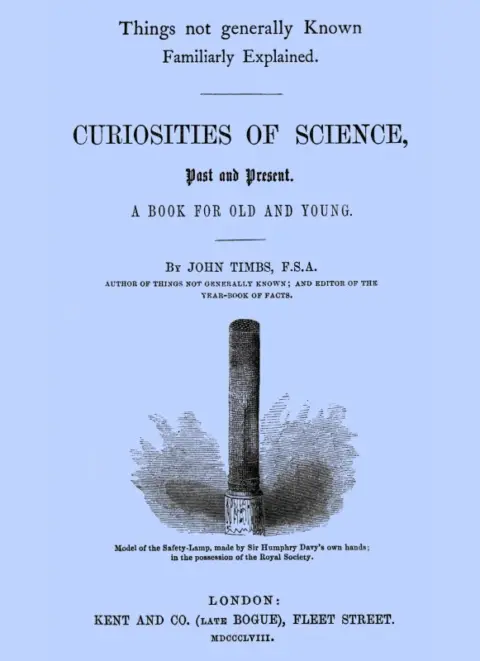
John Timbs
BEHIND THE BOOK
This eBook is for the use of anyone anywhere in the United States and most other parts of the world at no cost and with almost no restrictions whatsoever. You may copy it, give it away or re-use it under the terms of the Project Gutenberg License included with this eBook or online at www.gutenberg.org. If you are not located in the United States, you will have to check the laws of the country where you are located before using this eBook. Read the source licence.
The original source file, including credits and licence, is retained by this library. Request an original-format copy at no charge. Please include the book title and Project Gutenberg identifier #44422.
KEEP YOUR CURIOSITY GOING
Cécile Tormay

Moritz Busch
John L. Ransom
Frances Wright
Cécile Tormay

Mabel Potter Daggett