
Things to be Remembered in Daily Life With Personal Experiences and Recollections
John Timbs
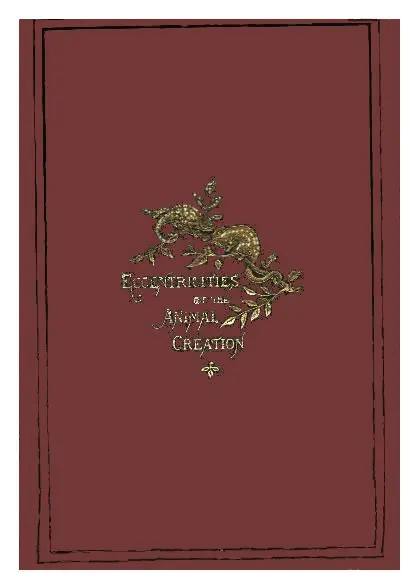
THE CLASSIC COLLECTION · 1869
"Eccentricities of the Animal Creation" by John Timbs is a zoological treatise written in the late 19th century. This work delves into the peculiar characteristics and behaviors of various animals, blending observations from natural history with engaging anecdotes. The book appears to aim at educating readers about fascinating facts surrounding animals, capturing both their whimsical traits and significant historical contexts. The opening of the book introduces the topic of zoological curiosities, highlighting humankind's long-standing interest in animal life across different cultures and eras. It references historical accounts of zoological gardens dating back thousands of years, discussing their origins and the exotic creatures kept within them. Timbs specifically emphasizes the rich history of zoological collections in places like China, Greece, and England, noting earlier examples such as the famous menagerie in the Tower of London. Additionally, the introduction sets the stage for subsequent chapters that promise to explore various eccentricities and remarkable habits of animals, indicating a blend of education and storytelling aimed at both young and adult audiences.
Introduction adapted from the source catalogue; source summaries may be automatically generated.
Free to read · English · 87,626 words · No account needed
MAKE TIME FOR A GOOD BOOK
On by default. Untick to stop anonymous reading totals. Each page counts after 10 seconds in view. How this works.
Anonymous counting is on unless you have switched it off.
Captain Owen relates that "the Bonita has the power of throwing itself out of the water to an almost incredible distance when in pursuit of its prey, the Flying Fish; and, the day previous to our arrival at Mozambique, one of these fish rose close under our bow, and passed under the vessel's side, and struck with such force against the poop, that, had any one received the blow, it must have been fatal. Stunned by the violence of the contact, it fell motionless at the helmsman's feet; but, soon recovering, its struggles were so furious that it became necessary to inflict several blows with an axe before it could be approached with safety. The greatest elevation it attained above the surface of water was eighteen feet, and the length of the leap, had no opposition occurred, would have exceeded 180."
Of winged or Flying Fish we find this extravagant account in a philosophical romance, entitled, "Telliamed," by M. Maillet, an ingenious Frenchman, of the days of Louis XV.:--
He believed, like Lamarck, that the whole family of birds had existed one time as fishes, which, on being thrown ashore by the waves, had got feathers by accident; and that men themselves are but the descendants of a tribe of sea-monsters, who, tiring of their proper element, crawled upon the beach one sunny morning, and, taking a fancy to the land, forgot to return. The account is as amusing as a fairy tale. "Winged or Flying Fish," says Maillet, "stimulated by the desire of prey, or the fear of death, or pushed near the shore by the billows, have fallen among the reeds or herbage, whence it was not possible for them to resume their flight to the sea, by means of which they had contracted their first facility of flying. Then their fins, being no longer bathed in the sea-water, were split and became warped by their dryness. While they found among the reeds and herbage among which they fell many aliments to support them, the vessels of their fins being separated, were lengthened, or clothed with beards, or, to speak more justly, the membranes which before kept them adherent to each other were metamorphosed. The beard formed of these warped membranes was lengthened. The skin of these animals was insensibly covered with a down of the same colour with the skin, and this down gradually increased. The little wings they had under their belly, and which, like their wings, helped them to walk into the sea, became feet, and helped them to walk on the land. There were also other small changes in their figure. The beak and neck of some were lengthened, and of others shortened. The conformity, however, of the first figure subsists in the whole, and it will be always easy to know it. Examine all the species of fowl, even those of the Indies, those which are tufted or not, those whose feathers are reversed--such as we see at Damietta, that is to say, whose plumage runs from the tail to the head--and you will see fine species of fish quite similar, scaly or without scales. All species of Parrots, whose plumages are different, the rarest and most singular marked birds, are, conformable to fact, painted, like them, black, brown, grey, yellow, green, red, violet colour, and those of gold and azure; and all this precisely in the same parts, where the plumages of these birds are diversified in so curious a manner."
Your reading position is saved on this browser. Take it to another device with a library code. Reading pages adapt to text, rather than matching a printed edition.
John Timbs
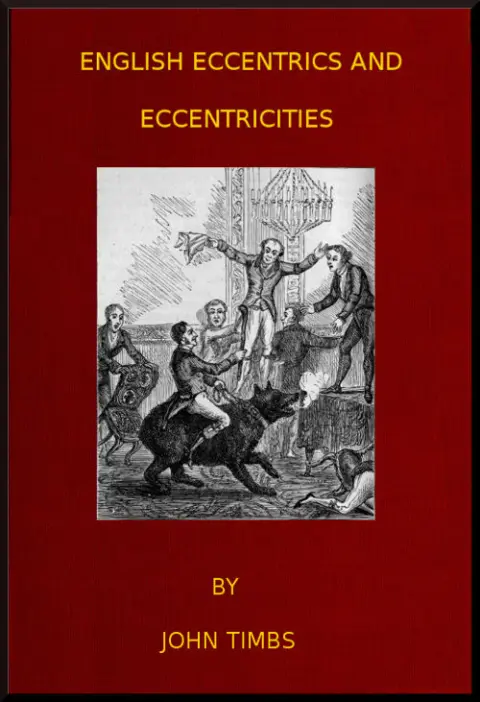
John Timbs
John Timbs
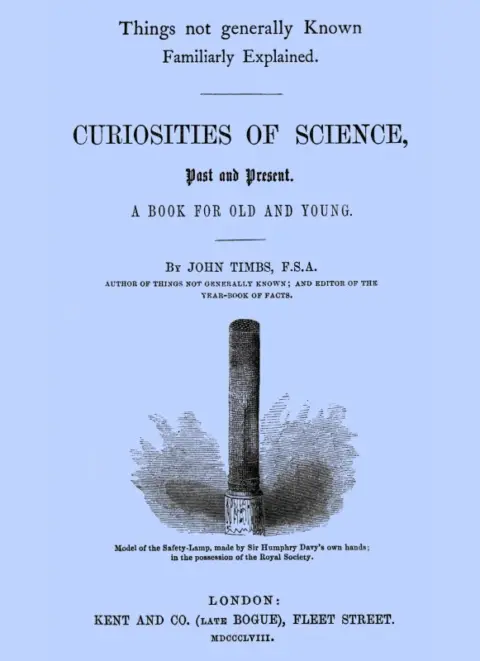
John Timbs
BEHIND THE BOOK
This eBook is for the use of anyone anywhere in the United States and most other parts of the world at no cost and with almost no restrictions whatsoever. You may copy it, give it away or re-use it under the terms of the Project Gutenberg License included with this eBook or online at www.gutenberg.org. If you are not located in the United States, you will have to check the laws of the country where you are located before using this eBook. Read the source licence.
The original source file, including credits and licence, is retained by this library. Request an original-format copy at no charge. Please include the book title and Project Gutenberg identifier #44422.
KEEP YOUR CURIOSITY GOING
Cécile Tormay

Moritz Busch
John L. Ransom
Frances Wright
Cécile Tormay

Mabel Potter Daggett