THE CLASSIC COLLECTION✦An outlaw’s diary: the CommuneCLASSIC FREE BOOKS
An outlaw’s diary: the Commune
Cécile Tormay
THE CLASSIC COLLECTION · 1922
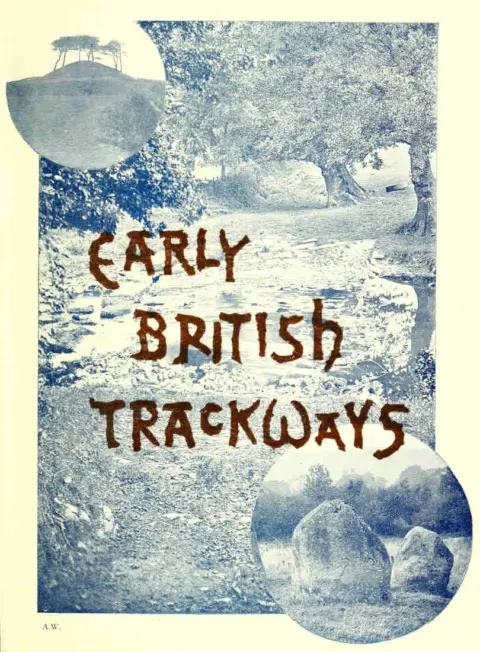
"Early British Trackways, Moats, Mounds, Camps, and Sites" by Alfred Watkins is a historical account written in the early 20th century. The book meticulously investigates the ancient trackways and associated structures in Britain, delving into their design and function from prehistoric times through the Roman occupation. Watkins proposes a systematic approach to understanding how these features were interconnected and the implications of their layouts for early human activity and navigation. At the start of the work, the author reflects on the prevailing misconceptions surrounding the study of ancient trackways, highlighting the need for new evidence and methods to uncover their true nature. He outlines how his exploration of maps and field observations led to the discovery of sighting lines linking various structures, such as mounds, moats, and churches. Watkins calls upon readers to engage in their own investigations, providing a rationale grounded in physical evidence and urging a collaborative effort to re-evaluate previous conclusions held by antiquarians. This opening portion sets the stage for a deeper exploration of how these ancient routes and landmarks are aligned in ways that reveal a sophisticated planning system employed by early Britons.
Introduction adapted from the source catalogue; source summaries may be automatically generated.
Free to read · English · 14,047 words · No account needed
MAKE TIME FOR A GOOD BOOK
On by default. Untick to stop anonymous reading totals. Each page counts after 10 seconds in view. How this works.
Anonymous counting is on unless you have switched it off.
Lady Lift (a hill-point mound) is on a ley with Lady Harbour Farm, and the prefix Lady is applied to court, grove, ridge, oak, and meadow in the county. The Lady Harbour of Hereford Cathedral is on one of the leys which form Church Street, and had the name before any church was built there. It might possibly indicate a woman’s shelter on the road.
The suffix--tree, probably originated in a single tree planted as a sighting point, either as at “Cross of the Tree” in Deerfold Forest, or to mark the apex of a natural hill as illustrated in Plate XII. Webtree is on such a hill with two leys passing through it. Its name signifies that it is the spot where the webbe or weaver met his buyers. He travelled along the webbe-ley, and there are three Weobleys (formerly Webbeley) in the county, at Weobley Ash, and Weobley Cross, also the better known townlet. He also met others at a mark-stone now known as Webton. The surnames Webb, Webber, and Webster still survive.
In the same way another first word element gave the place names (and surnames from them) of Bosley (Cattle-ley), Boston, Bosbury, Boswell, Bostock, and Boscastle. Again, Stanley, Stanwell, Stanton, Stanbury, and Stanbatch. And I have shown how the white (salt) man gave the first element to innumerable place names on his route. There is a Silver Tump and a Brass Knoll in the Olchon Valley, both proved sighting tumps.
The names Bowley, Bowling Green (farm, also a quarry near Ewias Harold), Bolitree, Bolstone, Bollingham, Bal Mawr, Balls Cross, Ballgate, Bellgate, Bellimore, and Belmont, all seem akin to the rounded outline of an inverted bowl, or to boils, bowels, and belly of animal life, and indicate the rounded tump.
The house at Bolitree is built on a tump with signs of a moat, and as I found a ley through Bollingham (house and chapel) I went there to find the bol, and there it was, a fine tump with an old summerhouse on its summit.
Gate in a place name (as in Hill Gate, Three Gates, Ballgate, England’s Gate, Burley Gate, etc.) did not mean, as now, something which stopped a way (that was called a lid-yatt), but the way itself. It is much the same as the word pass. The same element (modified) is in such names as Gatley, Gatsford, Yatton, Symonds Yat, Woodyatt’s Cross.
Lee Line and Timberline Wood are place names clearly describing leys. There is a Linton and a Linley at Stanford Bishop--the mark stone and the ley. I think that Lyonshall, Lynhales, Lion Farm, and Hobby Lyons are variations.
Your reading position is saved on this browser. Take it to another device with a library code. Reading pages adapt to text, rather than matching a printed edition.
BEHIND THE BOOK
This eBook is for the use of anyone anywhere in the United States and most other parts of the world at no cost and with almost no restrictions whatsoever. You may copy it, give it away or re-use it under the terms of the Project Gutenberg License included with this eBook or online at www.gutenberg.org. If you are not located in the United States, you will have to check the laws of the country where you are located before using this eBook. Read the source licence.
The original source file, including credits and licence, is retained by this library. Request an original-format copy at no charge. Please include the book title and Project Gutenberg identifier #69934.
KEEP YOUR CURIOSITY GOING
Cécile Tormay

Moritz Busch
John L. Ransom
Frances Wright
Cécile Tormay

Mabel Potter Daggett